Introduction to Infrared Proximity Sensing Technology
Infrared (IR) proximity sensors are fundamental components in modern automation and control systems. Operating on the principle of emitting an infrared light beam and detecting its reflection from a nearby object, these sensors provide a non-contact method for detecting presence, distance, and even specific characteristics of materials. The core system typically consists of an IR LED emitter and a photodiode or phototransistor receiver. When an object enters the sensor's field of view, it reflects the emitted IR radiation back to the receiver. The sensor's internal circuitry then processes this signal, often by measuring the intensity of the reflected light or the phase shift, to determine the object's proximity. This technology is prized for its reliability, relatively low cost, and immunity to ambient audible noise, making it superior to ultrasonic sensors in many noisy industrial environments. Its performance can be affected by factors like object color, reflectivity, and environmental IR interference, which engineers must account for during system design and calibration.
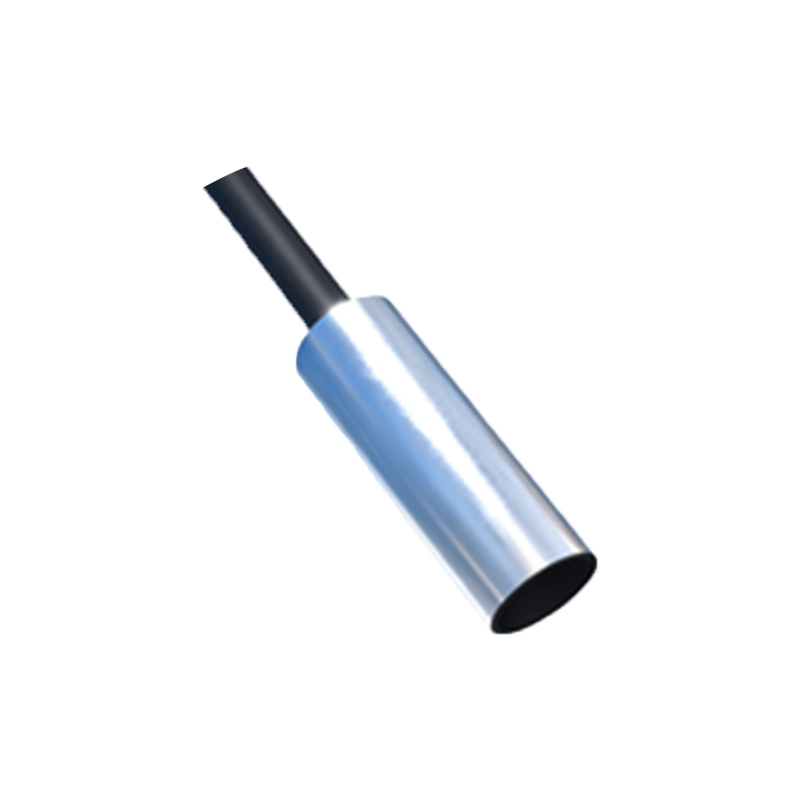
Core Applications in Industrial Automation
The industrial sector is the primary beneficiary of IR proximity sensor technology. On assembly lines, these sensors are indispensable for precise object detection and counting. They ensure components are present and correctly positioned before a robotic arm performs a task, such as welding or screwing. In packaging machinery, IR sensors detect the passage of boxes or products on a conveyor belt, triggering the next step in the process, like labeling or sealing. They are also crucial in material handling for palletizing and depalletizing operations, where they verify the presence of a pallet or a layer of products. Furthermore, in CNC machines and automated guided vehicles (AGVs), IR proximity sensors act as safety devices and navigation aids, preventing collisions and ensuring accurate path following by detecting walls, obstacles, or guidance tapes.
Integration in Consumer Electronics and Devices
Beyond heavy industry, IR proximity sensors have become ubiquitous in consumer electronics, enhancing user experience and device functionality. The most common application is in smartphones and tablets, where a sensor located near the earpiece detects when the phone is held to the user's face during a call. This triggers the screen to turn off, preventing accidental touch inputs and saving battery power. Similarly, in smartwatches and fitness bands, these sensors enable features like automatic screen wake-up when the user raises their wrist. They are also integral to touchless interfaces, such as automatic towel dispensers, soap dispensers, and faucets in public restrooms, promoting hygiene. In home automation, they are used in security systems for motion detection and in smart appliances to detect user presence for energy-saving modes.
Role in Automotive Safety and Systems
The automotive industry leverages IR proximity sensors to enhance both safety and convenience. Advanced driver-assistance systems (ADAS) often incorporate IR sensors for blind-spot detection and parking assistance. These sensors provide accurate short-range distance measurements to nearby obstacles, aiding in low-speed maneuvers. Inside the vehicle, they are used for occupancy detection, which can be linked to airbag deployment systems to optimize safety based on passenger size and position. Some luxury vehicles feature gesture control systems for infotainment units, where an IR sensor array interprets specific hand movements to adjust volume or answer calls without physical contact. Additionally, rain-sensing wipers frequently use an IR beam reflected off the windshield; when water droplets disrupt the beam, the system activates the wipers.
Advancements and Emerging Innovations
The field of IR proximity sensing is continuously evolving. Recent advancements include the development of multi-element and array sensors that can provide simple shape or gesture recognition beyond basic presence detection. The integration of IR sensors with time-of-flight (ToF) technology allows for highly accurate distance measurement over a longer range, opening doors for applications in robotics and augmented reality. Furthermore, the miniaturization of components has led to the creation of extremely small sensors suitable for wearable devices and IoT modules. Engineers are also working on sensors with improved ambient light rejection and multi-wavelength IR emission to better distinguish between different materials and reduce false triggers. The convergence of IR sensing with artificial intelligence for predictive maintenance in industrial settings represents a significant frontier, where sensor data trends can forecast equipment failures before they occur.
Critical Considerations for System Design
Successfully implementing an IR proximity sensor requires careful engineering consideration. Selection must be based on the required sensing range, response time, and environmental conditions. The sensor's output type—digital (on/off) or analog (proportional to distance)—must match the controller's input capabilities. Mounting is critical; sensors must be positioned to avoid cross-talk between multiple units and to ensure the target object reliably enters the detection zone. For outdoor or harsh industrial environments, sensors with appropriate Ingress Protection (IP