What is the CX421 Photoelectric Sensor?
The CX421 is a versatile and widely recognized model in the realm of industrial automation, representing a specific series of photoelectric sensors. At its core, a photoelectric sensor is a device that uses a light transmitter (typically an LED) and a receiver to detect the presence, absence, or distance of an object. The CX421 series is engineered for reliability and precision in demanding environments. These sensors operate by emitting a beam of light; when this beam is interrupted or reflected by an object, the change in light intensity at the receiver is converted into an electrical signal. This signal is then processed to trigger a control action, such as stopping a conveyor belt, counting items, or verifying part placement. The CX421 is known for its robust housing, consistent performance, and adaptability to various sensing challenges, making it a staple in manufacturing, packaging, and material handling systems.
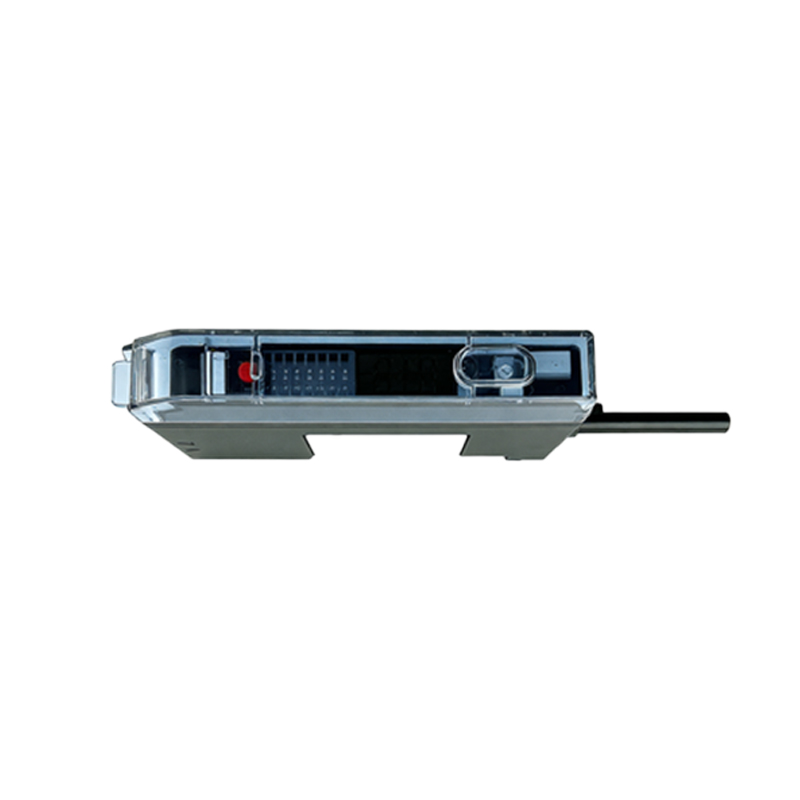
Primary Operating Types of Photoelectric Sensors
To understand what "type" the CX421 is, one must first grasp the fundamental classifications of photoelectric sensing. There are three primary operating modes, each defined by the arrangement of the emitter and receiver and the method of light detection. These are through-beam, retro-reflective, and diffuse (proximity) sensing. The specific model within the CX421 series will be designed for one of these primary types, each offering distinct advantages. The through-beam type offers the longest sensing range and highest reliability, as it uses separate units for the emitter and receiver. The retro-reflective type uses a single unit and a reflector, providing a good balance of range and ease of installation. Finally, the diffuse type senses light reflected directly from the target object itself, which is ideal for detecting objects at close range without the need for a separate receiver or reflector.
Identifying the CX421's Specific Type
The term "CX421" itself is typically a series designation from a specific manufacturer (like Omron, a prominent player in sensor technology). Therefore, a CX421 sensor could be manufactured as any of the three main types. For instance, one might find a CX-421-D model configured as a diffuse reflective sensor, while a CX-421-T might be a through-beam sensor. The exact type is determined by the suffix or part number variant. In practice, the most common configurations for such general-purpose industrial sensors are often diffuse or retro-reflective, as they require only a single device to be mounted on one side of the application. It is crucial for engineers and technicians to consult the specific datasheet for the complete part number to confirm its operational type, sensing range, light source (e.g., red LED, laser), and output configuration (e.g., NPN or PNP transistor).
Key Features and Technological Specifications
Regardless of its specific operating type, the CX421 series typically incorporates several key features that define its performance. These sensors often feature a visible red or laser light beam, which greatly simplifies alignment and setup during installation. They are built with rugged, often metal or high-grade plastic housings that provide high resistance to environmental factors like dust, water (commonly rated IP67), and mechanical impact. The sensing distance varies by type: a diffuse CX421 may sense up to 1 meter, a retro-reflective model up to 5 meters, and a through-beam variant potentially much farther. Output is usually in the form of a digital switch (ON/OFF signal), with options for light-on or dark-on operation. Advanced models may include teach-in functionality for automatic sensitivity adjustment or background suppression technology to ignore objects beyond a set distance.
Typical Industrial Applications
The application of a CX421 sensor is dictated by its type. A diffuse sensor type is perfect for object detection on assembly lines, bottle cap presence verification, or detecting the level of bulk material in a bin. Its ability to detect the object directly makes it suitable for varied surface colors and textures, though sensing distance can be affected. A retro-reflective CX421 is excellent for detecting transparent objects, like glass or plastic bottles, especially when equipped with a polarization filter that ignores reflections from shiny surfaces. It is also widely used in packaging machinery and door control systems. A through-beam CX421, offering the highest precision, is deployed in safety curtains, high-speed counting, and precision positioning where even small objects must be reliably detected over long distances.
Selection and Integration Considerations
Selecting the correct CX421 type requires a thorough analysis of the application parameters. Engineers must consider the target object's properties (size, color, material, surface finish), the required sensing distance, the environmental conditions (ambient light, contaminants, temperature), and the necessary response speed. Electrical compatibility with the control system (PLC) regarding voltage supply (10-30V DC is standard) and output type (sourcing or sinking) is paramount. Proper mounting, alignment, and periodic maintenance are essential for long-term reliability. The CX421 series' modular design and availability of various accessories, such as mounting brackets and protective guards, facilitate seamless integration into complex automated systems, ensuring robust and fault-free operation.