Introduction to Adjustable Photoelectric Sensors
In the realm of industrial automation, precision and adaptability are paramount. Adjustable photoelectric sensors have emerged as a cornerstone technology, offering unparalleled control over detection parameters. Unlike their fixed counterparts, these sensors allow operators to fine-tune sensitivity, response time, and beam characteristics to match specific application requirements. This adjustability translates directly into enhanced system reliability, reduced false triggers, and optimized performance across diverse and challenging environments. From packaging lines to material handling and robotic assembly, the ability to calibrate sensor behavior on-the-fly is a significant competitive advantage, ensuring processes run smoothly with minimal downtime.
Core Operating Principles and Adjustability
At their heart, adjustable photoelectric sensors operate on the same fundamental principle: they emit a beam of light (visible red, infrared, or laser) and detect changes in the received light signal caused by the presence, absence, or characteristics of a target object. The key differentiator lies in the integrated circuitry and software that permit adjustment. Users can typically modify the sensing distance threshold, effectively setting the exact point at which the sensor triggers. Furthermore, sensitivity adjustments allow the sensor to ignore background objects or environmental noise, such as dust or ambient light variations. Advanced models offer programmable logic functions, timing delays, and output configurations, turning a simple sensor into a smart, application-specific node on the network.
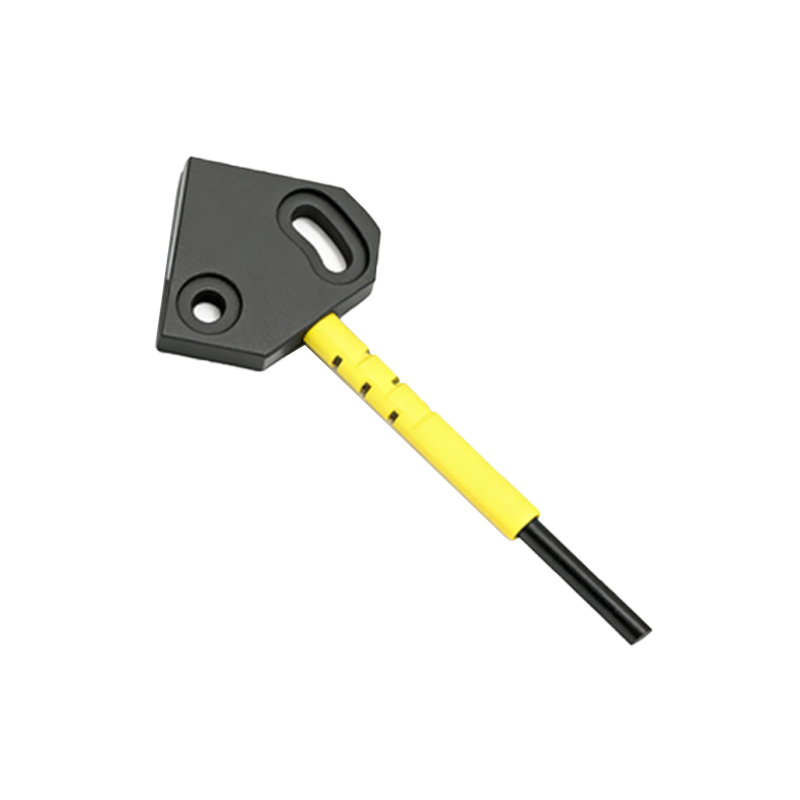
Key Types and Their Application-Specific Advantages
Several types of adjustable photoelectric sensors cater to different needs. Adjustable diffuse reflective sensors, where the emitter and receiver are in the same housing, are common for detecting objects at short to medium ranges. Their adjustability is crucial for dealing with varying surface colors and reflectivities. Adjustable retro-reflective sensors, which use a reflector, benefit from tunability to compensate for reflector contamination or misalignment over long distances. Finally, adjustable through-beam sensors, with separate emitter and receiver units, offer the longest range and highest reliability; here, adjustability helps maintain signal integrity in harsh conditions. Each type leverages its adjustable features to solve unique challenges, from detecting transparent films to ensuring precise positioning in high-speed bottling operations.
Critical Adjustment Parameters for Optimal Performance
To harness the full potential of these sensors, understanding the key adjustable parameters is essential. The primary adjustment is often the sensitivity or gain control. Increasing sensitivity allows detection of smaller, less reflective, or more distant objects, while decreasing it helps avoid false triggers from background interference. Response time adjustment is another critical factor, enabling the sensor to filter out rapid vibrations or debris. Many sensors also feature a teach-in function, where a button press or remote signal programs the sensor based on a presented target. Additionally, the ability to switch between light-on and dark-on operation (output activates when light is received or blocked) and to set a time delay for the output signal provides immense flexibility for integrating the sensor into complex control sequences.
Installation, Calibration, and Maintenance Best Practices
Proper installation is the first step toward reliable operation. Ensuring stable mounting, correct alignment (especially for through-beam types), and a clean optical surface is fundamental. The calibration process involves systematically adjusting the parameters while simulating real-world operating conditions. It is advisable to set the sensitivity to the minimum level required for reliable detection, creating a safety margin against future degradation. Regular maintenance should include lens cleaning and periodic verification of sensing accuracy. Modern sensors often feature diagnostic LEDs or IO-Link communication, providing real-time data on signal strength, operating temperature, and contamination levels, facilitating predictive maintenance and swift troubleshooting.
The Role of Advanced Features and Connectivity
The evolution of adjustable photoelectric sensors is closely tied to Industry 4.0. Modern units are not just adjustable but intelligent. IO-Link communication has become a standard feature, allowing for remote parameter adjustment, continuous condition monitoring, and seamless integration into digital control systems. This enables centralized management of thousands of sensors from a control room. Advanced background suppression technology, now finely adjustable, allows for precise detection within a defined "window" of distance, ignoring objects outside it. Furthermore, built-in temperature compensation ensures stable performance despite environmental fluctuations, making these sensors indispensable in demanding applications like outdoor logistics or food processing with washdown requirements.
Conclusion: Driving Efficiency and Innovation Forward
Adjustable photoelectric sensors represent a significant leap from fixed-function devices. By putting precise control in the hands of engineers and technicians, they empower the creation of more resilient, efficient, and intelligent automated systems. Their flexibility future-proofs installations, as a single sensor model can be adapted for multiple roles or recalibrated for new products. As manufacturing demands grow more complex, the ability to fine-tune detection parameters will remain a critical factor in achieving operational excellence, minimizing waste, and maximizing throughput. The continued integration of smart connectivity and diagnostic features ensures that adjustable photoelectric sensors will remain at the forefront of industrial sensing technology.