Introduction to Proximity Sensing Technology
Proximity switch sensors represent a cornerstone of modern industrial automation, providing non-contact detection of metallic objects. Among the diverse range of sensors available, the NBN8 model has established itself as a reliable and widely adopted solution. This inductive proximity sensor is engineered to deliver consistent performance in demanding environments, offering a detection range typically up to 8mm. Its core principle relies on generating an electromagnetic field. When a metallic target enters this field, it induces eddy currents, causing a change in the sensor's oscillation amplitude. This change is detected by the internal circuitry, which subsequently triggers a solid-state switching output. This mechanism allows for precise, wear-free detection, eliminating the mechanical failures associated with traditional limit switches and significantly enhancing system longevity and reliability.
Key Technical Specifications of the NBN8 Sensor
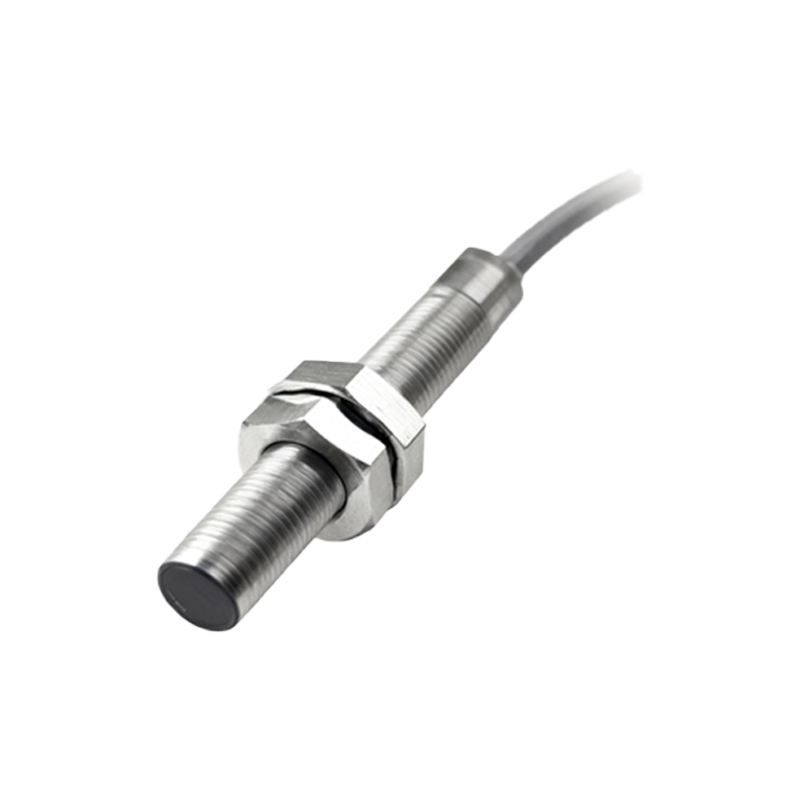
The NBN8 proximity sensor is characterized by a set of robust technical parameters. It is commonly available in a cylindrical M8 housing, making it compact and easy to install in space-constrained applications. The standard sensing distance is 8mm, though this is considered a nominal value under ideal conditions with a standard target. The sensor typically operates on a DC supply voltage, often in the range of 10-30V DC, with both PNP (sourcing) and NPN (sinking) output configurations available to interface seamlessly with different PLC (Programmable Logic Controller) systems. Its output is usually in a normally-open (NO) or normally-closed (NC) configuration. Key performance metrics include a high switching frequency, allowing it to detect rapidly moving objects, and a minimal hysteresis to ensure repeatable switching points. It is also designed with built-in protection against short-circuits, reverse polarity, and electrical noise, which is critical in industrial settings.
Design and Construction Features
The durability of the NBN8 sensor stems from its thoughtful construction. The sensing face is typically made from a corrosion-resistant material like PBT (Polybutylene Terephthalate) or nickel-plated brass, protecting the internal coil from physical damage and chemical exposure. The housing is rated with a high IP (Ingress Protection) rating, such as IP67, indicating complete protection against dust and protection against temporary immersion in water. This makes the NBN8 suitable for use in washdown areas, machining centers, and outdoor applications. The sensor incorporates an LED status indicator, providing immediate visual confirmation of power and output state, which is invaluable for troubleshooting and setup. The connection is facilitated via a pre-wired cable or a quick-disconnect M8 connector, simplifying installation and maintenance procedures.
Primary Industrial Applications and Use Cases
The versatility of the NBN8 proximity switch sensor lends itself to a multitude of applications across various industries. In automotive manufacturing, it is used for part presence verification on assembly lines, position sensing of robotic arms, and end-of-travel detection on actuators. Within packaging machinery, it detects metal components on conveyor belts, counts products, and ensures proper positioning before sealing or labeling operations. In material handling, these sensors monitor the position of pallets, control gate operations, and provide feedback for automated guided vehicles (AGVs). They are also integral to CNC machines for tool positioning and workpiece detection. Their non-contact nature makes them ideal for applications involving high-speed rotation or vibration where physical contact is impractical.
Installation Guidelines and Best Practices
Correct installation is paramount to achieving optimal performance from an NBN8 sensor. Firstly, it is crucial to ensure the sensor is mounted securely to prevent vibration-induced failures or misalignment. The sensing face must be positioned parallel to the target surface for maximum detection range. Engineers must account for the "reduced sensing distance" factor when detecting metals other than mild steel (the standard target). For instance, stainless steel may reduce the effective range, while copper or aluminum reduces it further. Adequate clearance must be maintained between adjacent sensors to prevent mutual interference of their electromagnetic fields. When wiring, careful attention should be paid to the output type (PNP/NPN) to match the control system input. Shielding and proper grounding are recommended in environments with high electromagnetic interference to prevent false triggering.
Troubleshooting Common Operational Issues
Even with robust design, operational issues can arise. A frequent problem is the failure to detect a target. This can be caused by an insufficient supply voltage, a target outside the effective sensing range, or the use of a non-ferrous metal target without proper adjustment. The built-in LED is the first diagnostic tool; if it fails to illuminate, check power and wiring connections. If the LED is on but the output does not switch, the target material, size, or approach speed may be incorrect.