Introduction to Photoelectric Sensor Families
In the realm of industrial automation, photoelectric sensors are indispensable for detection, positioning, and quality control. Two prominent series that often come under comparison are the 405 and 305 families. While both serve the core function of non-contact object detection using light beams, they are engineered for different operational envelopes and application challenges. This article delves into a technical comparison, highlighting their distinct characteristics to guide selection for optimal system performance.
Core Operating Principle and Light Source
At their fundamental level, both 405 and 305 sensors operate on the same basic principle: emitting a light beam (visible red, infrared, or laser) and detecting changes in the received light to sense an object's presence or absence. The primary distinction often lies in the light source technology and its associated performance. The 405 series typically incorporates advanced LED technology with optimized optics, offering a more focused beam and superior signal stability over longer sensing ranges. The 305 series, while reliable, may utilize a more standard LED setup, making it suitable for general-purpose applications at moderate ranges. This difference directly impacts beam precision and resistance to ambient light interference.
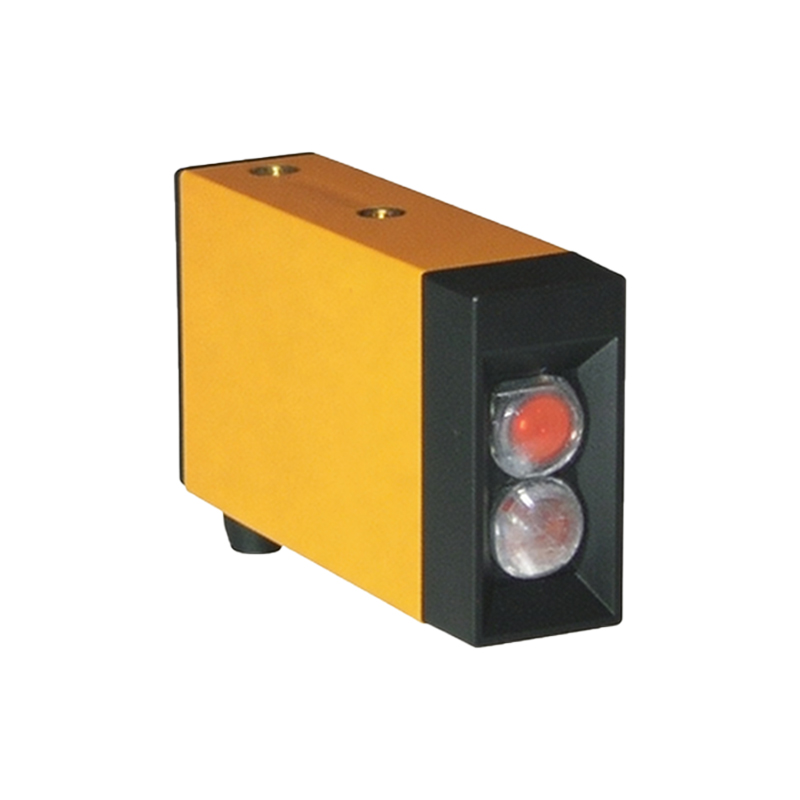
Sensing Range and Detection Capabilities
Sensing range is a critical differentiator. The 405 photoelectric sensors are generally designed for extended sensing distances. For example, a diffuse reflective model in the 405 series might offer a range of up to 2 meters, whereas a comparable 305 sensor might be rated for 1 meter or less. This makes the 405 family the preferred choice for applications requiring detection of objects at a distance or in large machinery setups. Furthermore, 405 sensors often feature enhanced sensitivity adjustments and background suppression functionality, allowing them to reliably detect objects with low reflectivity or ignore distant backgrounds—a capability that is more limited or absent in standard 305 models.
Environmental Robustness and Housing
Industrial environments are harsh, exposing sensors to dust, moisture, vibration, and chemical washdowns. Here, the build quality and ingress protection (IP) ratings become paramount. The 405 series is frequently housed in rugged, stainless-steel or high-grade polymer housings with superior sealing. It commonly boasts higher IP ratings (e.g., IP67, IP69K), indicating complete protection against dust and the ability to withstand high-pressure, high-temperature jet washes. The 305 series, while durable, often features standard industrial plastic housings with lower IP ratings (e.g., IP65, IP67), suitable for less demanding environments where exposure to extreme conditions is not a daily occurrence.
Electrical Outputs and Connectivity
Both families offer standard digital outputs like PNP/NPN transistors or relay contacts. However, the 405 series often includes more sophisticated features and connectivity options. This may include analog output variants for distance measurement, IO-Link communication for smart sensor capabilities (enabling parameter setting, diagnostics, and process data monitoring), and short-circuit/overload protection circuits. The 305 series tends to focus on providing essential, reliable switching outputs with simpler wiring schemes, catering to basic on/off detection tasks without the need for advanced networking or analog feedback.
Application Scenarios and Selection Guidance
Choosing between a 405 and a 305 sensor hinges on the specific application demands. The 305 photoelectric sensor is an excellent, cost-effective solution for standard machine automation, packaging lines, or material handling where sensing ranges are moderate, environmental conditions are controlled, and basic detection is sufficient. It is the workhorse for routine tasks. Conversely, the 405 sensor is engineered for challenging applications. It excels in food & beverage processing (requiring frequent washdowns), automotive manufacturing with heavy vibration, logistics with long-range pallet detection, or any process requiring precise detection of dark, shiny, or transparent objects. Its advanced features justify the typically higher investment for critical operations.
Conclusion: Matching the Sensor to the Need
In summary, the 305 and 405 photoelectric sensor families represent different tiers of performance and robustness. The 305 series offers reliable, fundamental detection for general industrial use. The 405 series provides enhanced range, precision, environmental sealing, and smart features for demanding, high-performance applications. A thorough evaluation of the required sensing distance, environmental exposure, object characteristics, and desired functionality is essential. By understanding these key differences, engineers and system integrators can specify the correct sensor, ensuring long-term reliability, reducing downtime, and optimizing the efficiency of their automated systems.