Introduction to Photoelectric Sensor Sampling
Photoelectric sensors are pivotal components in modern industrial automation, serving as the primary interface for object detection, positioning, and counting. Their operation hinges on the modulation of a light beam, typically infrared, visible, or laser, and the detection of changes in the received light intensity caused by the presence or absence of a target object. This report details a comprehensive sampling experiment conducted to evaluate the performance characteristics of a diffuse-reflective photoelectric sensor under controlled laboratory conditions. The objective is to quantify key parameters such as sensing distance, response time, and environmental interference susceptibility, providing empirical data crucial for system integration and reliability assessment in real-world applications.
Experimental Setup and Equipment
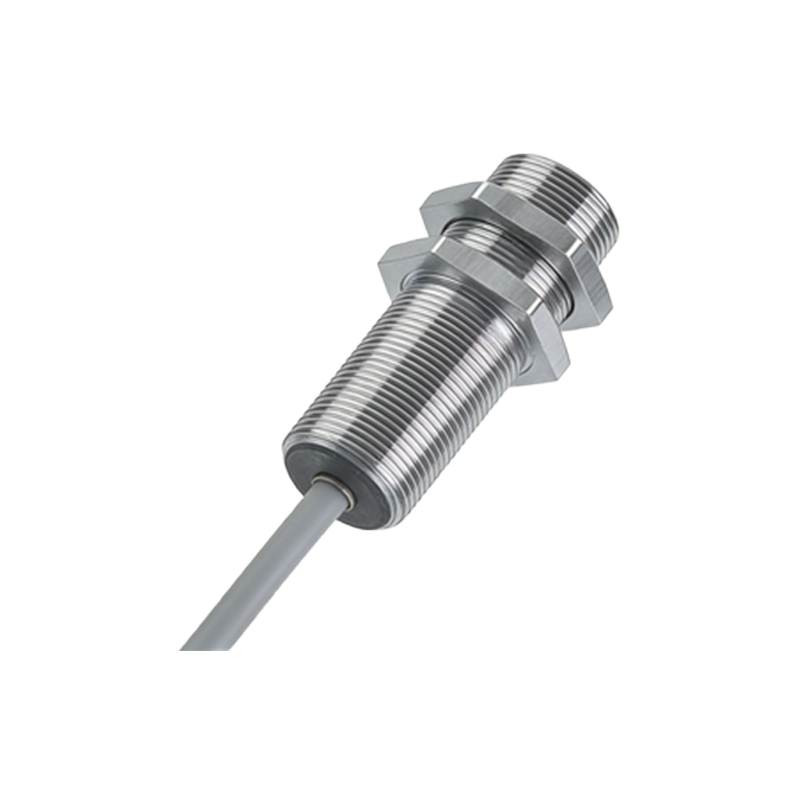
The experiment utilized a standard diffuse-reflective photoelectric sensor with a modulated infrared LED light source and a phototransistor receiver. The sensor was mounted on a stable optical bench. The target objects consisted of standardized test cards with varying reflectivity (90% white, 18% gray) and a matte black card (6% reflectivity). A high-precision linear translation stage, controlled by a stepper motor, was employed to vary the distance between the sensor head and the target object with an accuracy of ±0.1mm. A programmable logic controller (PLC) was connected to the sensor's output to record switching states. A digital oscilloscope was used to measure the sensor's response time by monitoring the output signal transition. All tests were conducted under consistent ambient lighting conditions of 500 lux.
Methodology: Sampling Procedure
The sampling procedure was divided into three distinct phases. First, the maximum effective sensing distance was determined. The white test card was placed perpendicular to the sensor's beam. Starting from direct contact, the target was gradually moved away using the translation stage until the sensor's output failed to switch reliably upon target presentation. This point was recorded as the maximum nominal sensing distance. This process was repeated ten times for statistical significance. Second, response time sampling was performed. With the target positioned at 50% of the maximum sensed distance, a high-speed trigger mechanism was used to rapidly introduce and remove the target. The oscilloscope captured the delay between the physical edge of the target crossing the beam and the corresponding change in the sensor's output signal, sampling both the "on" and "off" delay times over 100 cycles. Third, the influence of object reflectivity was sampled by repeating the maximum distance test with the gray and black test cards.
Analysis of Sampling Data
The collected data revealed clear performance trends. The maximum reliable sensing distance for the high-reflectivity (90% white) target was measured at 152.3mm with a standard deviation of 0.8mm, closely matching the sensor's datasheet specification of 150mm. For the 18% gray target, this distance reduced to 98.7mm (±1.2mm), and for the 6% black target, sensing became unreliable beyond 45.1mm (±2.5mm), demonstrating a direct correlation between target reflectivity and effective range. The response time sampling data showed a mean "on" delay (target present) of 1.02 milliseconds and an "off" delay (target absent) of 1.15 milliseconds. The histogram of response times indicated a tight distribution, confirming consistent high-speed performance suitable for rapid production line applications.
Discussion of Environmental Factors and Noise
A supplementary sampling run was conducted to assess environmental interference. Ambient light from a 60Hz fluorescent fixture was introduced at an oblique angle to the sensor. Sampling the sensor's output with no target present showed no false triggering, confirming the effectiveness of the modulated light source in rejecting constant ambient light. However, when a strobe light was flashed directly at the receiver, occasional false pulses were recorded in the output signal. This highlights a limitation where high-frequency, high-intensity light sources can saturate the receiver. Furthermore, sampling performed with dust particles introduced into the sensing path showed a negligible effect on the maximum sensing distance for the white target but caused a more pronounced and variable reduction in distance for the low-reflectivity black target.
Conclusion and Engineering Implications
The photoelectric sensor sampling experiment successfully quantified critical operational parameters. The data underscores the importance of characterizing the sensor with targets that match the actual application's reflectivity, as the sensing distance is not a fixed property but highly dependent on target surface characteristics. The fast and consistent response time validates its use in high-cycle counting tasks. The primary engineering implication is the necessity for thorough environmental pre-sampling in the final installation site, particularly to rule out interference from other optical equipment. For applications involving very dark or absorbent materials, a sensor with a longer nominal range or a different sensing mode, such as through-beam, should be considered. This sampled dataset serves as a reliable foundation for designing robust and fault-tolerant automated systems.