Introduction to the EV3 Light Sensor
The EV3 Light Sensor is a fundamental component in the LEGO Mindstorms EV3 robotics kit, serving as the primary tool for enabling robots to perceive and interact with their environment based on light intensity. This sensor operates by emitting a red light and measuring the amount of light reflected back to its phototransistor. It can function in two distinct modes: Reflected Light Intensity mode and Ambient Light Intensity mode. In Reflected Light mode, the sensor's own red LED is active, allowing it to measure the light bouncing off a surface, which is crucial for tasks like line following. In Ambient Light mode, the LED is off, and the sensor measures the surrounding environmental light, useful for creating light-reactive behaviors. Its precision, with a typical sampling rate of 1 kHz, allows for real-time data acquisition, making it an indispensable sensor for educational robotics, prototyping, and introductory automation projects.
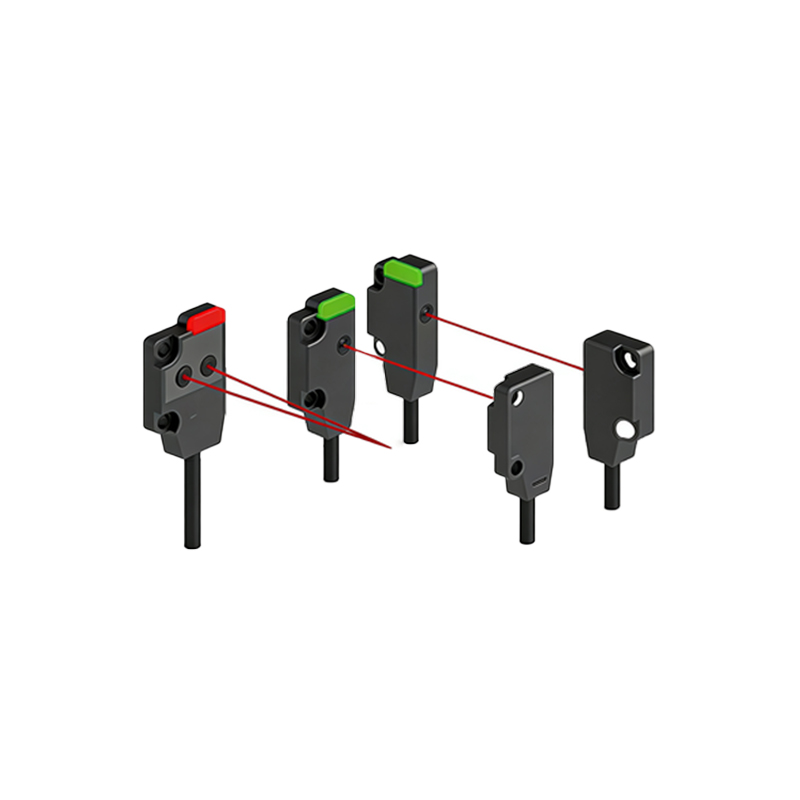
Core Functionality and Technical Specifications
At its heart, the EV3 Light Sensor is a analog-to-digital converter that translates light levels into a digital value ranging from 0 to 100. A reading of 0 corresponds to very dark conditions, while 100 represents very bright light. This simple yet effective scale provides a reliable metric for programming decision-making logic. The sensor connects to any of the EV3 Intelligent Brick's input ports via a standard cable. Its compact design and robust construction make it suitable for the dynamic and sometimes rough handling in educational settings. Understanding its calibration is key; users can manually calibrate the sensor for specific surface conditions to ensure accurate readings, which is a critical step before deploying any light-dependent program, enhancing the robot's consistency and performance.
Primary Application: Line Following and Tracking
One of the most iconic and educational applications of the EV3 Light Sensor is enabling a robot to follow a line. This task is a cornerstone of robotics education, teaching fundamental concepts of feedback control, proportional logic, and sensor integration. By positioning the sensor over the boundary between a light-colored surface and a dark line (or vice-versa), the robot's program can continuously read reflected light values. Using a simple threshold algorithm or more advanced Proportional-Integral-Derivative (PID) control, the robot adjusts its motor power to steer left or right, keeping the sensor on the line edge. This application demonstrates practical closed-loop control and is often the first step toward more complex autonomous navigation challenges in competitions and classroom projects.
Sorting and Color Detection Capabilities
While not a full-color sensor, the EV3 Light Sensor can be ingeniously used for basic sorting tasks based on lightness and darkness. By measuring the reflected light value of objects, a programmed robot can differentiate between, for example, a white tile and a black tile, or a light-colored can and a dark-colored one. This functionality is leveraged in simulated factory automation setups where robots sort items on a conveyor belt. Although limited to grayscale detection, this application introduces students to the concepts of industrial automation, input-based decision trees, and the logical sequencing of robotic actions. It bridges the gap between simple reactive behaviors and more complex, task-oriented programming.
Environmental Interaction and Triggered Behaviors
In Ambient Light mode, the sensor opens up possibilities for robots that react to their environmental lighting. A robot can be programmed to start moving when the lights in a room are turned on, or to seek out a dark corner when it detects bright light. It can also be used to create light-activated security systems or diurnal behavior simulations. For instance, a robotic animal model might become active at "dawn" (simulated by increasing light) and retreat at "dusk." These applications foster creative problem-solving and help learners understand how sensors can be used to make robots appear more intelligent and context-aware, responding not just to physical contact but to subtle changes in their surroundings.
Integration with Other EV3 Sensors and Components
The true power of the EV3 Light Sensor is realized when it is integrated with other components of the EV3 ecosystem. For example, combined with the Ultrasonic Sensor for distance measurement, a robot can follow a line until it detects an obstacle, then navigate around it. Used alongside the Gyro Sensor, it can enable precise turns at specific points on a line. Furthermore, its data can be used to control other outputs, like the EV3 brick's display or a motor's speed, creating a direct link between perception and action. This synergy teaches systems thinking and modular design, showing that complex robotic behaviors emerge from the effective integration of simple, reliable sensor inputs.
Educational Value and Skill Development
Beyond its technical functions, the EV3 Light Sensor is a powerful educational tool. It provides a tangible, hands-on introduction to core STEM concepts such as optics, analog/digital conversion, threshold values, and control theory. Students learn to troubleshoot sensor readings, calibrate equipment, and write/debug code that responds to real-world physical variables. The immediate feedback from seeing a robot successfully follow a line or sort an object based on a programmed light threshold is immensely rewarding and reinforces computational thinking and logical reasoning. It serves as an accessible gateway to more advanced topics in robotics, computer vision, and industrial sensor technology.
Conclusion and Broader Implications
The EV3 Light Sensor, though a component of a educational kit, embodies principles critical to modern automation and robotics. Its applications in line following, sorting, and environmental interaction provide a microcosm of how sensors drive autonomous systems in warehouses, manufacturing plants, and even consumer devices. Mastering its use builds a foundational skill set for future engineers and programmers. By transforming an abstract concept like "light intensity" into actionable data for a machine, it demystifies the interaction between the digital and physical worlds, proving that even a simple sensor can be the key to creating intelligent, responsive robotic behavior.