Introduction to 5VDC Proximity Sensing
In the realm of industrial automation and control systems, proximity sensors are indispensable components for non-contact object detection. Among the various configurations available, 5VDC proximity switch sensors represent a critical category, prized for their compatibility with low-voltage logic circuits and digital systems. These sensors operate by generating an electromagnetic field or a beam of radiation and detecting changes in the field or return signal. The 5-volt DC power supply aligns perfectly with the operating voltage of many microcontrollers, programmable logic controllers (PLCs), and digital interfaces, making them a seamless integration point in modern electronic control architectures. Their primary function is to detect the presence or absence of a target object without physical contact, thereby eliminating mechanical wear and enabling high-speed, reliable operation in demanding environments.
Core Operating Principles and Technologies
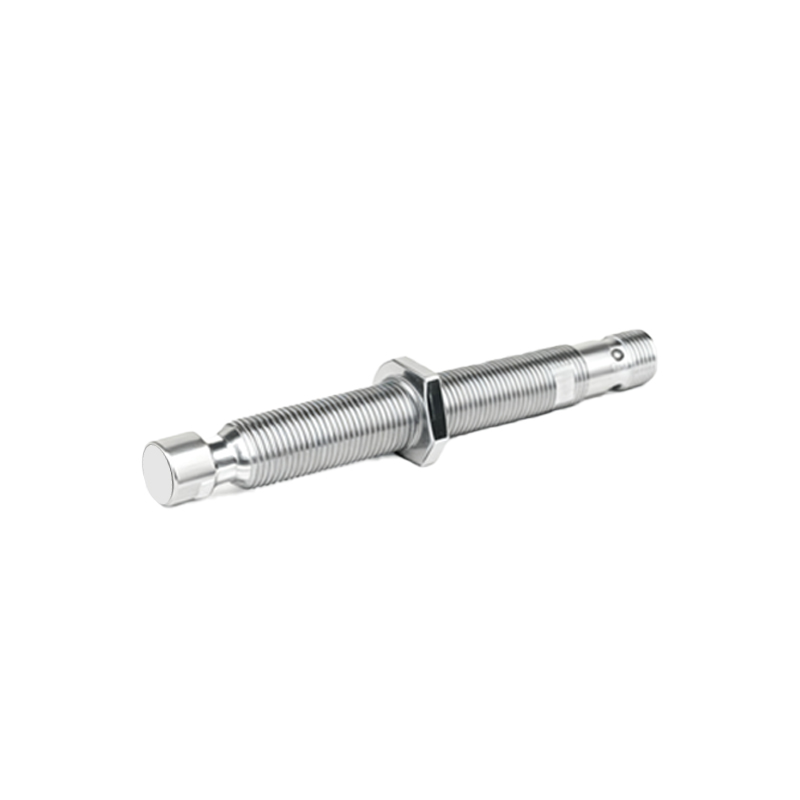
5VDC proximity sensors primarily utilize three sensing technologies: inductive, capacitive, and photoelectric. Inductive sensors are the most common for metallic target detection. They consist of a coil driven by an oscillator, a detection circuit, and an output circuit. When a metal object enters the oscillating electromagnetic field, eddy currents are induced in the target, causing a load on the oscillator. The sensor's detection circuit monitors this amplitude change and triggers a solid-state output switch. Capacitive sensors can detect both metallic and non-metallic materials (plastics, wood, liquids) by measuring changes in capacitance between the sensor's active surface and the ground. Photoelectric sensors, another variant operating at 5VDC, use a light emitter and receiver to detect objects interrupting or reflecting a light beam. Despite the differing physics, the output of these sensors is typically a clean, digital 5VDC signal, ideal for direct connection to logic inputs.
Key Specifications and Selection Criteria
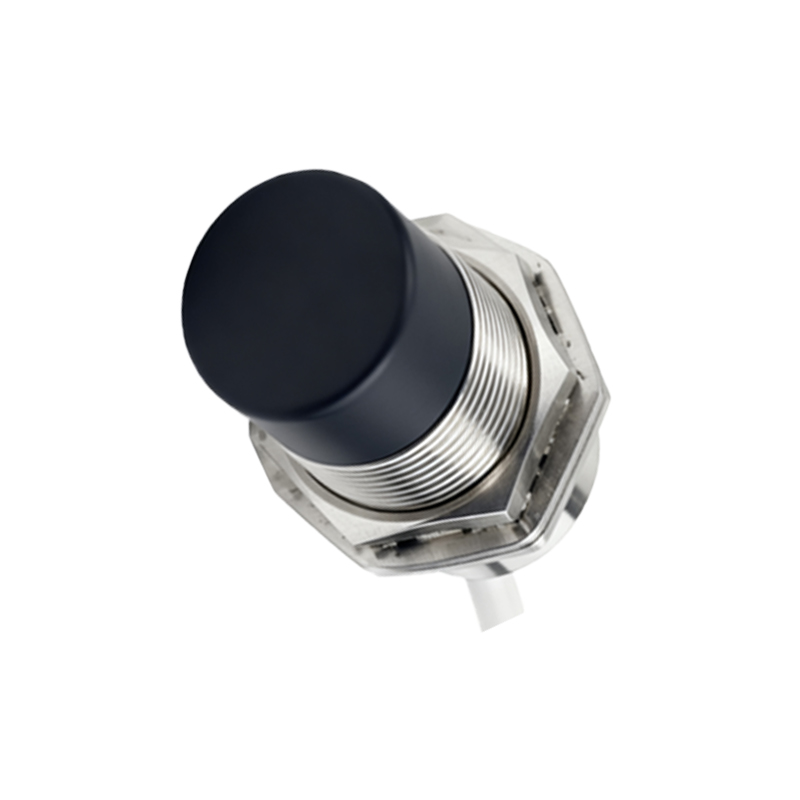
Selecting the appropriate 5VDC proximity switch requires careful analysis of several parameters. Sensing distance, or the nominal range at which a standard target can be reliably detected, is paramount. For inductive sensors, this typically ranges from 1 to 15 millimeters. The output configuration is crucial; it can be NPN (sinking) or PNP (sourcing), which defines how the sensor switches the 0V or 5V line to the load. The load device's input type must match this. Response frequency indicates how quickly the sensor can detect objects per second, a vital factor for high-speed applications. Environmental ratings, such as IP (Ingress Protection) codes for dust and water resistance, and operating temperature ranges, ensure reliability in harsh conditions. Additionally, factors like housing material (often nickel-plated brass or stainless steel), output state indication (LED), and short-circuit protection are essential for robust system design.
Wiring and Integration with Control Systems
Integration of a 5VDC proximity sensor into a control system is straightforward due to its standardized interface. A typical three-wire sensor has connections for brown (5VDC+), blue (0V Common), and black (Output Signal). For a PNP sensor, the black wire outputs 5VDC when a target is detected; for an NPN, it switches to 0V. This output wire connects directly to the digital input of a PLC, microcontroller, or counter. Proper wiring practices are essential: using shielded cables in electrically noisy environments, ensuring correct polarity, and implementing flyback diodes for inductive loads if necessary. The low current consumption of these sensors, often below 20mA, makes them suitable for bus-powered systems and dense I/O configurations. Their compatibility with 5V logic eliminates the need for level-shifting circuits, simplifying PCB design and prototyping.
Advantages in Modern Industrial Applications
The advantages of using 5VDC proximity switches are multifaceted. Their low voltage operation enhances safety, reduces energy consumption, and minimizes electromagnetic interference (EMI). The non-contact nature guarantees long operational life with millions of cycles, as there are no moving parts to wear out. They enable high-speed detection, critical in packaging, assembly, and material handling lines. Their small form factors allow for installation in confined spaces. Furthermore, the digital output provides excellent noise immunity compared to analog signals, leading to more reliable state detection. In industries ranging from automotive manufacturing and robotics to consumer electronics and printing, these sensors form the foundational layer for position verification, part counting, end-of-travel detection, and automated quality control.
Common Challenges and Troubleshooting Tips
Despite their reliability, 5VDC proximity sensors can encounter issues. Incorrect sensing due to the wrong sensor type (e.g., using an inductive sensor for a plastic target) is a common error. Electrical noise from motors or variable frequency drives can cause false triggering;