Introduction to Photoelectric Sensor 3D Models
In the realm of industrial automation and electrical engineering, the integration of precise 3D models into the design and planning phase has become indispensable. Photoelectric sensors, critical components for object detection, positioning, and quality control, are no exception. A high-fidelity 3D model of a photoelectric sensor allows engineers and designers to perform accurate spatial analysis, interference checks, and seamless integration within a larger control system or machinery layout before physical procurement and installation. These digital twins encapsulate exact dimensions, mounting specifications, and often functional attributes, enabling a virtual prototyping environment that saves significant time and cost. The availability of detailed 3D CAD files, typically in formats like STEP, IGES, or native software formats, has revolutionized how electrical and mechanical teams collaborate on projects involving sensing technology.
Key Applications in Industrial Design and Simulation
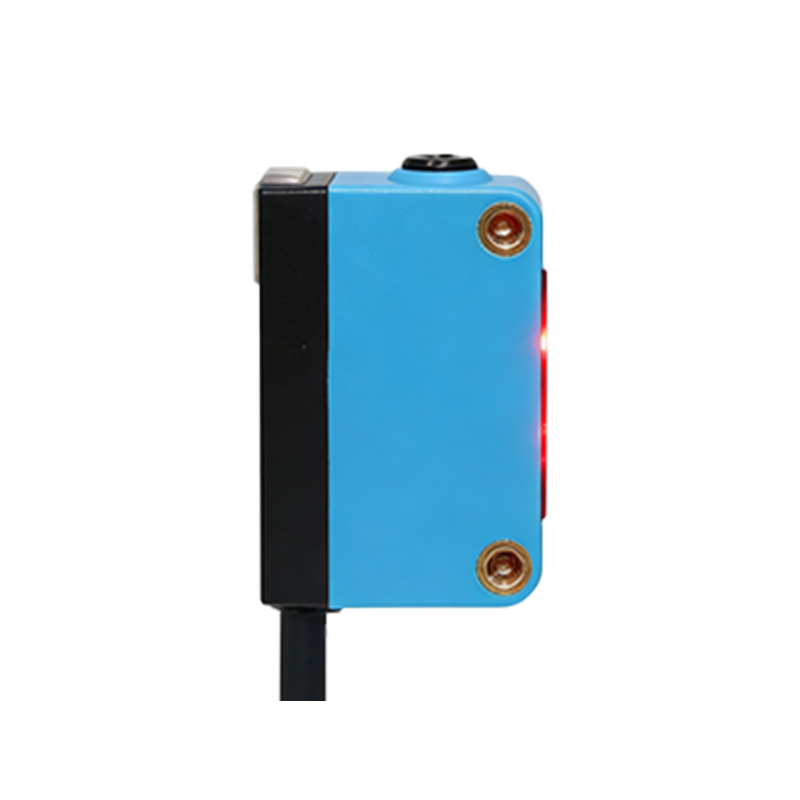
The utility of photoelectric sensor 3D models extends across various stages of product development and system integration. Primarily, they are used for creating realistic digital mock-ups of production lines, packaging machinery, and automated assembly systems. Designers can precisely place through-beam, retro-reflective, or diffuse sensors in their virtual layouts to ensure optimal sensing range and avoid physical obstructions. Furthermore, these models are crucial for generating accurate bill of materials (BOM), assembly instructions, and for training purposes using virtual reality (VR) or augmented reality (AR) platforms. In electrical cabinet design, 3D models help in planning cable routing and connector placement associated with the sensor, ensuring compliance with safety standards and ease of maintenance.
Technical Specifications and Model Accuracy
A professionally crafted 3D model of a photoelectric sensor must accurately represent its physical counterpart. This includes exact dimensional data such as housing size, thread specifications (e.g., M8, M12, M18), mounting bracket geometry, and the position of sensing windows and alignment indicators. High-quality models also detail the connector type, cable outlet orientation, and LED status lights. For functional simulation in some advanced CAD or PLC simulation software, parameters like sensing range, beam angle, and response time might be embedded as metadata. Engineers rely on this accuracy to prevent fit issues during installation and to ensure that the sensor's field of view is unobstructed in the final assembly, which is critical for reliable operation in demanding industrial environments.
Sources and Libraries for 3D Sensor Models
Numerous online platforms and manufacturer websites serve as valuable repositories for photoelectric sensor 3D models. Leading sensor manufacturers like Sick AG, Omron, Keyence, and Banner Engineering often provide comprehensive CAD download portals on their official websites. These libraries allow users to search by part number and download models in multiple formats. Additionally, third-party CAD community websites and parts supplier platforms aggregate models from various brands, offering a one-stop solution for designers. It is imperative to verify the version and origin of the model to ensure it is up-to-date and authorized, as an outdated or inaccurate model can lead to costly design errors downstream in the project lifecycle.
Best Practices for Integration into CAD Projects
Successfully integrating a photoelectric sensor 3D model into a larger assembly requires adherence to several best practices. First, always use the model in its native unit system (metric or imperial) to avoid scaling errors. Second, organize the model within your CAD assembly using clear naming conventions and layers or groups, distinguishing between the sensor body, bracket, and any associated hardware. When performing interference detection, consider the sensor's effective sensing beam as an invisible volume, which may require creating a simple cylindrical or conical body to represent its detection zone. Finally, maintain a link to the source file or part number so that any updates to the model can be easily propagated, ensuring the digital design remains synchronized with the chosen physical component.
Future Trends: Digital Twins and Smart Manufacturing
The role of detailed 3D models is evolving beyond static design elements towards dynamic components within a digital twin framework. In the context of Industry 4.0 and smart factories, a photoelectric sensor's 3D model could be linked to real-time data from its physical counterpart. This integration allows for predictive maintenance simulations, performance monitoring, and virtual commissioning of entire production lines. Future CAD models may include intelligent data fields for IoT connectivity parameters, power consumption profiles, and diagnostic protocols. As photoelectric sensors become more sophisticated with IO-Link and other communication capabilities, their digital representations will need to evolve accordingly, providing engineers with a holistic tool for designing, simulating, and optimizing automated systems from concept through to operation.