Understanding the Fundamentals of Proximity Sensing
Proximity sensors are non-contact devices designed to detect the presence or absence of an object within a specified range. The core principle revolves around emitting a field or beam and analyzing changes in the return signal caused by a target object. The maximum measurable distance, often termed as the "sensing range" or "nominal range," is a critical specification that varies dramatically based on the underlying technology. It is not a universal constant but a parameter defined under specific, standardized conditions, typically involving a standard target material and size. Factors such as target material composition, size, shape, orientation, and environmental conditions all interact to influence the effective operational range in real-world applications. Understanding these fundamentals is the first step in accurately predicting sensor performance.
Key Technologies and Their Typical Ranges
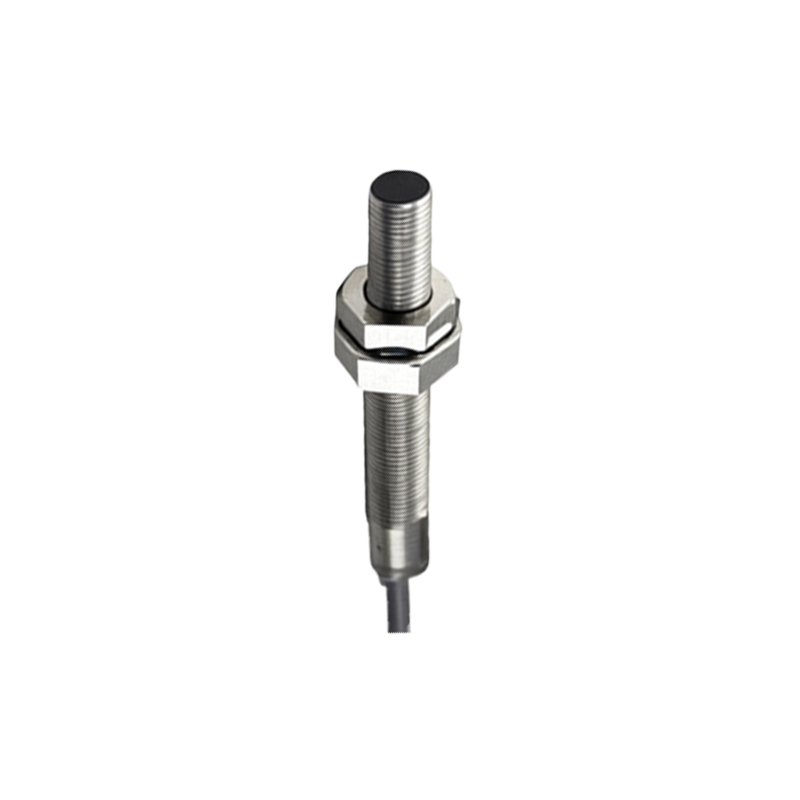
The sensing technology is the primary determinant of measurement distance. Inductive proximity sensors, which generate an electromagnetic field, are used exclusively for detecting metallic objects. Their typical sensing ranges are relatively short, from 1-2 mm for small sensors up to about 60 mm for larger, specialized models. Capacitive sensors can detect both metallic and non-metallic materials by sensing changes in capacitance. Their ranges are similar to inductive types, generally from a few millimeters up to about 40 mm. Ultrasonic sensors operate by emitting sound waves and measuring the time-of-flight of the echo. They offer significantly longer ranges, commonly from 20-30 mm up to several meters, with some industrial models reaching 8 meters or more. Photoelectric sensors, using light beams, provide the most versatile and often longest ranges. Diffuse-reflective types can sense up to 2-3 meters, while through-beam and retro-reflective models can easily achieve ranges of 10, 20, or even over 100 meters in clear conditions.
The Critical Role of Target Material and Size
The sensor's rated nominal range is always defined for a specific standard target. For inductive sensors, the standard target is typically a square of mild steel (Fe360) with a thickness of 1 mm and a side length equal to the sensor's diameter or three times the nominal range. If the target is made of a different metal, such as aluminum or copper, the effective sensing distance reduces significantly—sometimes to only 40-50% of the nominal range. For capacitive sensors, the dielectric constant of the target material is key; water-based materials are detected at greater distances than plastics. In photoelectric sensing, the target's color, reflectivity, and surface finish are paramount. A matte white surface reflects much more light than a glossy black one, drastically affecting the reliable sensing distance. A target smaller than the sensor's beam or the recommended minimum size will also reduce the effective range.
Environmental Factors That Limit Range
Real-world environments introduce variables that can shorten a sensor's effective range. For ultrasonic sensors, temperature gradients, high humidity, and wind can affect sound wave propagation, while dust or acoustic noise can cause interference. Photoelectric sensors are highly susceptible to ambient light interference (e.g., sunlight, welding arcs), airborne contaminants like dust or fog that scatter the light beam, and buildup of dirt on the lens. Inductive and capacitive sensors can be affected by the presence of other metals or materials in the sensing field. Electromagnetic interference (EMI) from motors or drives can also impact the performance and stability of the sensing electronics, potentially causing false triggers or reduced sensitivity, which effectively diminishes the reliable operating distance.
Installation and Alignment Considerations
Proper mechanical installation is non-negotiable for achieving the published sensing range. Sensors must be mounted securely to prevent vibration-induced errors. For photoelectric and ultrasonic sensors, precise alignment is crucial, especially for through-beam and retro-reflective modes. Even a slight misalignment can cause the receiver to miss the signal, rendering the sensor ineffective at its maximum range. Adequate clearance around the sensor head, as specified in the datasheet, is required to prevent side-effects from adjacent metal or other objects, which is particularly important for inductive and capacitive types. Ensuring a stable power supply with proper filtering is also essential, as voltage fluctuations can affect the sensor's output stability and sensing characteristics.
Selecting the Right Sensor for Your Distance Requirement
Choosing the correct sensor begins with a clear definition of the application requirements: the minimum and maximum distance to the target, the target material, the required switching frequency, and the environmental conditions. A good rule of thumb is to select a sensor with a nominal range that is 20-30% greater than your maximum required sensing distance. This derating provides a safety margin to account for target variations, environmental factors, and sensor aging. For very long-range detection