Laser sensors have revolutionized distance measurement across numerous industries by providing high precision, non-contact solutions. These devices operate on the principle of emitting a laser beam towards a target and analyzing the reflected light to calculate distance. The most common methods include time-of-flight (ToF), triangulation, and phase-shift measurement, each suited for specific applications based on required range, accuracy, and environmental conditions.
Time-of-flight laser sensors measure the time taken for a laser pulse to travel to the target and back. Given the constant speed of light, distance is calculated precisely. This method is ideal for long-range measurements, often exceeding 100 meters, used in surveying, forestry, and autonomous vehicle navigation. Modern ToF sensors can achieve millimeter-level accuracy even at substantial distances, thanks to advancements in high-speed electronic timing circuits.
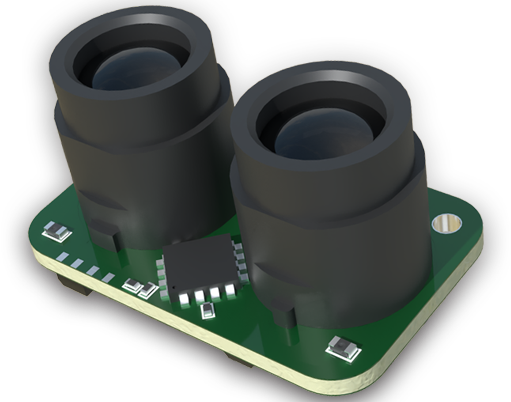
Triangulation-based laser sensors, on the other hand, are preferred for short to medium-range applications demanding micron-level resolution. A laser diode projects a spot onto the target, and a position-sensitive detector (PSD) or CMOS camera captures the reflected light at an angle. The displacement of the spot on the detector correlates directly to the target's distance. This technique is prevalent in industrial automation for part inspection, robotic guidance, and thickness gauging, where high speed and exceptional accuracy are paramount.
Phase-shift measurement sensors emit amplitude-modulated continuous-wave laser light. The distance is derived from the phase difference between the emitted and reflected waves. This approach offers a balance of good accuracy and moderate range, commonly applied in construction layout, archaeology, and facility management.
Key advantages of laser distance sensors include their non-contact nature, which prevents damage to both the sensor and measured object, and their ability to function on various surfaces, including reflective, dark, or transparent materials, though surface properties can influence performance. They also provide fast response times, enabling real-time monitoring in dynamic processes. However, challenges such as ambient light interference, especially from strong sunlight, and performance degradation with highly absorptive or specular surfaces must be managed through proper sensor selection and environmental controls.
In industrial settings, laser sensors are integral to quality control, ensuring dimensional accuracy in manufacturing lines. In robotics, they enable precise object detection and spatial mapping. The consumer electronics sector utilizes miniaturized laser sensors for autofocus in smartphone cameras and gesture recognition. Furthermore, emerging fields like augmented reality and smart infrastructure rely on laser sensing for spatial awareness and 3D modeling.
Selecting the appropriate laser sensor involves evaluating parameters like measurement range, resolution, sampling rate, beam spot size, and environmental ratings (e.g., IP protection class). As technology progresses, trends point toward miniaturization, reduced power consumption, enhanced robustness in harsh conditions, and integration with IoT platforms for smart data analytics. Laser distance measurement continues to be a cornerstone of precision metrology, driving innovation and efficiency across global industries.