Introduction to Three-Wire Proximity Sensors
Three-wire proximity sensors are fundamental components in modern industrial automation, widely recognized for their reliability and versatility. These non-contact sensing devices detect the presence or absence of metallic objects without physical contact, making them ideal for harsh environments where mechanical wear and contamination are concerns. Unlike two-wire sensors that simplify wiring but may have limitations in load compatibility and voltage drop, three-wire sensors provide a more robust solution with separate power, ground, and signal wires. This configuration allows for precise switching, better load handling, and compatibility with a wide range of programmable logic controllers (PLCs) and control systems. Their design typically includes a sensing face, an oscillator circuit that generates an electromagnetic field, and a solid-state output that switches when a target enters the detection zone.
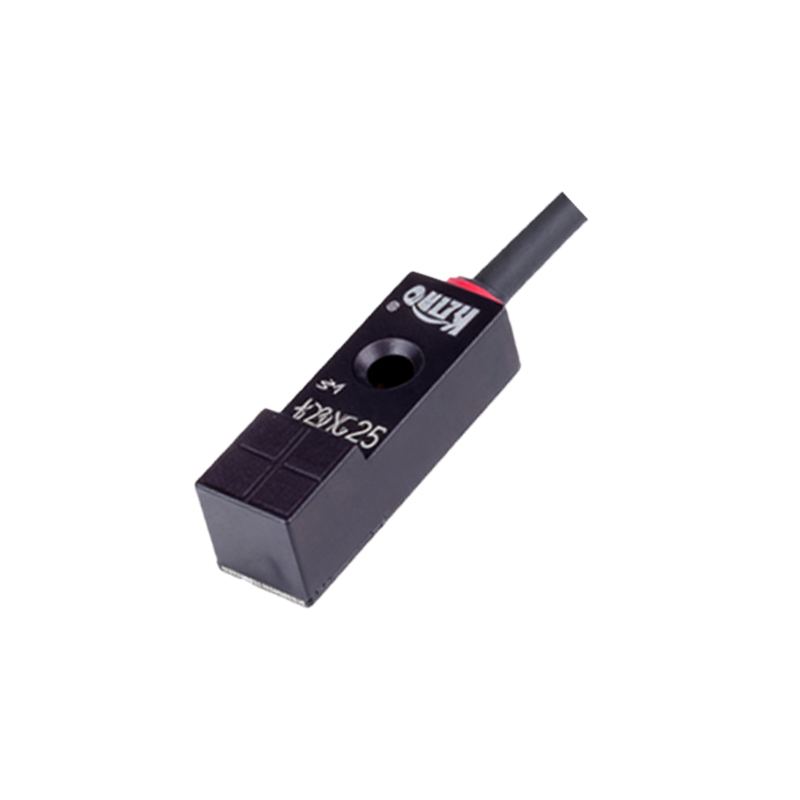
Working Principle and Internal Circuitry
The core operation of a three-wire inductive proximity sensor relies on electromagnetic induction. Inside the sensor housing, an oscillator generates a high-frequency alternating magnetic field at the sensing face. When a ferrous or non-ferrous metal target enters this field, eddy currents are induced on the target's surface. This causes a change in the oscillation amplitude or frequency within the sensor's coil. A trigger circuit monitors this change and activates a solid-state switch—typically a transistor (PNP or NPN type)—which changes the state of the output signal wire. The three wires are distinctly color-coded or labeled: brown for positive DC supply voltage (e.g., +10 to 30 VDC), blue for the common ground or negative supply, and black for the switched output signal. This clear separation ensures stable power delivery and a clean, isolated signal path, minimizing electrical noise interference common in industrial settings.
Key Advantages in Industrial Settings
The adoption of three-wire proximity switches offers several operational benefits. First, they provide superior electrical performance with low leakage current, ensuring minimal power waste and heat generation. The dedicated output wire allows for direct interfacing with PLC digital input modules, relays, or indicators without requiring additional interfacing modules. Their fast response time, often in the microsecond range, supports high-speed counting, positioning, and sequencing applications on production lines. Furthermore, they exhibit excellent repeat accuracy and are largely unaffected by environmental factors like dust, oil, or moisture when properly housed (e.g., IP67 rated enclosures). The availability of both normally open (NO) and normally closed (NC) output configurations, along with PNP (sourcing) and NPN (sinking) transistor types, provides flexibility to match specific circuit requirements globally.
Wiring Configurations: PNP vs. NPN Outputs
A critical aspect of three-wire sensor implementation is selecting the correct output type, which is determined by the transistor technology used. PNP (positive-negative-positive) sensors, common in Europe and many regions, switch the positive voltage to the load. In a typical PNP wiring scheme, the brown wire connects to DC+, blue to DC-, and the black output wire connects to the load, which is then connected to DC-. Conversely, NPN (negative-positive-negative) sensors, often used in North America and Asia, switch the negative or ground side. Here, the black output wire connects to the load, which is then connected to DC+. Miswiring or mixing PNP and NPN sensors in a system can lead to malfunction or damage. Understanding the control system's input card specification (sinking or sourcing) is essential for correct sensor selection and trouble-free integration.
Application Examples Across Industries
Three-wire proximity sensors find extensive use across diverse sectors. In automotive manufacturing, they detect piston position in cylinders, control robotic arm endpoints, and verify part presence in assembly jigs. Packaging machinery utilizes them for label detection, fill level control, and conveyor belt object counting. In metalworking, they serve as limit switches for CNC machine tools, monitor tool wear, and detect metal sheets in stamping presses. Additional applications include detecting valve positions in process control, ensuring safety door closures, and enabling precise positioning in material handling systems. Their non-contact nature eliminates mechanical failure points, significantly reducing maintenance downtime and increasing overall equipment effectiveness (OEE).
Installation Considerations and Best Practices
Proper installation is paramount for optimal sensor performance and longevity. Mounting should ensure the correct sensing distance and account for the sensor's stated operating point and hysteresis. Factors like target material, size, and approach direction (axial or lateral) affect the effective sensing range. For instance, steel targets are detected at the nominal range, while stainless steel or aluminum may reduce it. Adequate clearance must be maintained between adjacent sensors to