Introduction to Photoelectric Sensing Technology
Photoelectric sensors are a cornerstone of modern industrial automation, providing non-contact detection of objects based on the modulation of light. An NM photoelectric sensor, often referring to a specific model series or a type utilizing Near-infrared to Mid-range wavelengths, operates on this fundamental principle. These devices typically consist of an emitter, which projects a light beam (often infrared, red, or laser light), and a receiver that detects the presence or absence of this beam. The "NM" designation can sometimes indicate a focus on specific performance characteristics like noise immunity or miniature size, depending on the manufacturer's nomenclature. Their ability to detect objects from a distance, without physical contact, makes them invaluable in environments where reliability, speed, and cleanliness are paramount.
Core Operating Principles
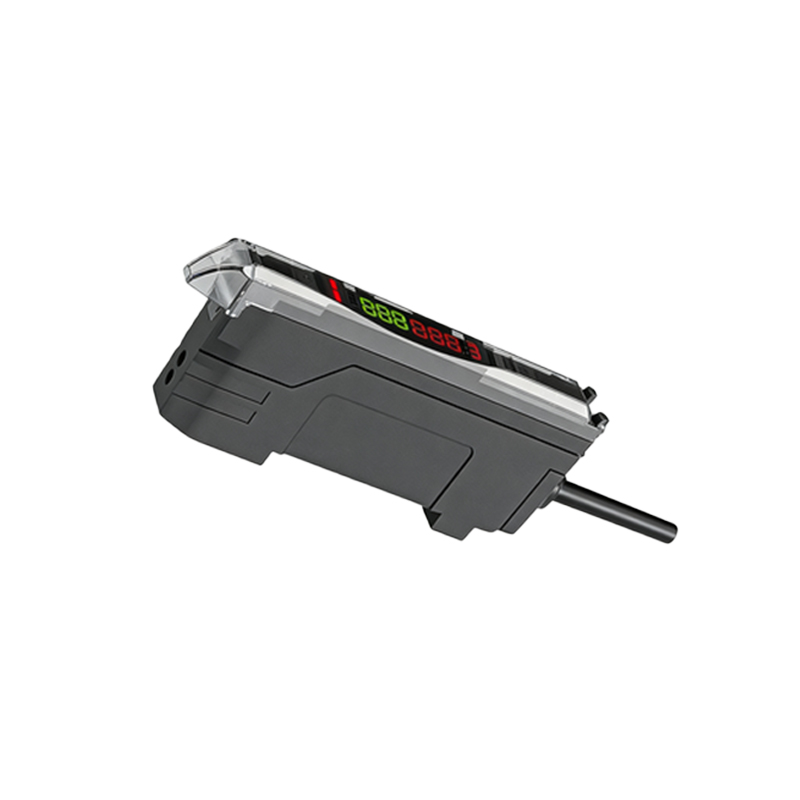
The operation hinges on the interaction between the emitted light and the target object. There are three primary sensing modes: through-beam, retro-reflective, and diffuse-reflective. In through-beam mode, the emitter and receiver are separate units. An object is detected when it interrupts the light beam traveling from the emitter to the receiver. This mode offers the longest sensing distances and highest reliability. Retro-reflective mode uses a single housing containing both emitter and receiver, along with a separate reflector. The light beam is projected to the reflector and bounced back to the receiver. Detection occurs when an object blocks this reflected beam. Diffuse-reflective mode, also with a combined emitter/receiver, detects light reflected directly off the target object itself. NM sensors are engineered to optimize these principles with stable light sources and sensitive receivers, often incorporating advanced circuitry to filter ambient light and electrical noise.
Key Types and Specifications
NM photoelectric sensors come in various forms tailored to diverse applications. Key types include standard diffuse, background suppression, and convergent beam sensors. Background suppression sensors can precisely detect an object within a set range, ignoring surfaces beyond that point. Convergent beam models focus light at a specific point for highly precise detection of small objects. Critical specifications to consider are sensing distance, light source type (e.g., red LED, infrared LED, laser), response time, output configuration (PNP/NPN, analog, IO-Link), and housing material. Environmental ratings, such as IP67 or IP69K for dust and water resistance, are crucial for harsh industrial settings. The design of NM series often emphasizes compact size, easy installation, and robust performance under challenging conditions like vibration or temperature fluctuations.
Advantages Over Other Sensor Technologies
Compared to proximity sensors (inductive or capacitive), NM photoelectric sensors offer distinct benefits. They can detect a much wider variety of materials, including glass, plastic, wood, and liquids, regardless of color or conductivity, as long as they affect the light beam. Their sensing range is significantly longer, from a few centimeters up to several meters. They provide faster response times, suitable for high-speed production lines. Furthermore, they allow for precise positioning and can detect transparent or translucent objects with the right model. This versatility makes them a preferred choice for complex detection tasks where other sensors fall short.
Typical Industrial Applications
The applications for NM photoelectric sensors are vast across manufacturing and logistics. In packaging machinery, they count bottles, detect labels, and verify cap presence. On assembly lines, they confirm part placement, check for object height, and control robotic pick-and-place operations. In material handling, they are used for edge guiding on web processes, palletizing, and warehouse automation for parcel dimensioning and sorting. They also play vital roles in security systems for intrusion detection and in the automotive industry for precise component verification. Their reliability ensures smooth operation, reduces downtime, and enhances overall system safety and efficiency.
Installation and Alignment Best Practices
Proper installation is critical for optimal performance. The sensor must be securely mounted to minimize vibration effects. For through-beam and retro-reflective types, precise alignment between emitter, receiver, and reflector is essential; many models feature visual or audible alignment aids. The sensing beam should be perpendicular to the target surface for consistent results. Environmental factors must be considered: keeping lenses clean from dust, oil, or debris, and avoiding locations with strong ambient light that could interfere with the sensor's receiver. Utilizing mounting brackets and protective guards can extend the sensor's operational life in demanding environments.
Troubleshooting Common Issues
Common issues include false triggering, failure to detect, or unstable operation. False triggers are often caused by reflective backgrounds, ambient light interference, or electrical noise. Solutions involve using a sensor with background suppression, installing light shields, or ensuring proper electrical grounding. Failure to detect may result from misalignment, dirty lenses, an object outside the sensing range, or a faulty power supply. A systematic approach—checking alignment, cleaning optics, verifying target properties, and testing with a known good object—is recommended. Consulting the sensor's manual for status indicator meanings is always a valuable first step.
Future Trends and Innovations
The future of NM photoelectric sensors is driven by Industry 4.0 and smart factory concepts. Integration of IO-Link communication is becoming standard, allowing for parameter setting, remote monitoring, and predictive maintenance data exchange directly with PLCs. Miniaturization continues, enabling installation in tighter spaces. Enhanced intelligence, such as sensors with built-in logic functions for simple decision-making, is on the rise. Furthermore, developments in light source technology, like more powerful and stable lasers, will push the boundaries of sensing distance, precision, and ability to handle difficult-to-detect materials, ensuring their continued indispensability in automation.