Introduction to Hall Effect Sensing Evolution
The landscape of industrial automation and position sensing is undergoing a profound transformation, driven by the advent of next-generation Hall Effect proximity sensors. These advanced devices, building upon the foundational principle of the Hall Effect discovered in 1879, now integrate cutting-edge semiconductor technology, sophisticated signal processing, and robust packaging to deliver unprecedented levels of performance, reliability, and intelligence. Unlike their predecessors, modern Hall sensors are not merely magnetic field detectors; they are smart, integrated systems capable of operating in the harshest industrial environments while providing precise, contactless detection of ferrous and non-ferrous objects. This evolution marks a significant leap from basic switching functions to complex, programmable sensing solutions that form the backbone of Industry 4.0 and smart factory initiatives.
Core Technological Advancements
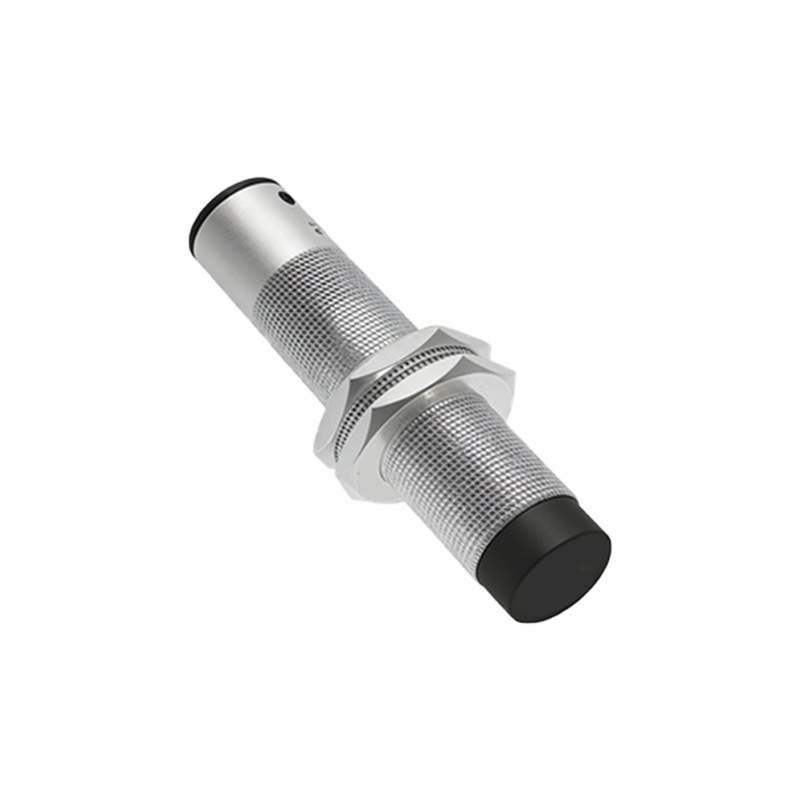
At the heart of the new generation lies a suite of technological breakthroughs. Monolithic integration has been a game-changer, with sensor elements, signal amplifiers, voltage regulators, and communication interfaces now fabricated on a single silicon chip. This integration drastically reduces component count, enhances reliability, and minimizes the sensor's footprint. Furthermore, advancements in materials science have led to the development of highly sensitive Hall plates using compound semiconductors, which offer superior temperature stability and reduced noise. Digital output capabilities, including IO-Link and I2C interfaces, are now standard, enabling bidirectional communication for parameter configuration, real-time diagnostics, and process data reporting. These sensors also feature enhanced magnetic field focusing techniques and shielding, allowing for precise sensing distances and exceptional immunity to external magnetic interference.
Enhanced Performance and Precision
The performance metrics of contemporary Hall proximity sensors set new industry benchmarks. Switching frequencies now exceed 10 kHz, enabling high-speed detection in applications like rotary encoder systems and fast-moving production lines. Repeat accuracy has improved to micrometer levels, critical for precision assembly and robotic guidance. Operating temperature ranges have been vastly extended, with many models reliably functioning from -40°C to 125°C or beyond, suiting them for automotive, aerospace, and outdoor applications. Power consumption has seen a dramatic reduction, often operating in the microwatt range during idle states, which is essential for battery-powered and energy-efficient systems. Additionally, programmable switching hysteresis and teach-in functions allow for easy adaptation to specific application needs directly on the factory floor.
Robustness and Environmental Durability
Designed for the real world, next-generation Hall sensors exhibit exceptional ruggedness. Housings are typically constructed from stainless steel (e.g., V4A/AISI 316L) or high-performance polymers like PPSU, providing superior resistance to chemicals, oils, and mechanical stress. They achieve ingress protection ratings of IP67, IP68, and IP69K, ensuring reliable operation despite exposure to high-pressure washdowns, dust, and temporary immersion. Advanced internal potting compounds protect the electronics from shock, vibration, and thermal cycling. This durability ensures a long service life with minimal maintenance, reducing total cost of ownership and preventing unplanned downtime in critical processes.
Smart Features and Industry 4.0 Integration
Intelligence is the defining characteristic of the new sensor generation. Integrated microcontrollers enable advanced functionalities such as condition monitoring, predictive maintenance alerts, and compensation for temperature drift or mechanical misalignment. Through IO-Link communication, sensors become transparent nodes in the Industrial Internet of Things (IIoT), streaming valuable data on operational status, cycle counts, and internal temperature to higher-level control systems like PLCs and SCADA. This data facilitates process optimization, quality control, and digital twin applications. Furthermore, these sensors support tool-less configuration and daisy-chaining, simplifying installation and network expansion in complex machinery.
Diverse Application Horizons
The application spectrum for these advanced sensors is vast and growing. In automotive manufacturing, they ensure precise detection of piston position, gear tooth counting, and seat belt buckle engagement. In robotics, they provide accurate end-effector positioning and collision detection. The food and beverage industry leverages their washdown capability for bottle cap detection and fill level control. Renewable energy systems, such as wind turbines, use them for pitch control and speed monitoring. Even in consumer electronics, they enable features like laptop lid closure detection. Their versatility and reliability make them indispensable across sectors demanding high precision and robustness.
Future Trends and Outlook
The trajectory for Hall Effect proximity sensors points toward even greater integration and intelligence. Future developments will likely focus on embedding AI chips for edge computing, allowing sensors to make localized decisions based on learned patterns. Energy harvesting capabilities may eliminate the need for wired power in some applications. Furthermore, the convergence with other sensing modalities, such as integrating Hall elements with pressure or temperature sensors on a