Introduction to Photoelectric Sensing Technology
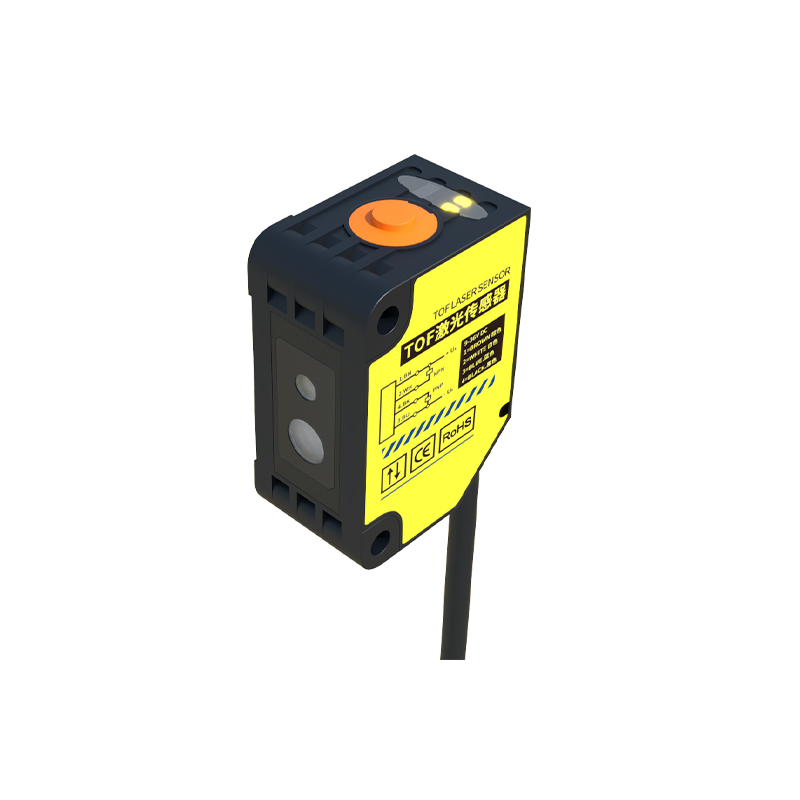
At the core of autonomous line-following vehicles lies a suite of sophisticated sensors, with photoelectric sensors playing a pivotal role. These devices operate on the fundamental principle of detecting variations in light intensity. Typically, an infrared (IR) light-emitting diode (LED) projects a beam of light onto the surface below the vehicle. A photodetector, such as a phototransistor or photodiode, then measures the intensity of the reflected light. The key to line-following is the contrast between the line, often black, and the background surface, usually white. A dark line absorbs most of the IR light, resulting in low reflection, while a light background reflects a significant portion, producing a high-intensity signal. This differential signal is the primary input for the vehicle's control system, enabling it to discern its position relative to the path.
Core Components and System Architecture
A standard line-follower sensor array comprises multiple sensor pairs arranged in a linear or curved configuration across the front of the vehicle. Each pair consists of an IR LED and a corresponding photodetector. The analog voltage output from each detector is fed into a comparator circuit or directly into a microcontroller's analog-to-digital converter (ADC). The microcontroller, often an Arduino, Raspberry Pi, or dedicated embedded processor, continuously polls these inputs. By analyzing the pattern of high and low signals across the array, the control algorithm can determine not only if the vehicle is centered but also the angle of deviation. This real-time positional data is processed to generate corrective commands for the motor drivers, adjusting the speed of the left and right wheels to steer the vehicle back onto the track.
Sensor Types and Signal Processing
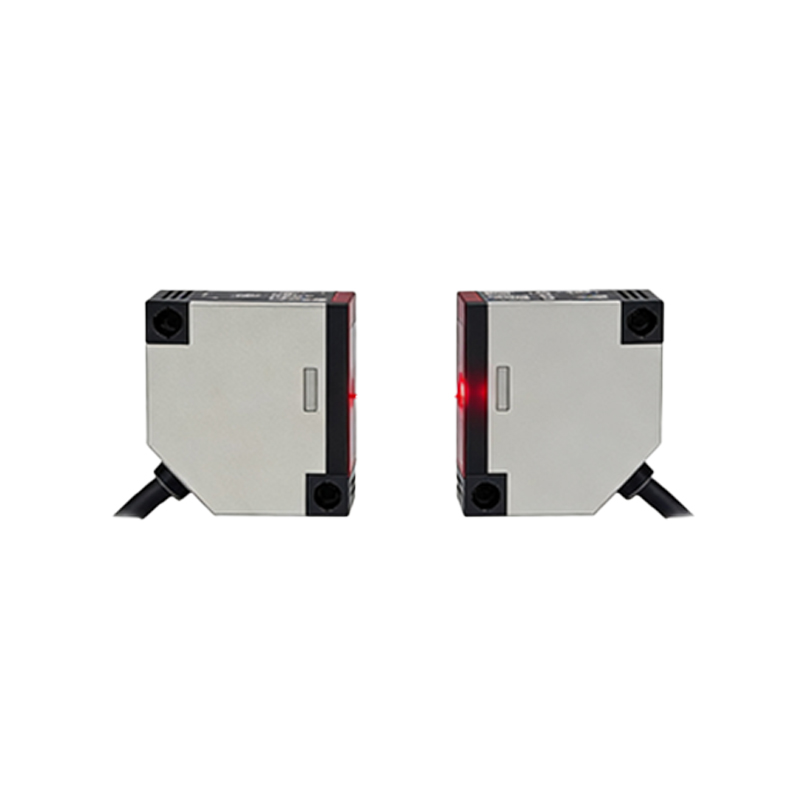
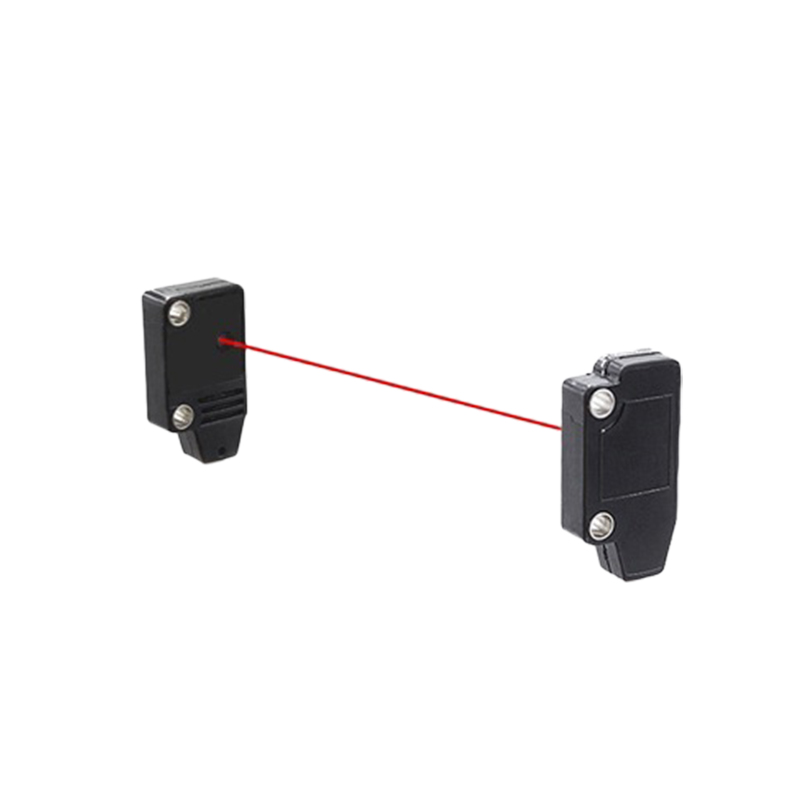
Two primary types of photoelectric sensors are prevalent: reflective and transmissive. Reflective sensors, as described, are most common for surface-based lines. Transmissive sensors, where the emitter and detector are opposite each other with the track in between, are used for specialized applications like detecting slots or holes. The raw signal from photodetectors is often noisy, susceptible to ambient light interference and surface inconsistencies. Therefore, signal conditioning is critical. Techniques include using modulated IR light with corresponding demodulating detectors to filter out constant ambient light, implementing Schmitt triggers for clean digital switching, and applying software-based filtering algorithms like moving averages or median filters within the microcontroller to smooth the data before decision-making.
Control Algorithms and Navigation Logic
The intelligence of an autonomous line-following vehicle is embedded in its control algorithm. The simplest method is a proportional (P) control, where the steering correction is directly proportional to the error (deviation from center). More advanced systems employ Proportional-Integral-Derivative (PID) control. The proportional term handles the immediate error, the integral term corrects for accumulated past error (preventing steady-state offset), and the derivative term anticipates future error based on its rate of change, enhancing stability, especially on curves. The algorithm translates the processed sensor data into a differential drive signal, meticulously balancing wheel speeds to execute smooth turns, sharp corners, and even handle intersections with complex path decision logic.
Industrial and Educational Applications
Beyond academic robotics competitions, the principles demonstrated by these vehicles have direct industrial parallels. Automated Guided Vehicles (AGVs) in warehouses and factories often use similar, albeit more robust, vision or tape-following systems for material transport. In automotive engineering, lane-keeping assistance systems in modern cars utilize advanced camera-based photoelectric sensing to monitor road markings. For education, building a line-following robot is a foundational project in mechatronics and embedded systems engineering, teaching students sensor integration, real-time feedback control, and system troubleshooting—skills directly transferable to larger-scale automation and robotics.
Challenges and Limitations
Despite their effectiveness, photoelectric sensor-based systems face inherent limitations. Their performance is highly dependent on environmental lighting conditions and track contrast. Strong ambient IR light (e.g., sunlight) can saturate sensors, while low-contrast or colored lines on similar backgrounds can cause detection failures. The sensors have a limited sensing range and field of view, making them unsuitable for detecting paths beyond a few centimeters. Furthermore, they can only follow pre-defined, physically marked paths and lack the ability to dynamically map or navigate unstructured environments, a significant constraint for broader autonomous navigation.
Future Trends and Advanced Integration
The future of autonomous guidance lies in sensor fusion. While photoelectric sensors provide excellent, low-cost data for defined paths, they are increasingly being integrated with other sensing modalities. Machine vision cameras offer richer environmental data, allowing for color recognition, shape detection, and path planning beyond simple lines. LiDAR (Light Detection and Ranging) and ultrasonic sensors add depth perception and obstacle avoidance capabilities. The convergence of these technologies, processed by powerful on-board computers using machine learning algorithms, is paving the way for truly adaptive autonomous vehicles that can learn routes, interpret complex signage, and navigate dynamic, real-world environments far beyond the constraints of a simple black line on a white background.