Introduction to Proximity Sensors
Proximity sensors are widely used in industrial automation and control systems to detect the presence or absence of objects without physical contact. These sensors operate based on various principles, such as inductive, capacitive, ultrasonic, and optical technologies. They are known for their reliability, durability, and ability to function in harsh environments. Common applications include object detection, counting, and safety interlocks. However, when it comes to positioning, the capabilities of proximity sensors are often questioned. This article explores whether proximity sensors can effectively serve as positioning tools in modern engineering contexts.
How Proximity Sensors Work
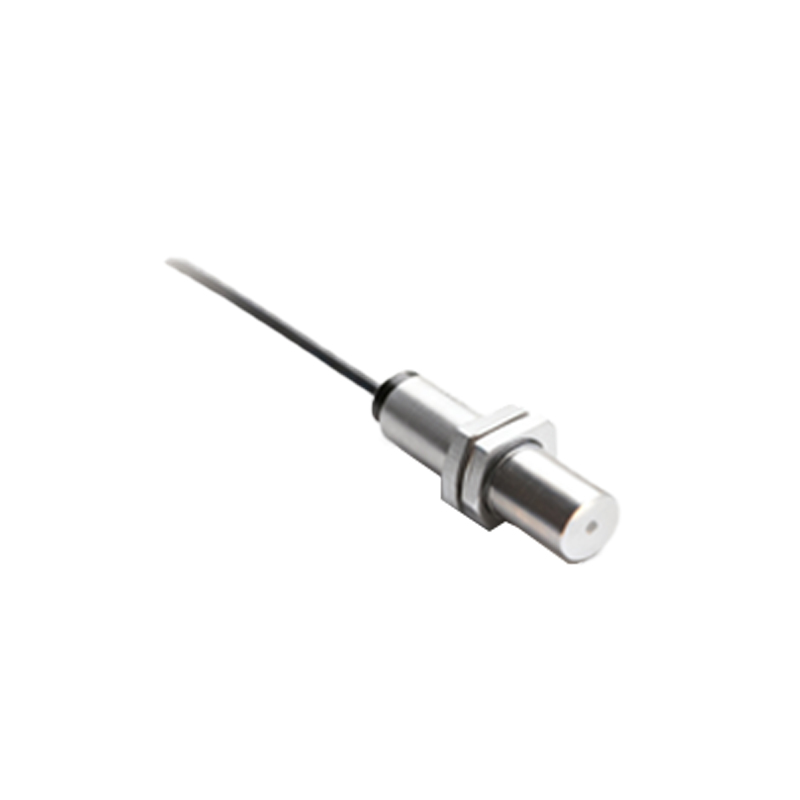
Proximity sensors function by emitting a field or signal and detecting changes caused by nearby objects. Inductive sensors, for example, generate an electromagnetic field to detect metallic objects, while capacitive sensors respond to changes in capacitance from non-metallic materials. Ultrasonic sensors use sound waves to measure distance, and optical sensors rely on light beams. Each type has specific ranges and sensitivities, typically from a few millimeters to several meters. The detection is binary in nature—indicating whether an object is within a predefined range—but some advanced models can provide analog output or distance measurements, which opens up possibilities for positioning applications.
Positioning Capabilities of Proximity Sensors
Proximity sensors can be used for basic positioning tasks, but their effectiveness depends on the application requirements. For simple positioning, such as determining if an object has reached a specific point on a conveyor belt, a single proximity sensor suffices. In more complex scenarios, multiple sensors arranged in arrays or patterns can triangulate an object's position. For instance, in automated guided vehicles (AGVs), inductive or ultrasonic sensors help in aligning or navigating along predefined paths. However, proximity sensors generally offer lower precision compared to dedicated positioning systems like encoders or laser trackers, with accuracy often limited to the sensor's detection range and resolution.
Limitations in Precision Positioning
While proximity sensors are versatile, they face challenges in high-precision positioning. Factors such as environmental interference, material variations, and sensor drift can affect accuracy. For example, inductive sensors may struggle with non-uniform metals, and capacitive sensors can be influenced by humidity or temperature changes. Additionally, most proximity sensors provide discrete outputs rather than continuous position data, making them unsuitable for applications requiring real-time, micron-level tracking. In industries like semiconductor manufacturing or robotics, where exact positioning is critical, supplementary systems like vision sensors or linear encoders are often preferred.
Applications in Industrial Positioning
Despite limitations, proximity sensors find practical use in various positioning applications. In assembly lines, they ensure components are correctly placed before welding or fastening. In packaging machinery, sensors help align labels or products. For safety, they position guards or doors to prevent accidents. In automotive manufacturing, inductive sensors assist in locating parts during robotic handling. These applications typically involve coarse positioning where exact coordinates are less important than presence detection. By integrating proximity sensors with controllers and software, engineers can enhance positioning reliability without significant cost increases.
Enhancing Positioning with Sensor Fusion
To overcome precision constraints, proximity sensors can be combined with other technologies in sensor fusion setups. For example, pairing an ultrasonic proximity sensor with an inertial measurement unit (IMU) improves position tracking in mobile robots. In smart factories, data from multiple sensor types—such as proximity, vision, and encoders—are processed through algorithms to achieve more accurate positioning. This approach leverages the strengths of each sensor, with proximity sensors providing robust presence detection and others adding fine-grained location details. Such systems are becoming more common in Industry 4.0 environments for adaptive automation.
Future Trends and Innovations
Advancements in sensor technology are expanding the positioning capabilities of proximity sensors. New models with higher resolution, faster response times, and digital communication protocols (e.g., IO-Link) enable better integration into positioning systems. Research into miniaturized and smart sensors allows for more precise detection in confined spaces. Additionally, the rise of the Internet of Things (IoT) facilitates real-time data analysis from sensor networks, improving positioning accuracy through predictive algorithms. As industries demand more flexible automation, proximity sensors may evolve to play a larger role in cost-effective positioning solutions.
Conclusion
In summary, proximity sensors can be used for positioning in specific contexts, particularly where coarse or binary positioning is acceptable. They offer advantages like durability, non-contact operation, and ease of installation. However, for high-precision tasks, their limitations necessitate complementary technologies or sensor fusion. Engineers should evaluate factors such as required accuracy, environmental conditions, and budget when considering proximity sensors for positioning. With ongoing innovations