Introduction to Two-Wire Proximity Sensors
In the realm of industrial automation and control systems, proximity sensors are indispensable components for non-contact object detection. Among the various configurations, the two-wire proximity sensor stands out for its simplicity and widespread use. Unlike their three-wire or four-wire counterparts, these sensors integrate the switching element directly into the power supply loop. This design eliminates the need for a separate control wire, making them a cost-effective and straightforward solution for many applications. The fundamental principle involves the sensor drawing a small leakage current when in the "off" state and a larger load current when activated, with the connected load (like a PLC input or relay) completing the circuit. This elegant simplicity, however, comes with specific considerations for proper operation and integration.
Decoding the Two Wires: Power and Signal Combined
The core question—what do the two wires represent—has a deceptively simple answer: both power and signal. In a standard DC two-wire sensor, one wire is typically connected to the positive voltage supply (e.g., +24VDC), and the other wire is connected to the load, which then returns to the negative supply (0V or ground). There is no dedicated signal output wire. The sensor itself acts as a variable resistance or a current-sinking device. When no target is present, the sensor maintains a high impedance, allowing only a small residual or leakage current (usually a few milliamps) to flow—this represents the "off" state. When a target enters its sensing range, the sensor switches to a low impedance state, allowing the full load current to pass through the circuit, which is interpreted as the "on" signal by the connected controller.
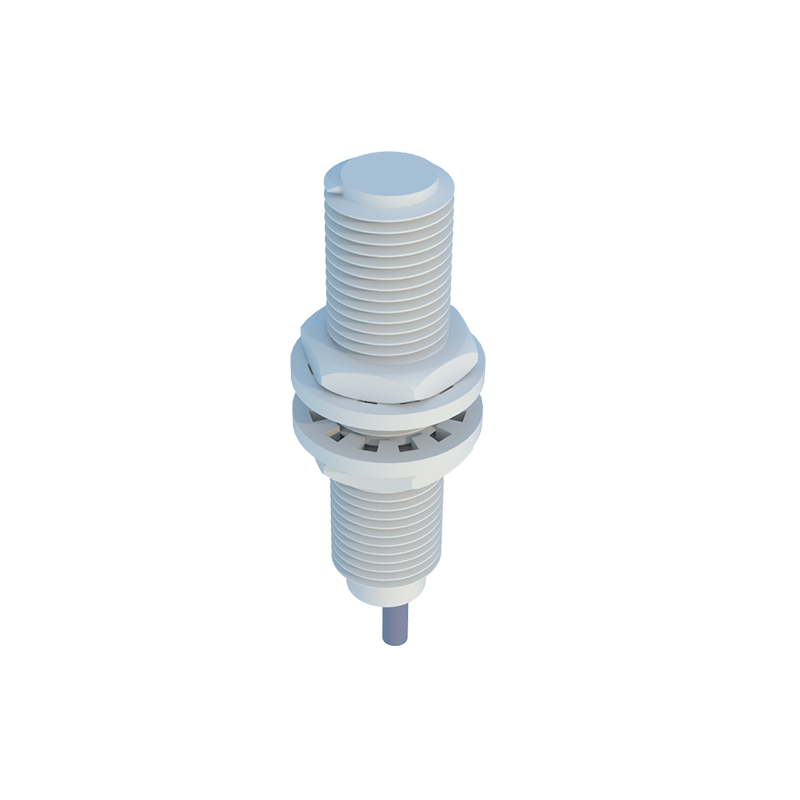
Key Electrical Characteristics and Wiring Considerations
Successful implementation of a two-wire sensor requires careful attention to its electrical parameters. The most critical specifications are the residual current (Ir) and the voltage drop (Ud). The residual current is the small current that flows even when the sensor is off. The connected load must be sensitive enough to reliably detect the "on" state current but not be inadvertently triggered by this residual "off" state current. Conversely, the voltage drop is the potential difference across the sensor when it is conducting. This voltage is lost to the load, meaning the load receives the supply voltage minus Ud. Engineers must ensure the remaining voltage is sufficient for the load (e.g., a PLC digital input) to recognize a logic "high" signal. Proper wiring is also essential to avoid issues; for instance, ensuring correct polarity for DC sensors and verifying that the load current stays within the sensor's maximum switching capacity.
Advantages of the Two-Wire Design
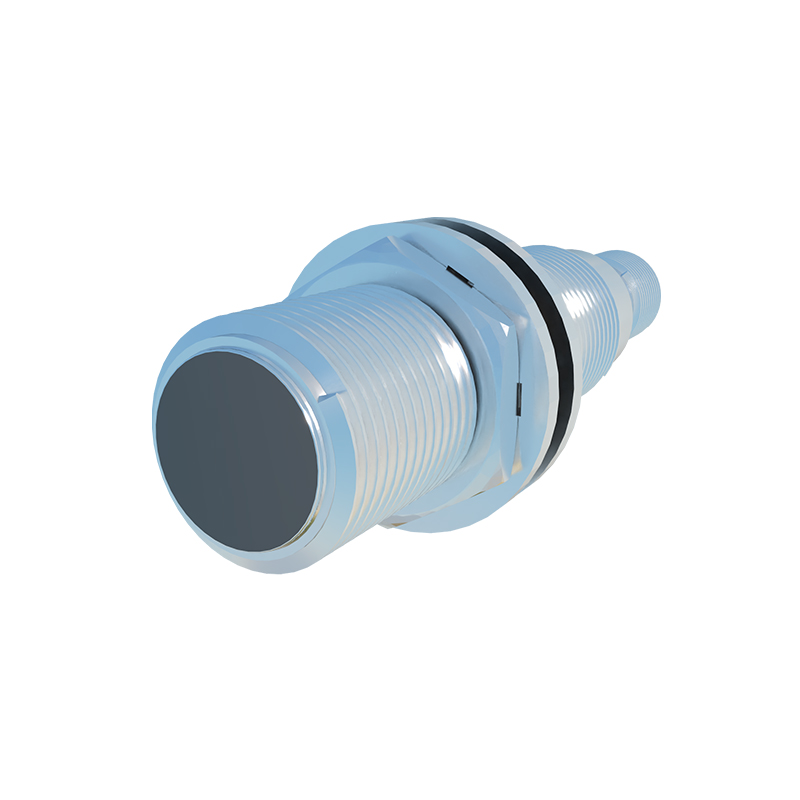
The popularity of two-wire proximity sensors stems from several distinct advantages. Their primary benefit is simplified installation and reduced wiring costs. With only two wires to connect, installation time is minimized, and the need for complex cable harnesses is reduced. This also leads to lower material costs for wires and connectors. Furthermore, the design is inherently robust with fewer connection points, potentially increasing system reliability. They are often easier to replace in the field without extensive re-wiring. For many standard applications involving programmable logic controller (PLC) inputs or relay coils, the two-wire sensor provides a perfectly adequate and economical detection solution.
Limitations and Application Constraints
Despite their advantages, two-wire sensors are not a universal solution. Their limitations must be understood to avoid application pitfalls. The inherent voltage drop can be problematic in systems with marginal supply voltages or when connecting multiple sensors in series. The residual current can cause "phantom" signals if connected to a highly sensitive load with a high input impedance. They generally have lower switching speeds compared to three-wire PNP or NPN sensors due to the internal switching dynamics. Additionally, they offer less flexibility; the load must be connected in series, and there is no option for a normally-open (NO) or normally-closed (NC) configuration without external relays. They are typically not suitable for directly driving high-current devices like solenoids.
Typical Industrial Applications
Two-wire proximity sensors find their niche in a vast array of industrial settings. They are commonly used for basic presence detection tasks: counting objects on a conveyor belt, detecting the position of a machine part (like a cylinder rod in end position), or confirming the closure of a safety gate. They are extensively interfaced with the digital inputs of PLCs, where the input module is designed to work with the sensor's current characteristics. Other applications include simple control circuits for lighting or fans, and integration into relay-based