Introduction to Proximity Sensor Functionality
In the realm of industrial automation and control systems, proximity sensors play a pivotal role in detecting the presence or absence of an object without physical contact. The fundamental operating principle involves generating an electromagnetic field or a beam of radiation. When a target object enters this field, it causes a change in the sensor's state. The transition to an "ON" state upon detecting an object is a critical, intentional design feature. This "ON" signal is not a random occurrence but a deliberate output with specific, programmed intent. It serves as a primary input for control logic, triggering a predefined sequence of actions within a machine or process line. Understanding the intent behind this "ON" signal is essential for designing, troubleshooting, and optimizing automated systems.
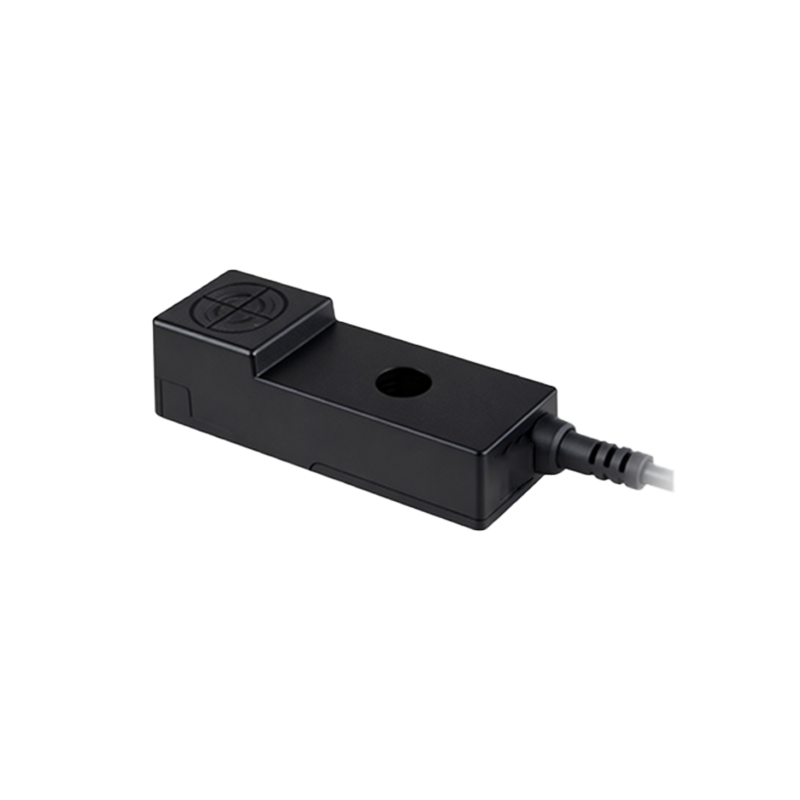
The Primary Intent: Signaling Presence and Initiating Action
The core intent of a sensor switching ON when an object is near is to provide a definitive, binary signal of detection. This high-level intent translates into several concrete operational purposes. Primarily, it acts as a confirmation signal. It tells the programmable logic controller (PLC) or other control unit: "An object is now within the specified detection range." This simple piece of information is the catalyst for complex automation. For instance, on a conveyor belt, a proximity sensor turning ON as a product passes can initiate counting, activate a robotic arm for picking, or trigger a sorting mechanism. The "ON" state is the digital equivalent of a physical switch being closed, completing a circuit that allows the next step in the process to proceed.
Enhancing Safety and Implementing Control Logic
A crucial intent behind the proximity ON function is to enhance operational safety and enable precise control logic. In safety applications, sensors are often used as part of interlock systems. For example, a sensor might be positioned to detect if a safety guard is properly closed. The sensor remaining ON (indicating the guard is closed) is a permissive condition that allows the machine to operate. If the guard opens, the sensor turns OFF, and the control system immediately halts the machine to prevent injury. Furthermore, the timing and duration of the ON signal are integral to control logic. A sensor that turns ON and OFF in a specific pattern can be used to monitor speed, detect jams, or verify the correct orientation of a part, making the intent not just about detection, but about qualifying the state of the process.
Enabling Precision in Positioning and Sequencing
Beyond simple detection, the intent of the ON signal is deeply tied to achieving precision. In positioning applications, such as on CNC machines or automated guided vehicles (AGVs), a series of proximity sensors provide ON/OFF feedback to determine the exact location of a tool or vehicle. The moment a sensor transitions to ON, it provides a precise reference point. This allows for highly accurate stopping, alignment, or measurement. In complex assembly sequences, the ON signal from one sensor often serves as a prerequisite for the next step. The control system waits for Sensor A to be ON before allowing Actuator B to move, ensuring a perfectly timed and error-free sequence of operations.
Facilitating Diagnostics and System Health Monitoring
The behavior of a proximity sensor going ON also carries diagnostic intent. In modern networked systems, the status of sensors is continuously monitored. A sensor that fails to turn ON when expected can indicate a problem such as a missing part, a misaligned object, a sensor failure, or a blockage. Conversely, a sensor that is permanently ON might suggest a stuck target, a short circuit, or sensor malfunction. By analyzing the intended versus actual ON/OFF states, maintenance personnel can quickly diagnose issues, reducing downtime. This predictive and diagnostic capability is a key intent in advanced IIoT (Industrial Internet of Things) implementations, where sensor data is used for overall equipment effectiveness (OEE) calculations.
Considerations for Different Sensor Technologies
The specific intent and characteristics of the ON state can vary slightly depending on the sensor technology. Inductive proximity sensors, designed for metals, generate an ON signal when a metallic object disrupts their oscillating electromagnetic field. Capacitive sensors can detect non-metallic materials and often have sensitivity adjustments to fine-tune the point at which they turn ON. Photoelectric sensors use a light beam, turning ON when the beam is broken (retro-reflective) or when sufficient light is reflected back (diffuse). Ultrasonic sensors measure distance, turning ON when an object is within a set threshold. Understanding the technological nuances is key to aligning the sensor's ON intent with the application's requirements, ensuring reliable and repeatable detection.
Conclusion: The ON Signal as a Fundamental Command
In summary, the intent of a proximity sensor