Introduction to the NBN40 Square Proximity Sensor
The NBN40 represents a robust and reliable solution in the realm of inductive proximity sensors. Characterized by its compact, square-shaped housing, this sensor is engineered for non-contact detection of metallic objects in demanding industrial environments. Its design prioritizes durability, precision, and ease of installation, making it a preferred choice for automation systems, material handling, and machine safety applications. The NBN40 typically operates on standard DC voltages and offers various output configurations, including NPN (sinking) and PNP (sourcing) transistor outputs, to seamlessly integrate with diverse control systems like PLCs and relays.
Key Technical Specifications and Operating Principles
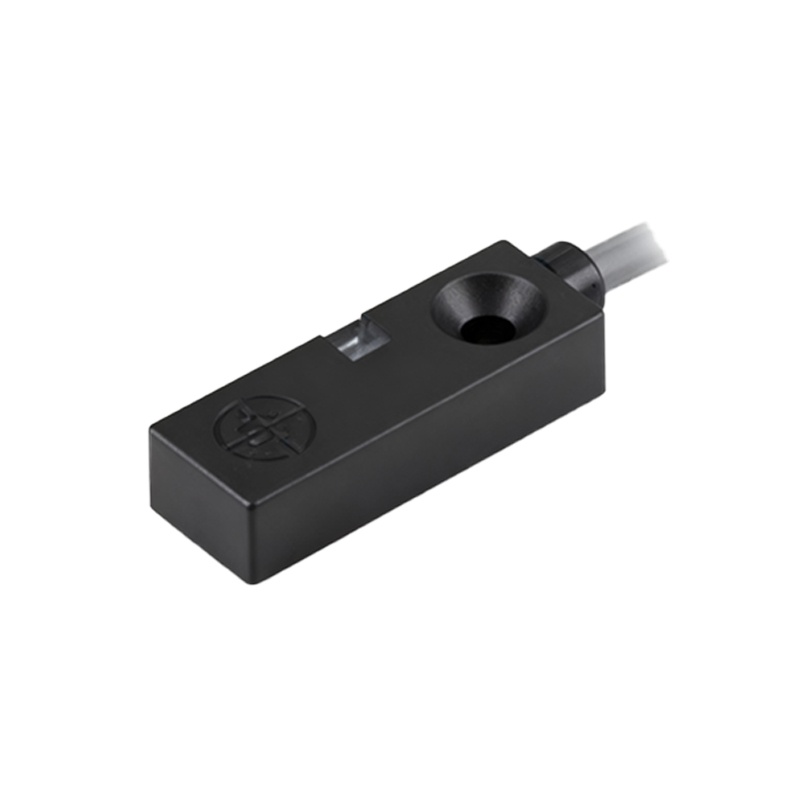
At its core, the NBN40 functions on the principle of electromagnetic induction. An internal oscillator generates a high-frequency electromagnetic field emanating from the active face of the sensor. When a ferrous or non-ferrous metal target enters this detection field, eddy currents are induced on the target's surface. This causes a change in the oscillation amplitude within the sensor, which is detected by a threshold circuit. This circuit then triggers a change in the output state. Key specifications include a standard sensing range, often up to 40mm for steel targets, depending on the exact model variant. It features a high switching frequency, allowing for the detection of rapidly moving objects. The sensor is also rated with a high degree of ingress protection (e.g., IP67), ensuring reliable operation in the presence of dust, oil, and coolants.
Advantages of the Square Housing Design
The square form factor of the NBN40 provides distinct mechanical advantages over cylindrical sensors. The flat surfaces allow for easier and more secure mounting, especially when aligning multiple sensors side-by-side on a machine frame or conveyor structure. This design minimizes the risk of sensor rotation after installation, ensuring consistent detection alignment. Furthermore, the housing often incorporates mounting slots or through-holes, facilitating flexible adjustment during setup. The square shape also allows for better labeling and identification of wiring connections, which simplifies maintenance and troubleshooting procedures for technicians on the shop floor.
Wiring and Electrical Output Configurations
Correct wiring is paramount for optimal performance. The NBN40 is typically available in 3-wire and 4-wire versions. The standard 3-wire configuration includes connections for power supply positive (brown wire), power supply negative (blue wire), and the switched output signal (black wire). The 4-wire version often provides both a Normally Open (NO) and a Normally Closed (NC) output from the same device, offering greater flexibility in control logic design. Users must carefully select between NPN and PNP output types to match the input requirements of their controller. An LED status indicator is a standard feature, providing immediate visual feedback on the sensor's power and switching state, which is invaluable during commissioning and diagnostics.
Application Scenarios in Industrial Automation
The versatility of the NBN40 makes it suitable for a wide array of applications. Common uses include position sensing for cylinders, end-of-travel detection on linear actuators, and part presence verification on assembly lines. In packaging machinery, it can detect metal components on conveyor belts. Within automated storage and retrieval systems (AS/RS), it is employed for pallet positioning and rack alignment. Its robust construction also allows it to function reliably in harsh areas, such as welding stations or near heavy machinery, where vibration and particulate contamination are concerns. The non-contact nature ensures long operational life without mechanical wear.
Installation Guidelines and Best Practices
Proper installation is critical to achieving the specified sensing performance. The sensor should be mounted securely to prevent movement. It is essential to maintain the recommended lateral and axial distances from the target and any surrounding metal structures to avoid false triggering or shielding effects. For flush-mountable versions, they can be installed embedded in a metal bracket without loss of sensing range. Non-flush models require a clear zone around the sensing face. Environmental factors such as temperature extremes, strong electromagnetic fields from motors or welders, and chemical exposure should be considered, and appropriate sensor variants with extended ratings should be selected if necessary.
Troubleshooting Common Operational Issues
Even with a reliable sensor like the NBN40, issues may arise. A failure to detect targets can stem from incorrect wiring, an insufficient power supply, or the target being outside the effective sensing range. False triggers might be caused by adjacent metal objects or electrical noise interference. The first step in troubleshooting is always to check the status LED. Verifying the supply voltage with a multimeter and inspecting for physical damage or contamination on the sensing face are standard procedures. Ensuring proper grounding and using shielded cables in electrically noisy