Introduction to Photoelectric Sensing Technology
Photoelectric sensors are fundamental components in industrial automation, utilizing light beams to detect the presence, absence, or distance of objects. These devices operate by emitting a light source—typically LED-based in visible red, infrared, or laser forms—and measuring the reflected or interrupted light with a receiver. The built-in variety integrates the emitter, receiver, and often the control circuitry into a single, compact housing. This integration simplifies installation, reduces wiring complexity, and enhances reliability by minimizing external interference. Their ability to perform non-contact detection makes them indispensable in environments where physical contact could damage products or sensors, such as in packaging, material handling, and assembly lines. The principle is straightforward yet powerful: a change in the received light signal triggers an electrical output, signaling a control system to take predefined action.
Core Functions and Operational Modes
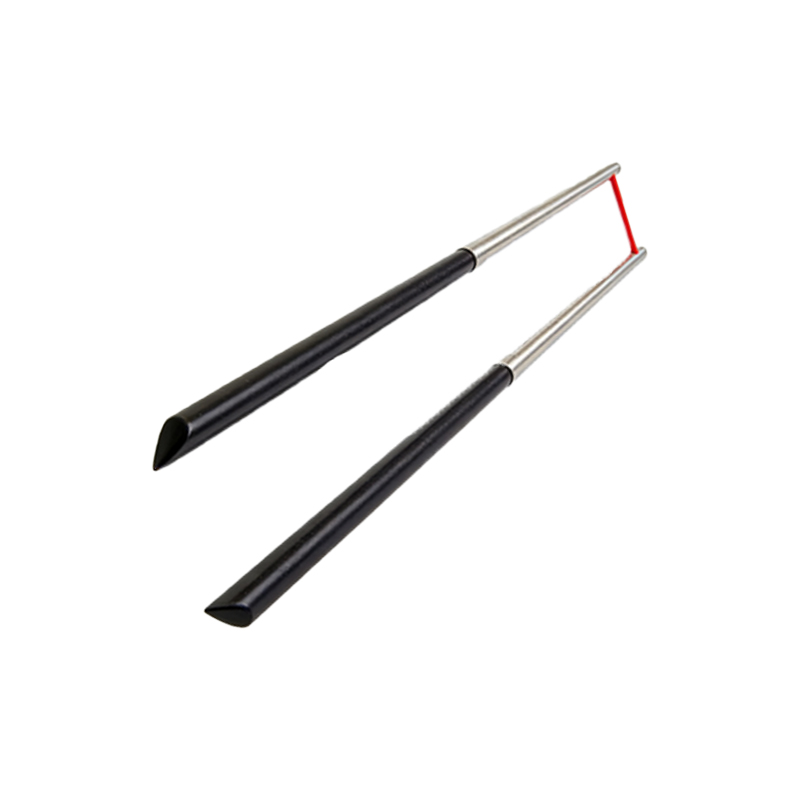
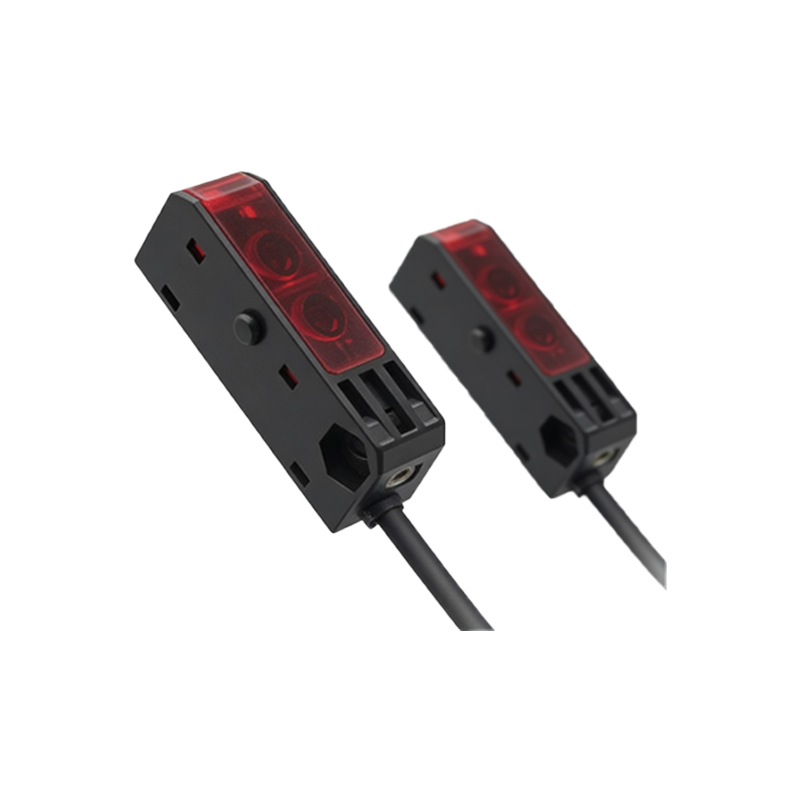
Built-in photoelectric sensors primarily function in three distinct operational modes: through-beam, retro-reflective, and diffuse reflective. In through-beam mode, the emitter and receiver are separate units facing each other; an object is detected when it breaks the light beam. This mode offers the longest sensing range and highest reliability, ideal for precise detection in high-speed applications. Retro-reflective mode employs a single housing containing both emitter and receiver, along with a reflector. The sensor detects an object when it interrupts the light beam reflected back from the reflector. It balances range and installation ease. Diffuse reflective mode, also self-contained, detects objects by measuring light reflected directly off the target's surface. While sensing distance is shorter and can be influenced by object color and surface texture, its simplicity for close-range applications is a major advantage. Each mode is selected based on factors like required range, environmental conditions, and target characteristics.
Key Advantages in Industrial Applications
The integration of photoelectric components into a single unit confers significant benefits. First, enhanced durability and resistance to environmental factors like dust, moisture, and vibration are achieved through robust sealing (e.g., IP67 ratings). This makes them suitable for harsh manufacturing floors. Second, built-in sensors often feature advanced functionalities such as background suppression, which allows detection of an object while ignoring a more distant background, and polarization filters to ignore shiny surfaces. Third, they offer simplified setup with built-in amplifiers and indicators (like LED status lights), enabling quick configuration and troubleshooting without external controllers. This plug-and-play capability reduces downtime and maintenance costs. In industries from automotive to food and beverage, these sensors ensure precise counting, positioning, and quality control, directly impacting efficiency and product consistency.
Integration with Smart Systems and IoT
Modern built-in photoelectric sensors are evolving beyond simple detection devices. Increasingly, they incorporate digital interfaces and smart features for Industry 4.0 and IoT connectivity. Many now support IO-Link communication, a point-to-point serial protocol that allows for bidirectional data exchange. This enables not only the transmission of standard switching signals but also detailed parameterization, real-time diagnostics, and process data monitoring—such as signal strength or device temperature—directly to a central control system. This connectivity facilitates predictive maintenance, as potential issues like lens contamination or LED degradation can be identified before causing failures. Furthermore, integration with PLCs and networked systems allows for adaptive control, where sensor parameters can be remotely adjusted based on production line changes, maximizing flexibility and uptime in dynamic manufacturing environments.
Selection Criteria and Best Practices
Choosing the right built-in photoelectric sensor requires careful consideration of several technical and application-specific parameters. The sensing distance must accommodate the actual working range with a safety margin. The type of light source is critical: red light LEDs are common and visible for easy alignment; infrared is less susceptible to ambient light interference; laser sources provide extremely precise detection for small objects. Environmental conditions dictate the necessary housing material and ingress protection rating. The output type (e.g., NPN/PNP transistor, analog, or relay) must be compatible with the control system. For optimal performance, proper alignment during installation is paramount, especially for through-beam and retro-reflective types. Regular cleaning of lenses and reflectors prevents false triggers from dust accumulation. Finally, understanding the target object's properties—size, color, material, and surface finish—is essential to select the most effective sensing mode and ensure reliable operation over the long term.
Future Trends and Developments
The future of built-in photoelectric sensors points toward greater intelligence, miniaturization, and specialization. Advances in LED and laser diode technology will yield sensors with even longer ranges, higher precision, and lower power consumption. The integration of artificial intelligence and edge computing capabilities is on the horizon, allowing sensors to perform basic pattern recognition or decision-making at the device level. Miniaturization will enable their deployment in tighter spaces, such as in collaborative robotics and micro-assembly. Furthermore, there is a growing trend toward sensors designed for specific challenging applications, like detecting transparent objects (using specialized blue light technology) or operating in extreme temperatures. As wireless power and communication technologies mature, truly cable-free, self-powered sensor nodes could become a reality, further simplifying system design and installation in the automated factories of tomorrow.