Introduction to Photoelectric Sensors in Automation
Photoelectric sensors are indispensable components in modern automated machinery, serving as the primary "eyes" of industrial systems. These devices operate by emitting a beam of light, typically infrared, visible red, or laser, and detecting changes in the received light signal. The fundamental principle involves detecting the presence, absence, or distance of an object by measuring the light's reflection or interruption. In automated environments, this capability translates into precise, non-contact detection critical for process control, positioning, and quality assurance. Their versatility, speed, and reliability make them superior to mechanical limit switches and other contact-based sensing methods, especially in high-speed or delicate applications where physical touch could cause damage or wear.
Core Operating Principles and Types
Understanding the three main operating modes is key to their application. Through-beam sensors consist of separate emitter and receiver units. An object is detected when it breaks the light beam between them, offering the longest sensing range and highest reliability. Retro-reflective sensors use a single unit that emits light and a reflector to bounce it back. Detection occurs when the beam is blocked. Diffuse or proximity sensors rely on the reflection of light directly off the target object itself. Each type has distinct advantages: through-beam for long-range and harsh environments, retro-reflective for easier alignment, and diffuse for applications where installing a reflector or receiver is impractical. Advanced versions include background suppression and convergent beam models for precise detection at a fixed distance, ignoring objects beyond or behind the set point.
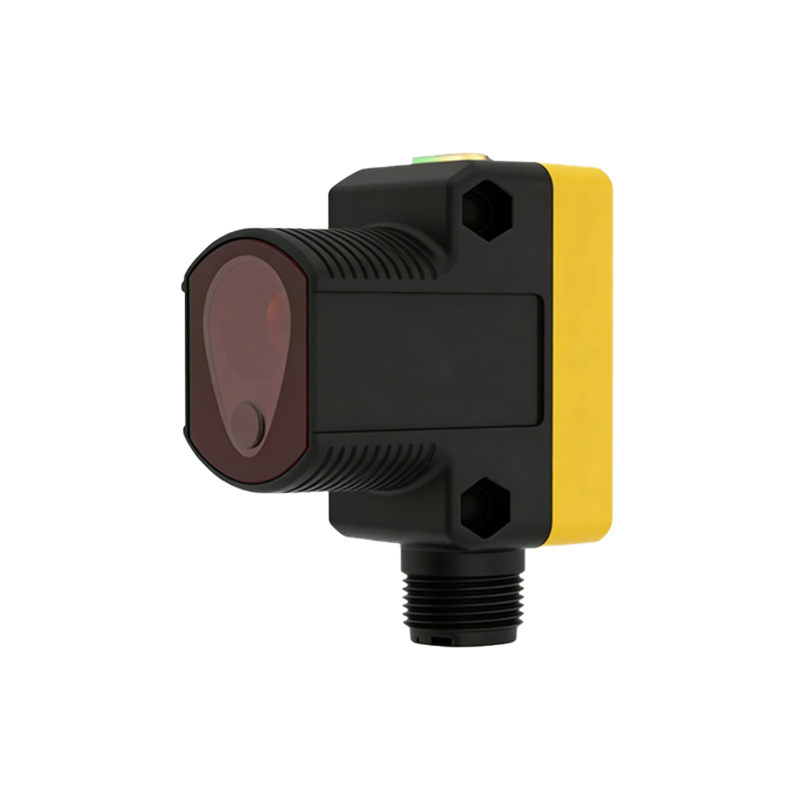
Case Study 1: High-Speed Packaging Line Bottle Detection
A prominent beverage company integrated diffuse photoelectric sensors on its high-speed bottling line. The challenge was to verify the presence of plastic bottles on a conveyor moving at 600 bottles per minute before filling and capping. Proximity sensors failed due to the transparent material of the bottles. Engineers installed a focused, high-speed diffuse sensor with a visible red beam. The sensor was calibrated to detect the slight reflection from the bottle's label or cap, ignoring the transparent body. Upon detection, the sensor sends a signal to the PLC, which controls the filler nozzle and capping head. This implementation reduced product waste from misfires by 99.8% and increased overall line efficiency by 15%, ensuring no empty bottles proceeded to the filling station.
Case Study 2: Precision Assembly with Through-Beam Sensing
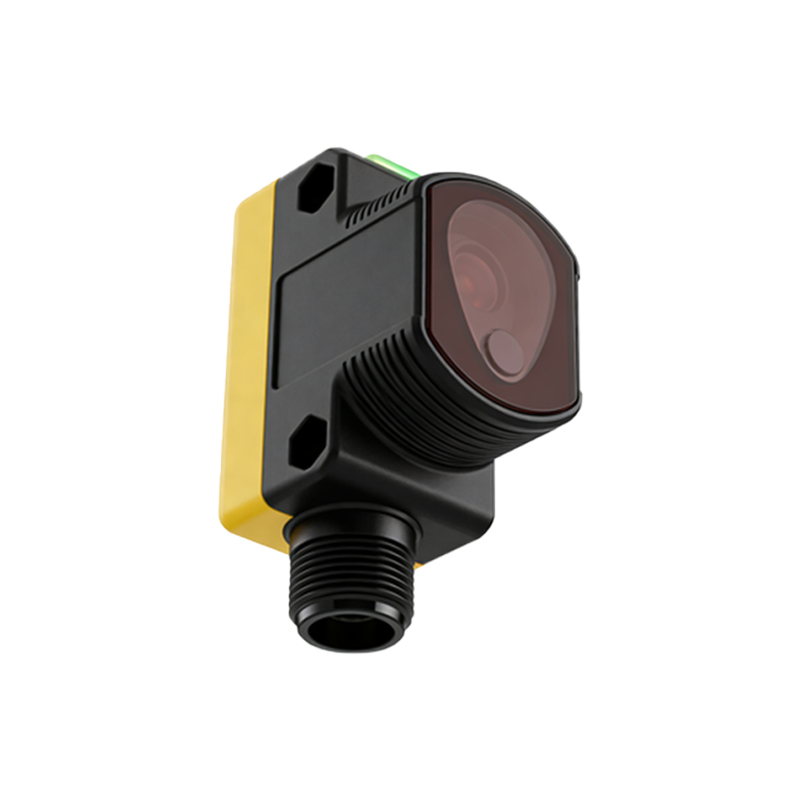
In an automotive electronics assembly plant, a robotic arm places miniature circuit boards into a housing with sub-millimeter tolerances. A through-beam photoelectric sensor array provides critical positional feedback. A pair of sensors is mounted on either side of the housing fixture, creating a precise "light curtain." The robot approaches with the board. The first sensor beam is broken, signaling the robot to begin its final, slow-approach sequence. The breaking of the second beam confirms the board is fully inserted to the correct depth, triggering the robot to release the board and retract. This dual-sensor setup eliminates placement errors that could cause costly short circuits or connection failures, enhancing first-pass yield rates and reducing robotic cycle time through optimized movement paths.
Case Study 3: Logistics and Warehouse Automation

Automated storage and retrieval systems (AS/RS) in large distribution centers depend heavily on retro-reflective photoelectric sensors for pallet handling. Sensors are mounted on the frames of automated guided vehicles (AGVs) and stacker cranes. Their primary function is to detect the presence of a pallet on a rack shelf or on the vehicle's forks. A retro-reflective sensor, with its built-in polarizing filter, reliably ignores reflections from shiny plastic wrap, a common challenge. When an AGV approaches a storage location, the sensor confirms the space is empty before the extension of the forks. This prevents collisions and inventory damage. Furthermore, sensors are used at conveyor transfer points to synchronize the release of parcels, ensuring smooth material flow and virtually eliminating jams in the sorting system.
Advanced Applications: Color Mark and Luminescence Detection
Beyond simple presence detection, specialized photoelectric sensors solve complex tasks. Color mark sensors are used in labeling and printing machinery. They detect specific color contrasts or registration marks on continuous webs of packaging material. By detecting a small printed mark, the sensor provides a signal to a cutter or sealer to actuate at the exact moment, ensuring perfect product length or label placement. Similarly, luminescence sensors detect materials that glow under UV light, such as invisible security marks on pharmaceuticals or special adhesives. This allows for 100% verification of authentic components in high-value assembly processes, a critical function in anti-counterfeiting and safety-critical industries.
Key Benefits and Selection Criteria
The adoption of photoelectric sensors delivers measurable benefits: enhanced operational speed, improved product quality through consistent detection, reduced mechanical wear and maintenance, and increased system safety. When selecting a sensor, engineers must consider the sensing range, required response time, environmental factors (dust, moisture, ambient light), the target object's properties (size, color, material, surface finish), and the required output type (PNP/NPN, analog, IO-Link). Modern sensors with IO-Link capability offer digital communication for parameter setting, diagnostics, and process data reporting, enabling predictive maintenance and deeper integration into Industry 4.0 frameworks.
Conclusion and Future Trends
Photoelectric sensors are foundational to industrial automation, providing reliable, non-contact sensing for countless applications. From ensuring a bottle is present to be filled, to guiding a robotic arm with micron-level precision, their role is critical. The future points toward smarter, more integrated devices. Sensors with embedded intelligence can perform simple logic functions, communicate detailed health status, and self-adjust to changing conditions. The convergence of sensing, networking, and data analytics will further solidify their position as essential components in building more efficient, flexible, and intelligent automated machinery systems. Their evolution continues to push the boundaries of what is possible in factory automation.