Introduction to Micro Inductive Plastic Proximity Sensors
In the realm of industrial automation, the demand for compact, reliable, and cost-effective sensing solutions has never been higher. Micro inductive plastic proximity sensors have emerged as a pivotal technology, offering precise non-contact detection of metallic objects in confined spaces. Unlike traditional metal-housed sensors, these devices feature a robust plastic housing that provides excellent resistance to chemicals, corrosion, and mechanical stress. Their miniature design allows for seamless integration into complex machinery, enabling enhanced operational efficiency and reduced downtime. As industries increasingly adopt smart manufacturing practices, the role of these sensors becomes indispensable for tasks such as position verification, counting, and object detection on high-speed production lines.
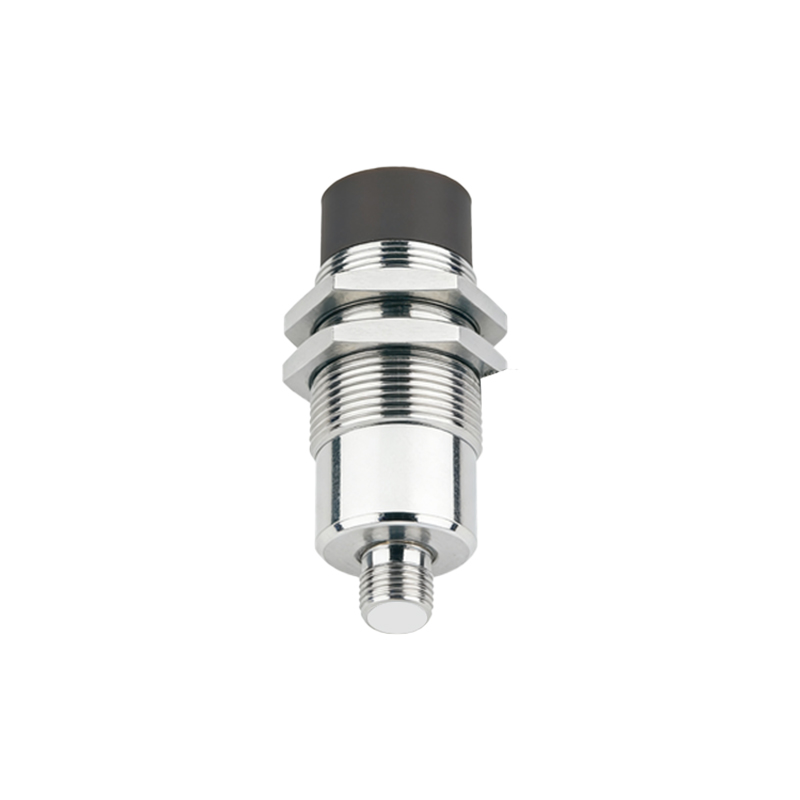
Core Working Principle and Technology
At the heart of a micro inductive plastic proximity sensor lies an oscillator circuit that generates a high-frequency electromagnetic field. When a metallic target enters this field, eddy currents are induced on the target's surface, causing a change in the oscillation amplitude. This alteration is detected by the sensor's circuitry, which subsequently triggers an output signal—typically a switching action via a solid-state or relay output. The plastic housing, often made from materials like PBT or PPS, does not interfere with the electromagnetic field, ensuring consistent performance. Advanced models incorporate embedded microprocessors for self-diagnosis, temperature compensation, and adjustable sensing ranges, allowing customization for specific applications such as packaging, robotics, or automotive assembly.
Key Advantages Over Conventional Sensors
The transition from metal to plastic housings offers several distinct benefits. Firstly, plastic sensors are significantly lighter, reducing the load on moving parts and simplifying installation. They exhibit superior immunity to vibration and shock, which is critical in harsh industrial environments. Additionally, the non-metallic enclosure eliminates the risk of galvanic corrosion when used in humid or chemically aggressive settings, thereby extending the sensor's lifespan. Electrically, these sensors provide stable operation across a wide temperature range, from -25°C to 70°C, with minimal drift. Their compact form factor, often as small as M5 or M8 cylindrical designs, enables deployment in space-constrained locations where traditional sensors cannot fit.
Application Scenarios in Modern Industry
Micro inductive plastic proximity sensors find utility across diverse sectors. In food and beverage processing, their plastic construction meets hygiene standards and resists washdown procedures, ensuring safe contamination-free operation. Automotive manufacturers utilize them for precise detection of engine components or robotic arm positioning, leveraging their high switching frequencies up to 5 kHz. Electronics assembly lines benefit from their ability to detect miniature metal parts without physical contact, preventing damage to delicate components. Moreover, in logistics automation, these sensors facilitate accurate parcel sorting and conveyor belt monitoring, contributing to streamlined supply chain operations.
Selection Criteria and Installation Best Practices
Choosing the right sensor requires careful consideration of several parameters. The sensing distance, typically ranging from 0.5 mm to 4 mm, must align with the target size and material—ferrous metals like iron yield longer ranges than non-ferrous ones like aluminum. Output configuration (NPN/PNP, NO/NC) should match the control system's requirements. Environmental factors such as exposure to oils, coolants, or UV radiation necessitate selecting sensors with appropriate IP ratings (e.g., IP67 or IP69K). During installation, maintaining proper alignment between the sensor and target is crucial to avoid false triggers. Adequate shielding from adjacent metal structures or electromagnetic interference ensures reliable performance. Regular maintenance, including cleaning of the sensing face and verification of electrical connections, helps sustain optimal functionality.
Future Trends and Innovations
The evolution of micro inductive plastic proximity sensors is driven by Industry 4.0 and IoT integration. Next-generation models are incorporating IO-Link communication protocols, enabling real-time data exchange for predictive maintenance and process optimization. Enhanced materials science is leading to plastics with higher thermal stability and mechanical strength, expanding operational limits. Miniaturization continues to advance, with chip-level sensors being developed for ultra-compact applications. Furthermore, energy-efficient designs that reduce power consumption are gaining traction, supporting sustainable manufacturing initiatives. As artificial intelligence and machine learning become more prevalent, these sensors will serve as critical data sources for autonomous decision-making in smart factories.
Conclusion: Enabling Smarter Automation
Micro inductive plastic proximity sensors represent a convergence of durability, precision, and adaptability, making them a cornerstone of modern industrial automation. Their ability to operate reliably in demanding conditions while offering easy integration underscores their value in enhancing productivity and safety. By understanding their working principles, advantages, and application-specific requirements, engineers can leverage these sensors to build more resilient and intelligent systems. As technology progresses, their role