Understanding Genesis Photoelectric Sensor Pricing
The price of a Genesis photoelectric sensor is not a single fixed number but a spectrum influenced by a complex interplay of technical specifications, market dynamics, and application requirements. As a leading manufacturer, Genesis offers a diverse portfolio, from cost-effective diffuse sensors for basic object detection to sophisticated background suppression and fiber optic models for challenging environments. For engineers and procurement specialists, navigating this pricing landscape requires a clear understanding of what drives cost. The core technology—be it through-beam, retro-reflective, or diffuse—sets a baseline price, with through-beam models often being more affordable per pair but requiring both emitter and receiver. More advanced features like precise background suppression, analog output, specialized housings for harsh conditions (IP67/IP69K ratings), and connectivity options (IO-Link) incrementally add to the sensor's value and, consequently, its price point.
Key Factors Influencing Sensor Cost
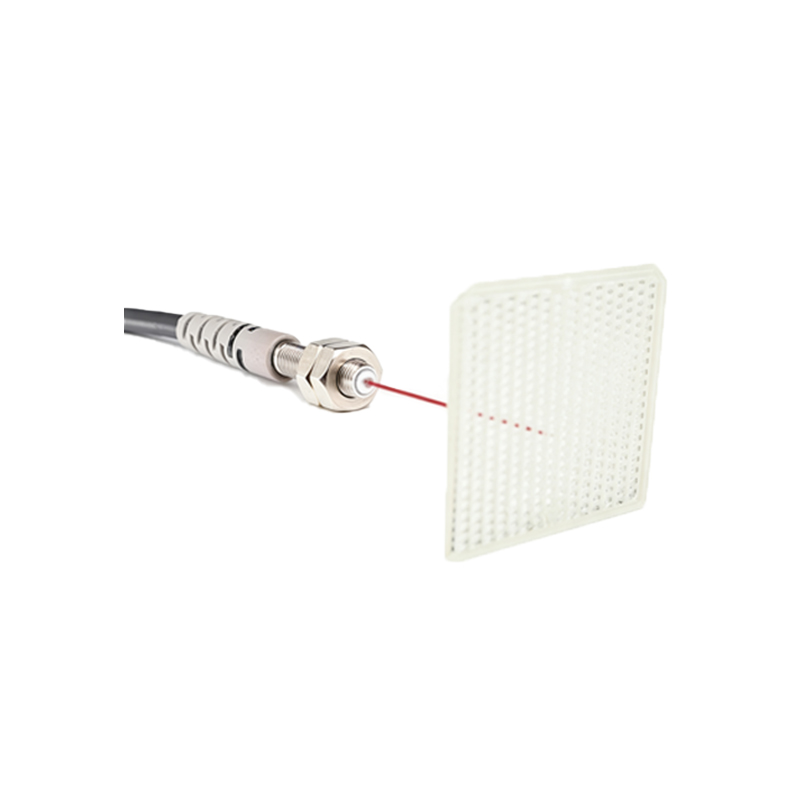
Several critical factors directly determine the final price tag of a Genesis photoelectric sensor. First, the sensing range is paramount; a standard diffuse sensor with a 1-meter range is significantly less expensive than a long-range, polarized retro-reflective model capable of 15 meters. Second, the light source plays a role. Traditional red LED sensors are the most economical, while high-performance models utilizing laser diodes for extreme precision or green LEDs for superior material differentiation command a higher price. Third, output configuration matters. A basic NPN or PNP digital output is standard. Sensors with configurable outputs, analog current/voltage outputs for distance measurement, or dual independent outputs for multi-purpose applications increase complexity and cost. Finally, the housing material and design for environmental robustness—such as stainless steel for washdown areas or specialized shapes for easy mounting—add to the manufacturing expense.
Price Range Across Common Model Types
Providing a general price range is illustrative, though actual quotes vary by distributor, region, and order volume. Entry-level, compact diffuse reflective sensors from Genesis for general-purpose detection can start in a very competitive range, often between $20 to $50 per unit. Standard retro-reflective and through-beam sensors with moderate ranges typically fall between $40 and $100. The price increases notably for sensors with advanced functionality. Background suppression (BGS) sensors, which ignore objects beyond a set distance, may range from $80 to $150. High-precision, contrast, or luminescence sensors for specialized tasks can exceed $200. It is crucial to consult with authorized Genesis distributors for precise, up-to-date pricing, as list prices may not reflect current market promotions or volume discounts.
The Impact of Features and Performance on Value
When evaluating price, one must assess the total value proposition, where Genesis sensors often excel. A higher initial investment in a feature-rich sensor can lead to substantial long-term savings by reducing downtime, improving process accuracy, and enhancing system reliability. For instance, a sensor with Teach-In functionality (auto-setup) saves commissioning time. Models with IO-Link capability provide detailed diagnostic data, enabling predictive maintenance and seamless integration into Industry 4.0 systems, justifying a premium. Similarly, sensors built with high-quality components for exceptional temperature stability, immunity to ambient light, and resistance to electrical noise ensure consistent operation in demanding applications, preventing costly errors and replacements. Therefore, the price should be evaluated against the cost of potential failure, not just as an initial component cost.
Procurement Strategies and Total Cost of Ownership
Smart procurement goes beyond comparing unit prices. Establishing a relationship with an authorized Genesis distributor is key. They can provide technical support to ensure the correct sensor is selected for the application, avoiding costly mismatches. Volume purchasing agreements often secure better per-unit pricing. Furthermore, considering the Total Cost of Ownership (TCO) is essential. This includes not only the purchase price but also installation costs, maintenance requirements, mean time between failures (MTBF), and the availability of spare parts. Genesis's reputation for durability and the widespread availability of its products contribute to a lower TCO. For large-scale or critical applications, requesting formal quotations and evaluating bundled solutions for complete detection systems can be more economical than sourcing individual sensors.
Market Trends and Future Price Considerations
The photoelectric sensor market is dynamic. Current trends, such as the increasing adoption of IO-Link for smart manufacturing and the demand for miniaturized yet powerful sensors, influence product development and pricing. While advanced features may initially carry a premium, economies of scale and technological maturation can lead to price reductions over time. However, global factors like supply chain stability, raw material costs for semiconductors and metals, and regional demand fluctuations can also cause short-term price volatility. For long-term project planning, it is advisable to factor in potential modest annual price adjustments and engage in ongoing dialogue with suppliers about market forecasts. Investing in future-proof sensors with digital communication capabilities may offer better adaptability and protection against obsolescence.