Introduction to Inductive Proximity Sensors
Inductive proximity sensors are non-contact electronic devices widely utilized in the mining industry for detecting metallic objects. Operating on the principle of electromagnetic induction, these sensors generate an oscillating electromagnetic field from a coil. When a metallic target enters this field, eddy currents are induced, causing a change in the oscillation amplitude. This alteration is detected by the sensor's circuitry, triggering an output signal. Their robustness, reliability, and ability to function in harsh environments make them indispensable in mining operations, where they monitor equipment position, control material flow, and enhance safety systems without physical contact, thereby reducing wear and maintenance.
Core Operating Principles and Technology
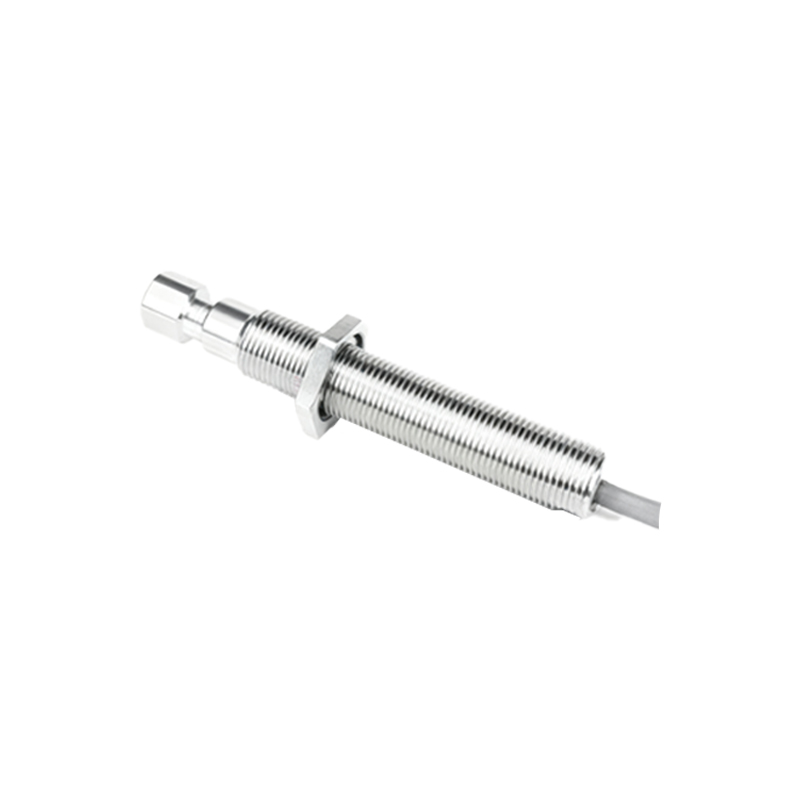
The fundamental technology hinges on a tuned circuit comprising an inductor and capacitor. The coil, when energized, produces a high-frequency electromagnetic field extending from the active face. Ferrous metals (like iron and steel) and non-ferrous metals (such as aluminum or copper) interact differently with this field; ferrous materials typically offer longer sensing ranges due to higher magnetic permeability. Advanced sensors incorporate temperature compensation and shielding to prevent interference from adjacent metallic structures or electrical noise—common challenges in mining settings. The output is typically a solid-state switch (PNP/NPN) or analog signal, providing seamless integration with programmable logic controllers (PLCs) for automated process control.
Key Design Features for Mining Durability
Mining environments present extreme conditions, including dust, moisture, mechanical vibrations, and potential chemical exposure. Inductive proximity sensors designed for this sector feature rugged housings, often constructed from stainless steel (e.g., V4A/AISI 316L) or nickel-plated brass, with ingress protection ratings of IP67, IP68, or IP69K to withstand water and dust intrusion. They are built to resist shock and vibration per IEC standards. Many models incorporate short-circuit and overload protection, reverse polarity protection, and LED status indicators for operational feedback. Their compact, cylindrical or rectangular form factors allow installation in confined spaces on conveyor belts, drilling rigs, or hydraulic systems.
Primary Applications in Mining Operations
In mining, these sensors perform critical functions across various stages. On conveyor systems, they detect belt slippage, monitor chute blockages, and count buckets or carts. In extraction machinery, they provide position feedback for drill heads, shovels, and crushers, ensuring precise movement and preventing mechanical overload. Safety applications include monitoring guard door positions, detecting personnel or vehicle proximity in restricted zones, and ensuring proper alignment of lifting equipment. Their non-contact nature eliminates issues caused by dirt buildup or mechanical failure common with limit switches, significantly boosting operational uptime and reliability.
Advantages Over Alternative Sensor Types
Compared to capacitive, ultrasonic, or photoelectric sensors, inductive variants offer distinct benefits in mining. They are immune to ambient light, airborne dust, and most non-metallic materials, providing high stability and repeatability when detecting metals. With no moving parts, they exhibit exceptional longevity and require minimal maintenance. Their response time is extremely fast, often in microseconds, suitable for high-speed counting or positioning tasks. While limited to metallic targets, this specificity reduces false triggers from rocks, coal, or debris—a frequent issue in mines. Their simplicity and cost-effectiveness for metal detection remain unparalleled.
Selection Criteria and Installation Guidelines
Choosing the right sensor involves several parameters. The sensing distance, typically 2 to 40 mm for standard models, must account for target material, size, and approach direction. Factors like switching frequency, output type (e.g., NO/NC), and supply voltage (commonly 10-30 V DC) must match control system requirements. Installation requires careful mounting to avoid sensor damage from direct impact; flush-mounted sensors allow installation in metal without affecting range, whereas non-flush types offer longer ranges but need clearance. Proper cable routing and grounding are essential to mitigate electromagnetic interference from high-power mining equipment. Regular testing with a target metal ensures continued accuracy.
Maintenance and Troubleshooting Practices
Though highly durable, periodic inspection maintains optimal performance. Technicians should check for physical damage, corrosion, or loose connections. Accumulated metallic dust on the sensor face can reduce effective sensing range and should be cleaned regularly. Common issues include failure to detect, caused by incorrect target material, excessive distance, or electrical faults like wiring breaks. Using a multimeter to verify output switching and supply voltage can isolate problems. Implementing predictive maintenance schedules, based on operational hours and environmental severity, helps preempt failures and aligns with Industry 4.0 initiatives for smart mining.
Future Trends and Technological Innovations
The evolution