Introduction to Arise Photoelectric Sensors
Arise photoelectric sensors represent a cornerstone technology in modern industrial automation, offering non-contact detection capabilities for a vast array of applications. These devices operate on the fundamental principle of converting light signals into electrical signals to detect the presence, absence, or distance of an object. By emitting a beam of light—typically infrared, visible red, or laser—and analyzing the reflected or received light, Arise sensors provide highly accurate and reliable data. Their design emphasizes robustness, enabling consistent performance in challenging environments characterized by dust, moisture, vibration, and extreme temperatures. This makes them indispensable in sectors ranging from packaging and material handling to automotive assembly and pharmaceutical production, where precision and uptime are paramount.
Core Operating Principles and Technologies
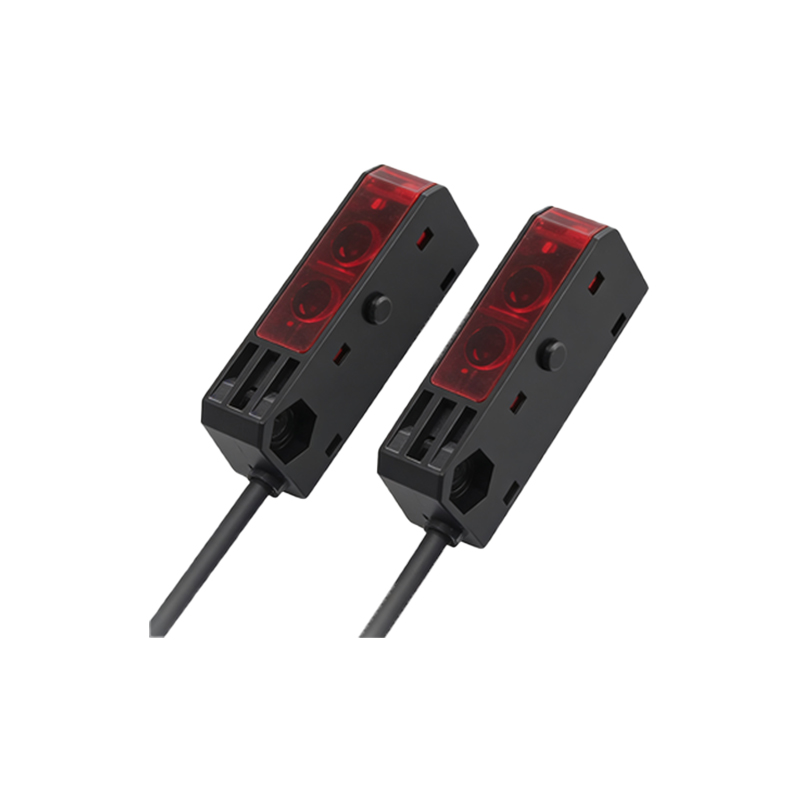
The functionality of Arise photoelectric sensors is grounded in three primary sensing modes: through-beam, retro-reflective, and diffuse reflective. Through-beam sensors, consisting of separate emitter and receiver units, offer the longest sensing ranges and highest reliability, as the receiver directly detects the beam from the emitter. An object is detected when it interrupts this beam. Retro-reflective sensors house both emitter and receiver in a single housing, utilizing a reflector to bounce the light beam back. Detection occurs when the object blocks the reflected beam. Diffuse reflective sensors, also with a combined emitter and receiver, detect objects by measuring the light scattered directly off the target's surface. Advanced Arise models incorporate background suppression and foreground suppression technologies, allowing them to ignore objects beyond or before a set distance, respectively. Furthermore, the integration of time-of-flight (ToF) and triangulation principles in certain models enables precise distance measurement, expanding their utility to positioning and dimension-checking tasks.
Key Features and Performance Advantages
Arise photoelectric sensors are engineered with a suite of features that deliver distinct performance advantages. A critical feature is their high switching frequency, allowing for the detection of very fast-moving objects on high-speed production lines, which is essential for maintaining throughput. Many models boast exceptional environmental resistance, achieving high IP (Ingress Protection) ratings such as IP67 or IP69K, ensuring reliable operation despite washdowns, oils, and particulates. The sensors often feature intuitive setup mechanisms, including teach-in functionality or potentiometers for easy adjustment of sensitivity and response time without specialized tools. Their compact and versatile housing designs facilitate installation in space-constrained locations. Additionally, advanced models offer IO-Link communication, enabling digital parameter setting, real-time diagnostics, and seamless integration into Industry 4.0 and smart factory networks. This connectivity allows for predictive maintenance, reducing unplanned downtime.
Diverse Application Scenarios in Industry
The application spectrum for Arise photoelectric sensors is remarkably broad. In packaging machinery, they are pivotal for detecting labels, counting products, and verifying fill levels in bottles or containers. Within automated material handling and logistics systems, these sensors ensure precise positioning of pallets, detect packages on conveyors, and manage inventory in automated storage and retrieval systems (AS/RS). The automotive industry relies on them for robot guidance, part presence verification in assembly stations, and ensuring correct part orientation. In the electronics sector, they facilitate the precise placement of miniature components on printed circuit boards (PCBs). Furthermore, their hygienic designs make them suitable for food and beverage processing, where they monitor production lines while withstanding frequent cleaning cycles. Their versatility also extends to safety applications, such as presence sensing in guarded machinery.
Selection Criteria and Installation Best Practices
Selecting the optimal Arise photoelectric sensor requires careful consideration of several parameters. The primary factor is the sensing mode, dictated by the application's requirements for range, target material, color, and surface finish. Required sensing distance and the size of the target object must be calculated with appropriate safety margins. The environmental conditions—including ambient light, temperature extremes, and potential contaminants—mandate choosing a sensor with suitable housing material, IP rating, and light source (e.g., laser for precise small-part detection). Electrical characteristics like operating voltage, output type (PNP/NPN, analog, or IO-Link), and connection method are crucial for system compatibility. For installation, it is vital to ensure stable mounting to minimize vibration effects, proper alignment of through-beam or retro-reflective units, and avoidance of optical interference from reflective backgrounds or direct ambient light. Regular maintenance, primarily lens cleaning, is recommended to sustain optimal performance over the sensor's operational lifespan.
Future Trends and Innovations
The future trajectory of Arise photoelectric sensors is closely aligned with the evolution of industrial IoT and smart manufacturing. Enhanced intelligence is a clear trend, with sensors incorporating more onboard processing power for edge computing tasks, such as basic pattern recognition or condition monitoring. Miniaturization will continue, enabling their deployment in increasingly compact machinery and micro-assembly applications. The adoption of multi-functional sensors that combine photoelectric sensing with other measurement principles, like temperature or pressure sensing, is anticipated. Energy efficiency will also improve, supporting battery-powered applications in mobile equipment. Furthermore, advancements in light source technology, including more robust and precise laser diodes, will extend sensing ranges and accuracy. Seamless integration with cloud platforms for data analytics will transform these sensors from mere detection devices into rich sources of operational intelligence, driving efficiency and predictive capabilities across the factory floor.