Introduction to Hazardous Area Sensing
In industrial settings where flammable gases, vapors, mists, or combustible dusts are present, the risk of explosion is a constant and critical concern. These areas, classified as hazardous or potentially explosive atmospheres, demand equipment that not only performs its primary function but does so without becoming an ignition source. This is where specialized safety equipment, such as explosion-proof photoelectric sensors, becomes indispensable. Unlike standard sensors, these devices are engineered to contain any potential spark or excessive heat generated within their housing, preventing it from reaching the volatile external atmosphere. Their role transcends simple automation; they are fundamental safety components that enable process control, monitoring, and protection in some of the world's most challenging industrial environments, including oil and gas refineries, chemical plants, grain silos, and pharmaceutical manufacturing facilities.
Core Function and Operating Principle
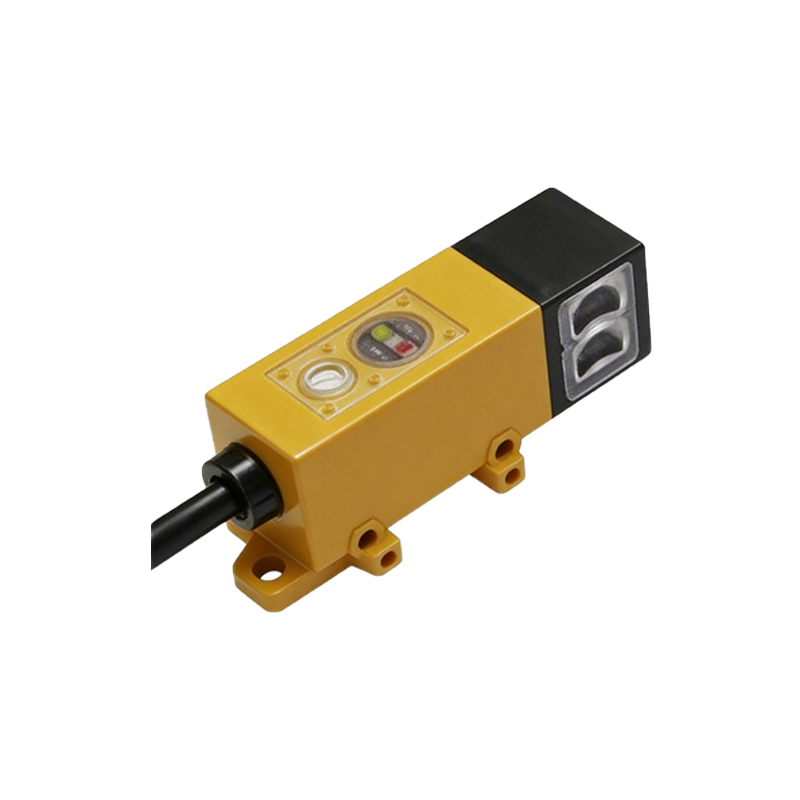
At their heart, explosion-proof photoelectric sensors operate on the same basic principle as their standard counterparts: they emit a beam of light (visible, infrared, or laser) and detect changes in the received light to sense the presence, absence, or distance of an object. The light source, typically an LED, is modulated at a specific frequency to enhance immunity to ambient light interference. The receiver analyzes the returning light signal. An object interrupting or reflecting this beam triggers a switching output. The critical distinction lies not in this core optoelectronic function, but in the robust mechanical and electrical design that surrounds it. The sensor's internal components are housed within an enclosure capable of withstanding an internal explosion of a specified gas or dust mixture. This enclosure prevents the propagation of the explosion to the surrounding hazardous area, thereby maintaining a safe operational boundary.
Key Design Features for Safety
The design of an explosion-proof photoelectric sensor is governed by stringent international standards, such as IECEx, ATEX, and NEC/CEC. Key design features include flame-path joints, which are precisely machined gaps between the enclosure's lid and body. In the event of an internal ignition, hot gases are forced to travel through this long, narrow path, cooling sufficiently to prevent ignition of the external atmosphere. Enclosures are constructed from durable materials like stainless steel or brass with high-impact polycarbonate windows for the optical lens. All electrical connections are made through certified cable glands or conduits that maintain the integrity of the seal. Furthermore, components are often potted with epoxy to secure them against vibration and to limit internal energy (a concept known as intrinsic safety for associated apparatus). These features collectively ensure that the sensor remains safe under both normal and fault conditions.
Types and Sensing Modes
Explosion-proof photoelectric sensors are available in various configurations to suit diverse applications. The main sensing modes include through-beam, retro-reflective, and diffuse reflective. Through-beam models, with separate emitter and receiver units, offer the longest sensing ranges and highest reliability. Retro-reflective types use a single housing with both emitter and receiver, bouncing light off a reflector; they are effective but can be fooled by shiny objects. Diffuse reflective sensors detect light reflected directly from the target object, making them ideal for sensing at short ranges without a separate reflector. Additionally, specific models are designed for precise distance measurement (background suppression), color recognition, or luminescence detection. The choice of model depends on factors like required sensing distance, target material, environmental obstructions, and the specific explosive atmosphere classification (e.g., Zone 1, Division 1).
Critical Applications Across Industries
The applications for these sensors are vast and critical. In oil and gas, they monitor valve positions, detect levels in storage tanks, and control robotic arms on offshore platforms. Chemical plants use them to count bottles, verify cap placement on hazardous material containers, and ensure proper positioning of reaction vessels. In grain handling and milling, they prevent overfilling of silos (a major dust explosion risk) and monitor conveyor belt flow. Pharmaceutical manufacturers rely on them in solvent-based production areas for packaging and material handling. In mining, they are used for conveyor belt alignment and ore chunk detection. In each case, the sensor provides reliable, non-contact detection while being a passive guardian against catastrophic ignition, forming a vital link in the plant's overall safety-instrumented system.
Selection and Installation Considerations
Selecting the correct explosion-proof photoelectric sensor requires careful analysis. Engineers must first determine the hazardous area classification (Zone/Division, gas group, temperature class). The sensor's approval must match or exceed this classification. Environmental factors like temperature extremes, humidity, water jets (IP rating), and corrosive chemicals must be considered. The required sensing range, response time, and output type (PNP/NPN, analog, IO-Link) are also crucial. Installation is equally important; it must be performed according to the manufacturer's instructions and relevant electrical codes. This includes proper grounding, using approved conduit seals, and ensuring that flame-path joints are not damaged or painted over. Regular maintenance, including lens cleaning and inspection of the enclosure for integrity, is essential for long-term, safe operation.
Conclusion: Enabling Safe Automation
Explosion-proof photoelectric sensors represent a perfect synergy of optical precision and mechanical safety engineering. They are not merely adapted standard sensors but are purpose-built from the ground up to perform reliably in environments where failure is not an option. By providing accurate, non-contact object detection while rigorously containing potential ignition sources, they form a foundational element of modern industrial safety and automation in hazardous locations. Their continued evolution, with trends toward smarter sensors with diagnostic capabilities and improved connectivity, promises to further enhance both operational efficiency and safety margins. For any operation within a classified hazardous area, investing in certified, high-quality explosion-proof photoelectric sensors is an investment in asset protection, process continuity, and, most importantly, human safety.