Introduction to Photoelectric Sensing Range
The sensing range of a photoelectric sensor is a critical parameter that defines its operational capability in detecting objects. It refers to the maximum distance at which the sensor can reliably detect a target under specified conditions. This range is not a fixed value but varies based on the sensor's type, light source intensity, receiver sensitivity, target properties, and environmental factors. In industrial automation, selecting a sensor with an appropriate sensing range is paramount for ensuring system reliability, safety, and efficiency. Engineers must consider both the nominal range specified by manufacturers and the real-world conditions that can attenuate or enhance performance. Understanding the fundamentals of how this range is determined and influenced forms the bedrock of effective sensor application.
Factors Influencing the Effective Sensing Distance
Several key factors directly impact the effective sensing range of a photoelectric sensor. First, the light source type, such as LED (infrared, red, or laser) and its emitted power, sets a baseline. A more powerful, focused beam typically achieves a longer range. Second, the receiver's sensitivity and the quality of its optical components determine how well it can discern the signal from ambient noise. Third, the target's characteristics—size, color, material, surface finish (matte or glossy), and orientation—significantly alter reflectivity. A large, light-colored, matte surface reflects more light back to the receiver than a small, dark, glossy one, potentially increasing the detectable range. Fourth, environmental conditions like dust, fog, steam, ambient light (especially sunlight), and temperature fluctuations can scatter, absorb, or overwhelm the sensor's light beam, drastically reducing reliable range.
Sensor Types and Their Typical Range Capabilities
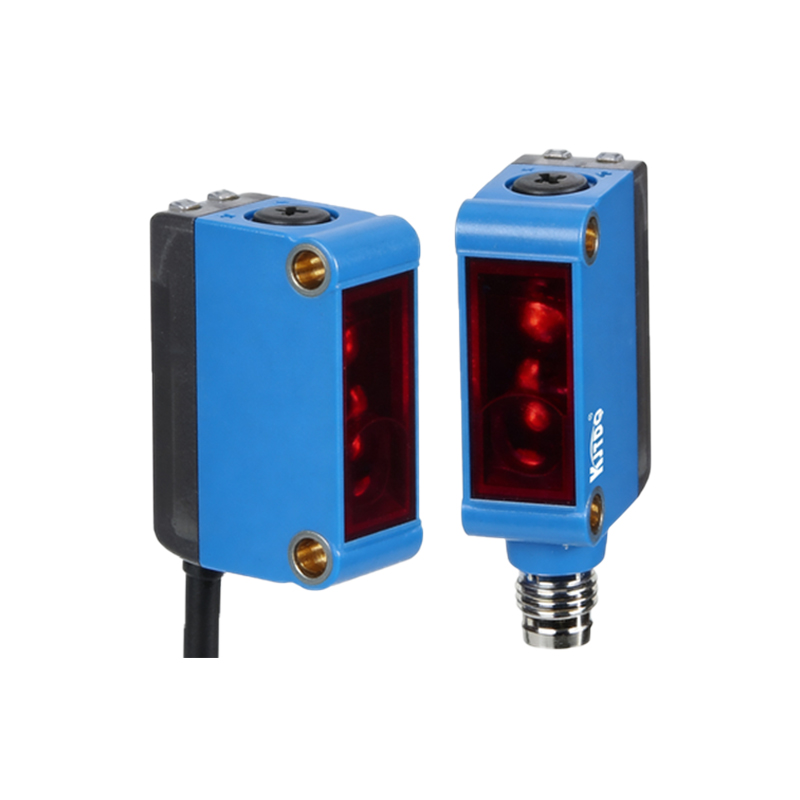
Photoelectric sensors are primarily categorized into three main types, each with distinct range characteristics. Through-beam sensors, consisting of separate emitter and receiver units, offer the longest sensing ranges, often exceeding 100 meters for high-power laser types. Their operation is based on the interruption of a direct light beam, providing high reliability and insensitivity to target color or finish. Retro-reflective sensors use a single unit and a reflector, with ranges typically up to 10-15 meters. Their performance can be affected by the reflector's condition and target reflectivity. Diffuse (proximity) sensors, where the emitter and receiver are housed together and detect light reflected directly from the target, have the shortest range, usually from a few millimeters to about 2 meters. Their range is highly dependent on the target's reflective properties. Specialized versions like background suppression and convergent beam sensors offer precise, color-independent detection within shorter, well-defined ranges.
Technical Specifications and Range Interpretation
Manufacturers specify sensing range in datasheets under controlled "standard conditions," often using a defined reference target (e.g., a 90% reflective white Kodak card). The "assured operating range" or "switching distance" is the guaranteed detection zone. Engineers must also consider "excess gain," a multiplier indicating how much stronger the received signal is compared to the minimum required for detection. A higher excess gain provides a buffer against lens contamination or target absorption. For diffuse sensors, the datasheet often includes a graph plotting sensing distance against target reflectivity. It is crucial to derate the nominal range for real applications. For instance, detecting a dark object may reduce the effective range of a diffuse sensor to 50% or less of its nominal value. Laser sensors provide precise, narrow beams for long-range detection of small objects, while modulated LED light sources help combat ambient light interference, maintaining range stability.
Optimization and Application Considerations
To optimize and ensure reliable operation within the required sensing range, several practical steps are essential. Proper alignment is critical for through-beam and retro-reflective types; misalignment can cause complete failure. For diffuse sensors, understanding the target's minimum reflectivity and testing with actual samples is mandatory. Using sensors with adjustable sensitivity or teach-in functions allows fine-tuning for specific targets and ranges. Installing protective housings or air purges can mitigate the effects of dust and condensation on the lens. In high-ambient-light environments, selecting sensors with robust modulation frequencies and optical filters is necessary. For long-range applications, choosing a through-beam sensor with a visible red or laser beam can simplify alignment. Regular maintenance, including lens cleaning and checking for mechanical drift, preserves the designed sensing range over time. Applications range from short-range object presence detection on conveyors to long-range vehicle detection in automated warehouses, each demanding precise range specification.
Conclusion and Future Trends
The sensing range remains a fundamental specification driving the selection and application of photoelectric sensors. A deep understanding of the interplay between sensor technology, target properties, and the operating environment enables engineers to design robust and fail-safe automation systems. Future trends point towards sensors with intelligent functions, such as IO-Link communication, which can provide diagnostic data about signal strength and remaining excess gain, allowing for predictive maintenance and dynamic range compensation. Advancements in laser diode and receiver technology continue to push the boundaries of achievable range and precision, while improved housing designs enhance performance in harsh environments. Ultimately, mastering the nuances of sensing range translates directly into improved process reliability, reduced downtime, and greater operational efficiency in modern industrial settings.