In the realm of precision measurement and industrial automation, laser displacement sensors have become indispensable tools. These devices offer non-contact, high-speed, and highly accurate measurements of distance, position, thickness, and vibration. The market for these sensors is driven by a diverse range of manufacturers, each contributing unique technologies and solutions to meet the stringent demands of modern industries such as automotive, electronics, semiconductor manufacturing, and aerospace.
A key player in this field is Keyence Corporation. Renowned for its innovation and extensive product portfolio, Keyence offers laser displacement sensors like the LK Series and IL Series. These sensors are celebrated for their ultra-high speed, sometimes reaching sampling rates in the hundreds of kilohertz, and sub-micrometer resolution. Keyence emphasizes user-friendly setup, often integrating advanced features like built-in controllers and intuitive software, which reduces integration time on factory floors. Their sensors are commonly deployed for precise inspection tasks, such as measuring component heights on PCBs or monitoring tire tread wear.
Another major contributor is Panasonic Industry (formerly Panasonic Electric Works). Their HG-C Series laser displacement sensors are recognized for robustness and reliability in challenging environments. Panasonic focuses on creating sensors with compact designs, high environmental resistance (to dust, water, and oil), and stable performance even on varied surface materials. This makes them a preferred choice for applications in automotive assembly lines and heavy machinery monitoring, where conditions are less than ideal.
SICK AG, a global leader in sensor intelligence, provides a comprehensive range of laser displacement sensors under brands like OD2 and OD5. SICK's strength lies in its application-specific engineering and strong focus on Industry 4.0 connectivity. Their sensors often come with advanced evaluation capabilities, integrated interfaces like IO-Link, and robust housings for demanding industrial use. They are frequently specified for logistics automation, robotic guidance, and safety-related measurement tasks.

Micro-Epsilon, a German-based specialist, is highly regarded for pushing the boundaries of measurement accuracy. Their optoNCDT series lasers are synonymous with high precision, capable of nanometer-level resolutions. Micro-Epsilon caters to research and development, as well as ultra-precise manufacturing processes in the semiconductor and optical industries. They offer a wide variety of models, including blue laser sensors for measuring hot or shiny surfaces that traditionally challenge red lasers.
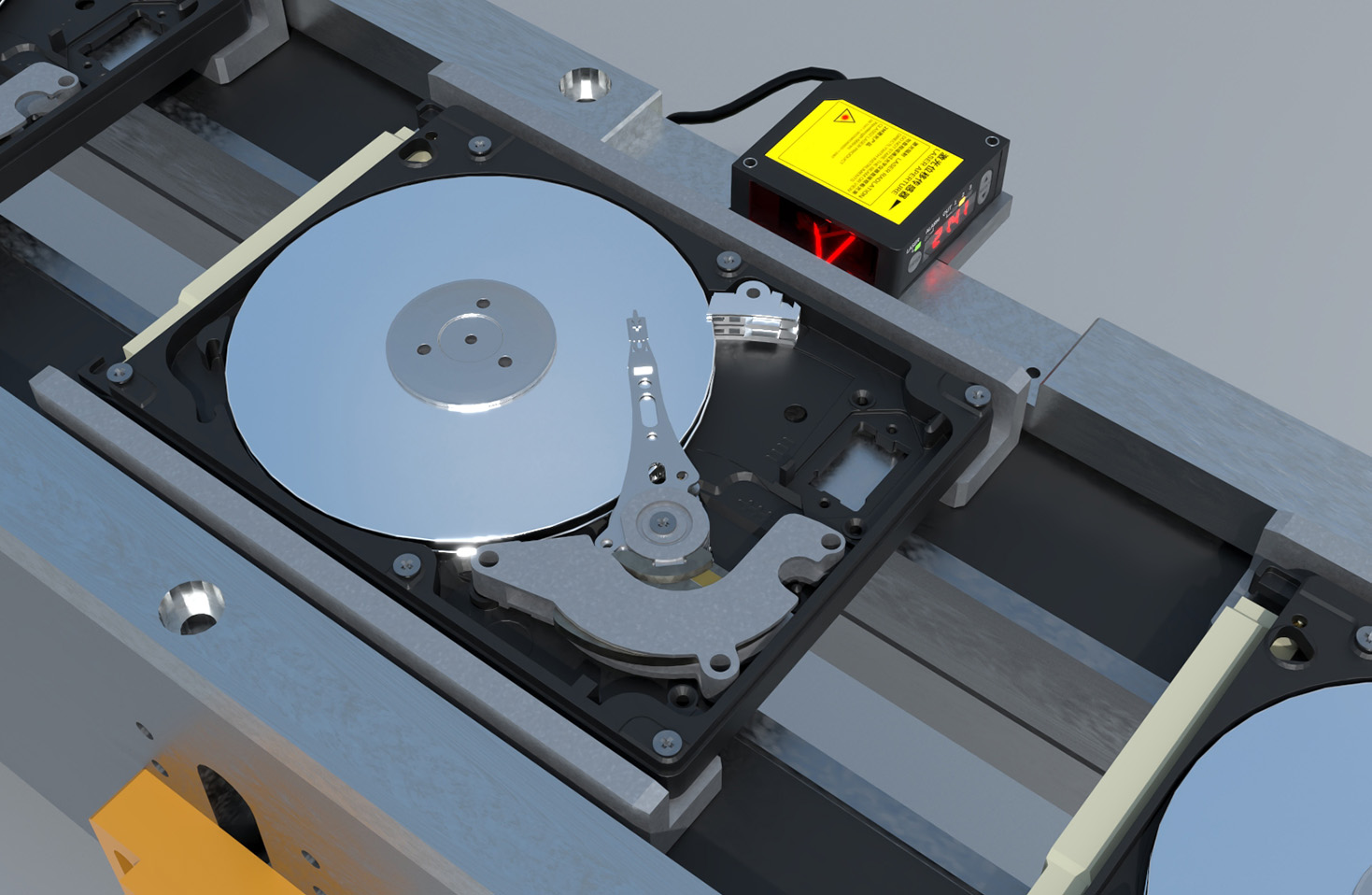
Omron Corporation integrates its laser displacement sensors into broader automation solutions. Models like the ZX Series are known for their smart features, such as multi-point measurement and profile scanning. Omron excels at providing sensors that are easy to configure and network within its ecosystem of PLCs and vision systems, offering a seamless solution for automated inspection and quality control stations.
MTI Instruments (USA) and Solartron Metrology (UK) are prominent in specialized and metrology-grade applications. Their sensors are often used in scientific research, aerospace component testing, and calibration laboratories where traceability and extreme accuracy are paramount.
The innovation trajectory among these manufacturers is clear. Key trends include the miniaturization of sensor heads, enabling installation in tight spaces. Enhanced connectivity through Ethernet/IP, PROFINET, and IO-Link is standard, facilitating real-time data integration into Manufacturing Execution Systems (MES). There is also a significant push towards improving performance on difficult surfaces—dark, shiny, transparent, or hot—through technologies like blue lasers, specialized optics, and adaptive algorithms.
Selecting the right manufacturer depends heavily on the application's specific requirements: required accuracy, measurement speed, environmental conditions, target surface properties, and budget. While Keyence and Panasonic often dominate in high-volume manufacturing for their ease of use and durability, Micro-Epsilon is the go-to for laboratory-grade precision. SICK and Omron provide strong, networked solutions for integrated automation lines.
In conclusion, the landscape of laser displacement sensor manufacturers is competitive and innovative. These companies are not merely selling sensors; they are providing critical enabling technology for quality assurance, process control, and automation efficiency. Their continuous advancements in speed, precision, and intelligence are fundamental to the evolution of smarter, more responsive, and more efficient manufacturing and research operations worldwide. As industries pursue tighter tolerances and greater automation, the role of these specialized manufacturers will only grow in importance.