Inductive proximity sensors are fundamental components in industrial automation, offering non-contact detection of metallic objects. Their robust design, reliability, and fast response time make them indispensable in manufacturing, packaging, and material handling. Understanding their working principle is key to effective application.
At its core, an inductive proximity sensor operates on the principle of electromagnetic induction. The primary components are an oscillator coil, a ferrite core, a detection circuit, and an output switching device, all housed in a rugged casing. The oscillator generates a high-frequency alternating electromagnetic field that radiates from the active face of the sensor, typically the front end.
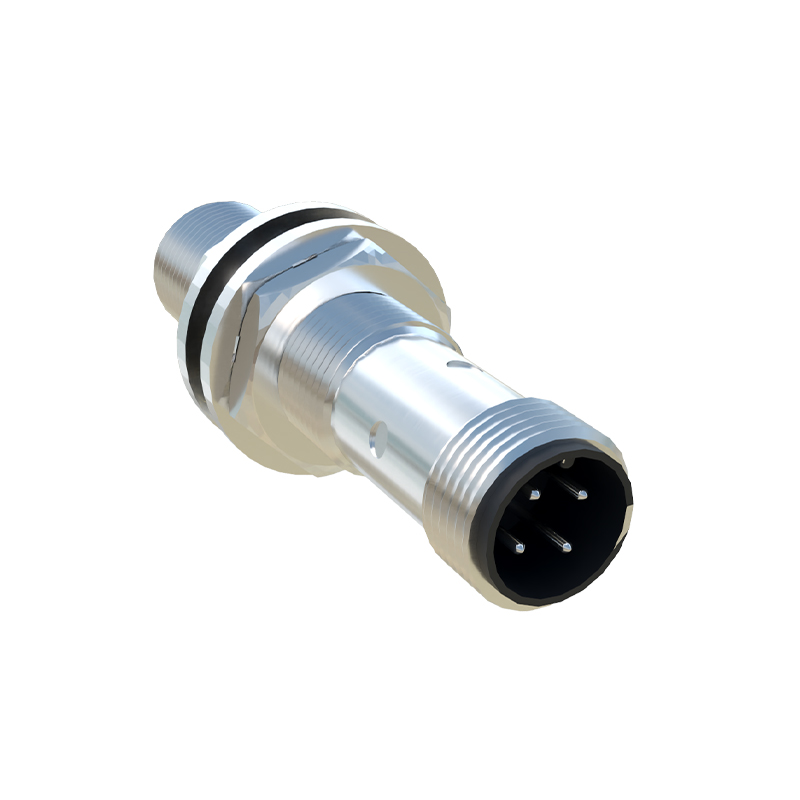
When no target object is present, the oscillator's energy is maintained at a constant level. However, when a conductive metal object enters this oscillating field, eddy currents are induced on the surface of the target. These eddy currents are circulating electrical currents that oppose the change in the magnetic field that created them, drawing energy from the oscillator circuit. This energy loss causes a reduction in the amplitude of the oscillation.
The sensor's detection circuit continuously monitors the amplitude of the oscillator. Once the amplitude drops below a predetermined threshold—indicating the presence of a target within the specified sensing range—the circuit triggers a change in the sensor's output state. This output is typically a solid-state switch, either a transistor (for DC sensors) or a triac (for AC sensors), which changes from an "off" state to an "on" state, or vice versa. This electrical signal is then used to control machinery, such as stopping a conveyor, counting parts, or confirming a robot's position.
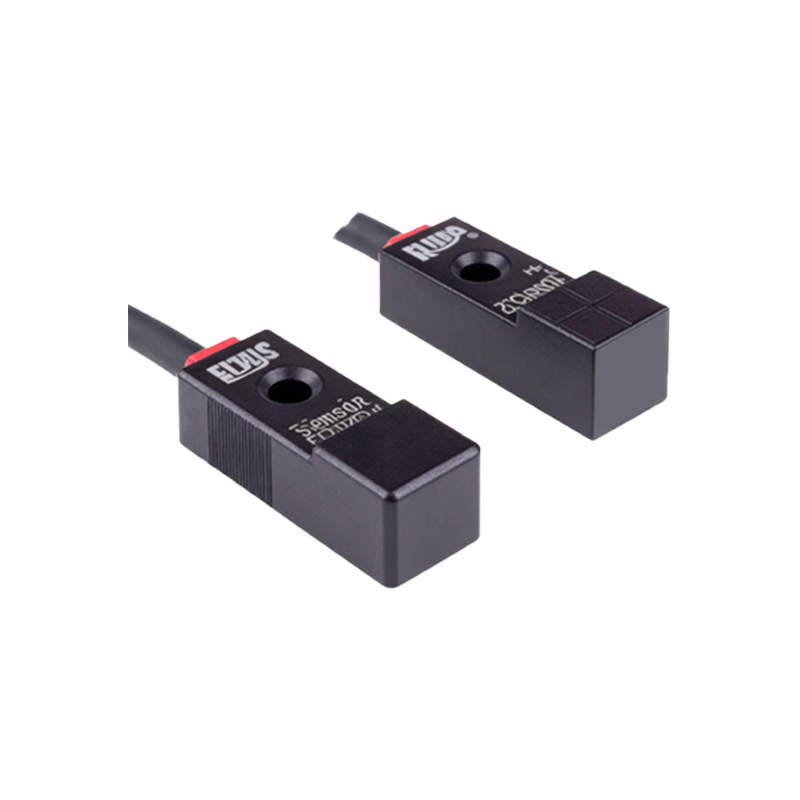
A critical specification is the sensing distance, or nominal range. This is the standard operating distance for which the sensor is calibrated, usually with a mild steel target of a defined size. It's important to note that the effective sensing distance can vary depending on the target material. Ferrous metals like iron and steel cause the greatest reduction in oscillation amplitude and are detected at the full nominal range. Non-ferrous metals like aluminum, copper, or brass generate weaker eddy currents, resulting in a reduced sensing distance, often requiring a correction factor.
Key characteristics define their performance. The operating frequency refers to how many on/off cycles the sensor can handle per second, crucial for high-speed counting. Hysteresis is a built-in feature that prevents output chatter when a target is at the edge of the sensing range; the switch-off point is slightly farther away than the switch-on point. These sensors are inherently self-contained, meaning they contain both the sensing and output electronics. They are also known for their resilience, being immune to environmental factors like dust, dirt, oil, and moisture (given appropriate IP ratings), unlike optical sensors.
The applications are vast and varied. In automotive assembly lines, they verify the presence of engine blocks or wheel rims. In packaging machinery, they detect metallic foil seals or control the fill level of cans. They are used for precise position sensing of cylinders in pneumatic systems, for detecting broken tools in CNC machines by checking for the presence of a drill bit, and for simple part counting on high-speed production lines. Their ability to work in harsh, dirty environments makes them preferable where optical sensors would fail.
When selecting an inductive proximity sensor, engineers must consider several factors: the required sensing distance, the target material and size, the output type (NPN sinking or PNP sourcing for DC models), the supply voltage, and the environmental conditions. Proper mounting, ensuring no surrounding metal interferes with the electromagnetic field (flush vs. non-flush mountable styles), is also essential for reliable operation.
In summary, the inductive proximity sensor is a workhorse of industrial sensing. Its elegant operation, based on electromagnetic damping, provides a contactless, wear-free, and highly reliable method for detecting metallic objects. From ensuring safety guards are in place to enabling complex automated sequences, its role in modern industrial control systems is both foundational and pervasive, driving efficiency and precision across countless sectors.