What Are Proximity Sensors?
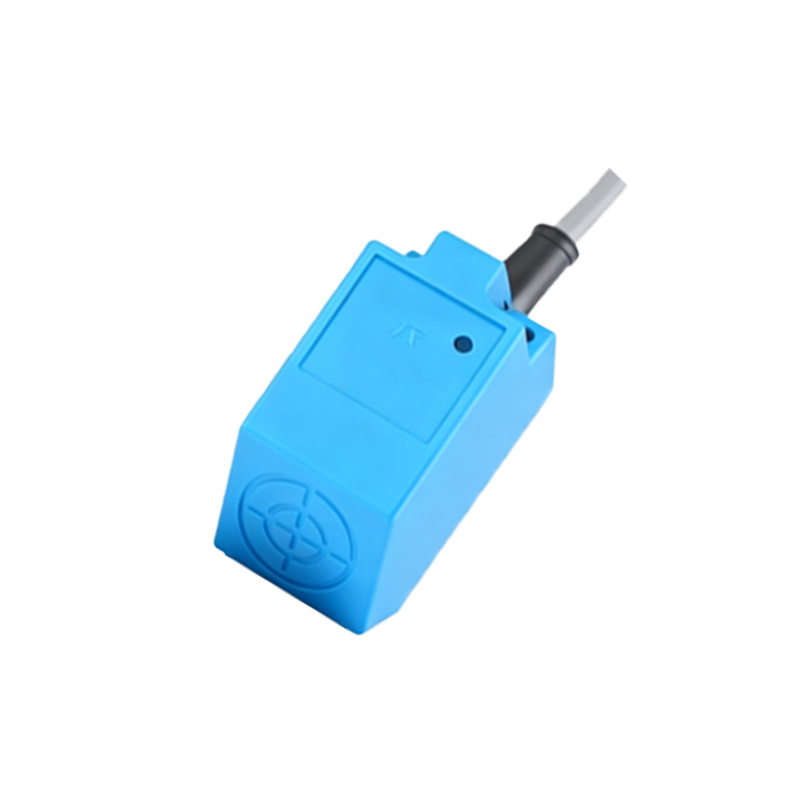
Proximity sensors are a fundamental component in modern industrial automation and control systems. These non-contact electronic devices are designed to detect the presence or absence of an object within a specified sensing range without any physical contact. They operate by emitting an electromagnetic field, light beam, or ultrasonic waves and then detecting changes in the return signal or field. This capability makes them indispensable in environments where reliability, speed, and durability are paramount. Unlike mechanical limit switches, proximity sensors have no moving parts, leading to longer operational lifespans and reduced maintenance needs. They are the silent sentinels of the factory floor, enabling precise, repeatable, and high-speed detection critical for process control, safety, and efficiency.
Core Operating Principles and Technologies
The functionality of proximity sensors is based on several distinct physical principles, each suited to different applications. Inductive proximity sensors are the most common type in industrial settings. They generate an oscillating electromagnetic field and detect the eddy current losses caused when a metallic target enters this field. They are exclusively used for detecting metals. Capacitive proximity sensors, on the other hand, can detect both metallic and non-metallic materials like liquids, plastics, or wood. They sense changes in capacitance caused by the presence of any material that alters the dielectric constant of the space between the sensor and the target. Photoelectric sensors use a beam of light (visible, infrared, or laser) and detect interruptions or reflections of that beam. Finally, ultrasonic sensors measure the time-of-flight of high-frequency sound waves to determine distance to an object, making them effective for level detection and presence sensing of varied materials.
Key Industrial Applications and Use Cases
The versatility of proximity sensors translates into a vast array of applications across nearly every manufacturing sector. In automotive assembly lines, inductive sensors precisely count gear teeth, verify piston position, or confirm the placement of metallic components. On packaging machinery, capacitive sensors ensure bottles are filled to the correct level by detecting liquid presence through container walls, while photoelectric sensors count boxes on a conveyor belt. In material handling, they provide position feedback for robotic arms and automated guided vehicles (AGVs), ensuring safe and accurate movement. They are crucial for machine safety, acting as part of interlock systems on guards and doors to prevent machine operation when access is open. Their role in enabling Industry 4.0 is growing, as sensor data feeds into PLCs and SCADA systems for real-time monitoring and predictive maintenance analytics.
Critical Selection Criteria for Engineers
Selecting the appropriate proximity sensor requires a careful analysis of several technical and environmental factors. The nature of the target material is primary: inductive for metals, capacitive for a broader range, photoelectric for long-range or small-object detection, and ultrasonic for challenging environments with dust or vapor. Sensing distance, or the nominal range at which the sensor can reliably detect a standard target, must be specified with a safety margin. Environmental conditions are critical; engineers must consider temperature extremes, potential exposure to chemicals, oils, or coolants, and the presence of electrical noise or welding sparks. The sensor's output type (e.g., NPN sinking, PNP sourcing, or analog) must be compatible with the control system's input module. Housing material, such as nickel-plated brass or stainless steel, is chosen based on required mechanical strength and corrosion resistance.
Advantages Over Traditional Detection Methods
The adoption of proximity sensors offers compelling advantages that directly impact operational bottom lines. Their non-contact nature eliminates mechanical wear and tear, dramatically increasing service life and reducing downtime for replacements. They can operate at very high switching frequencies, capable of detecting thousands of objects per minute, far exceeding the capability of mechanical switches. This enables faster machine cycles and higher throughput. They are highly resistant to contamination from dirt, grease, and moisture when properly rated (e.g., IP67), ensuring reliable operation in harsh industrial environments. Their solid-state design provides exceptional repeatability and accuracy, leading to improved product quality and process consistency. Furthermore, their modular and often compact designs allow for easy integration into tight spaces on complex machinery.
Integration and Future Trends
Integrating proximity sensors into a control system is a straightforward process, typically involving mounting, wiring to a DC power supply, and connecting the output signal to a programmable logic controller (PLC) input. Modern sensors often feature built-in diagnostics like LED status indicators for easy troubleshooting. The future of proximity sensing is closely tied to the evolution of smart factories. We are witnessing the rise of IO-Link enabled sensors, which provide not just a simple on/off signal but a digital communication channel for detailed parameterization, remote configuration, and advanced diagnostic data (e.g., operating temperature, signal strength, or wear indicators). This