Introduction to Photoelectric Sensors
Photoelectric sensors are indispensable components in modern industrial automation, providing non-contact detection of objects. They operate by emitting a beam of light, typically infrared, visible red, or laser, and detecting changes in the received light signal. The core principle involves a transmitter (light source) and a receiver (photodetector). When an object interrupts or reflects this light beam, it alters the signal at the receiver, triggering an output switch. This technology offers significant advantages over mechanical limit switches, including faster response times, longer operational life due to lack of physical contact, and the ability to detect a wide variety of materials, including transparent or fragile items. Their versatility makes them suitable for countless applications, from simple object presence detection to complex positioning and counting tasks on high-speed production lines.
Core Operating Modes
Photoelectric sensors are primarily categorized into three fundamental operating modes, each suited for specific environmental and application needs. The first is Through-Beam (or Opposed) mode. This configuration uses separate, physically opposed transmitter and receiver units. Detection occurs when an object breaks the direct light beam between them. This mode offers the longest sensing range and highest reliability, as it is less affected by object surface characteristics like color or reflectivity. The second mode is Retroreflective. Here, the transmitter and receiver are housed in a single unit. The emitted light is directed towards a specialized reflector (corner cube reflector) which bounces the beam directly back to the receiver. An object is detected when it interrupts this return path. This mode simplifies wiring and alignment compared to through-beam sensors. The third, and most common, mode is Diffuse (or Proximity) sensing. The transmitter and receiver are also in one housing. Detection relies on the object itself reflecting a portion of the emitted light back to the receiver. The sensing distance depends heavily on the object's size, color, and surface texture, making it ideal for applications where mounting a reflector or separate receiver is impractical.
Advanced Sensing Technologies
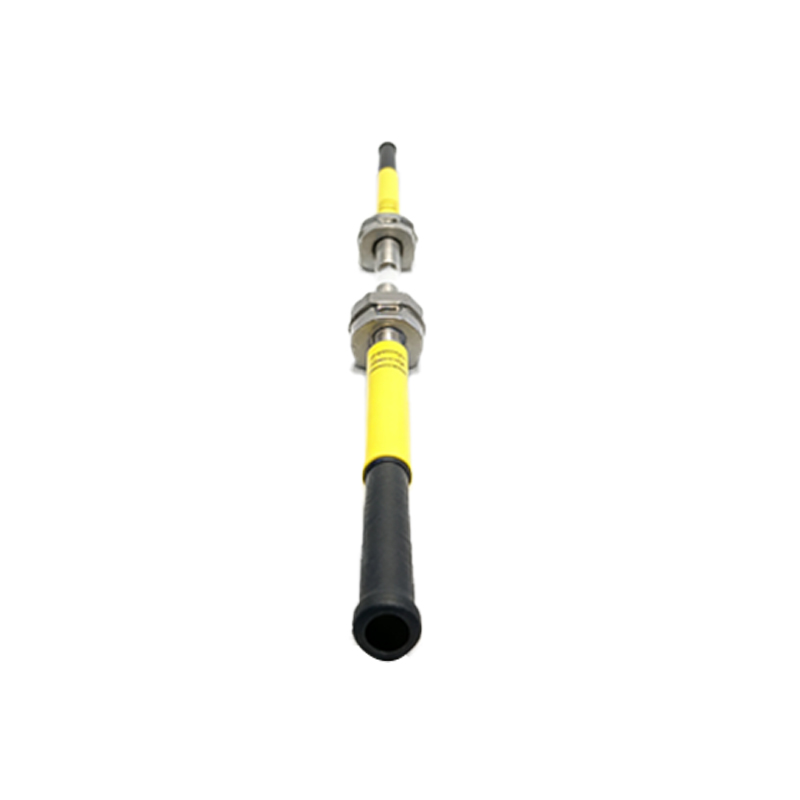
To address challenges in complex industrial environments, advanced photoelectric sensor technologies have been developed. Background Suppression (BGS) sensors, a subtype of diffuse sensors, use triangulation principles to detect objects only within a precise, fixed distance window, ignoring any background surfaces beyond that point. This is crucial for reliably detecting objects on conveyor belts or in bins. Contrast sensors are designed to detect differences in contrast or color marks on surfaces, such as labels on packaging. Luminescence sensors detect the presence of materials that glow under UV light, useful for security features or specific material sorting. Fiber optic sensors represent another critical advancement, where the sensing element consists of flexible fiber optic cables connected to an amplifier. This allows detection in extremely tight spaces, high-temperature zones, or areas with high electromagnetic interference, as the sensitive electronics can be remotely located.
Key Selection Criteria for Industrial Applications
Selecting the appropriate photoelectric sensor requires careful consideration of several technical and environmental factors. Sensing range is paramount; it must accommodate the maximum distance between the sensor and the target object under all operating conditions. The type of object—its size, material, color, and surface finish—directly influences the choice of sensing mode and light source. Environmental conditions pose significant challenges. Ambient light, dust, fog, steam, and temperature extremes can interfere with performance. Sensors with modulated LED light (pulsed light) and specialized housings (IP67/IP69K ratings) are essential for noisy or harsh environments. Electrical requirements, such as output type (PNP/NPN, NO/NC), supply voltage, and connection method, must match the control system. Finally, physical characteristics like housing size, shape (cylindrical or rectangular), and mounting options are critical for integration into existing machinery.
Common Applications in Automation
The applications for photoelectric sensors span virtually every manufacturing and logistics sector. In packaging lines, they are used for label detection, cap placement verification, and case counting. Automotive assembly relies on them for part presence confirmation, robot guidance, and weld nut detection. In material handling, sensors control conveyor flow, manage palletizing/depalletizing, and ensure proper box filling levels. They perform precise bottle counting in bottling plants, detect wafer presence in semiconductor fabrication, and ensure correct paper registration in printing presses. Their ability to provide fast, accurate feedback is fundamental to achieving high efficiency, quality control, and machine safety in automated systems.
Installation and Alignment Best Practices
Proper installation is critical for reliable sensor operation. Secure mounting is essential to prevent vibration-induced misalignment. For through-beam and retroreflective sensors, precise optical alignment is necessary to ensure the receiver gets the maximum signal strength. Many modern sensors feature alignment indicators, such as LED signal strength bargraphs, to assist in this process. For diffuse sensors, the mounting angle relative to the target surface must be considered to optimize reflectivity. It is crucial to avoid sensing unintended objects or background surfaces. Environmental protection measures, like using protective shrouds to guard against physical impact or accumulations of dust and debris on the lens, can significantly extend sensor life and maintain performance.
Systematic Troubleshooting Guide
When a photoelectric sensor fails to operate correctly, a systematic approach to troubleshooting is required. The first step is always to verify the power supply and wiring connections, ensuring correct voltage and secure terminals. Next, inspect the sensor's lens and, if applicable, the reflector for obstructions, dirt, or damage, cleaning them carefully if needed. Check the alignment for through-beam or retroreflective types; even slight shifts can cause failure. Evaluate the target object itself—has its color, material, or position changed? Utilize the sensor's built-in diagnostic indicators. Most sensors have a power LED and a separate output or signal strength LED. A lit power LED but no output LED often indicates the sensing condition is not met (e.g., beam not broken or insufficient reflection). If the output LED is on but the PLC receives no signal, the issue may lie in the wiring or the controller's input circuit. Consulting the sensor's datasheet for specific diagnostic features is always recommended.