Introduction to Powder Proximity Sensing
Powder proximity sensors represent a critical category of industrial automation components, specifically engineered for the detection and monitoring of powdered or granular materials. Unlike standard proximity sensors designed for solid objects, these specialized devices must contend with unique material properties such as low bulk density, potential for dust generation, and variable flow characteristics. Their primary function is to provide reliable, non-contact detection of the presence or absence of powder within silos, hoppers, pipelines, and processing equipment. This capability is fundamental to preventing overfills, ensuring continuous feed, and triggering process control actions in industries ranging from food and pharmaceuticals to plastics and cement manufacturing. The operational principle hinges on adapting established sensing technologies to the challenging environment presented by fine, often aerated, particulate matter.
Core Operating Principle: Capacitive Sensing Technology
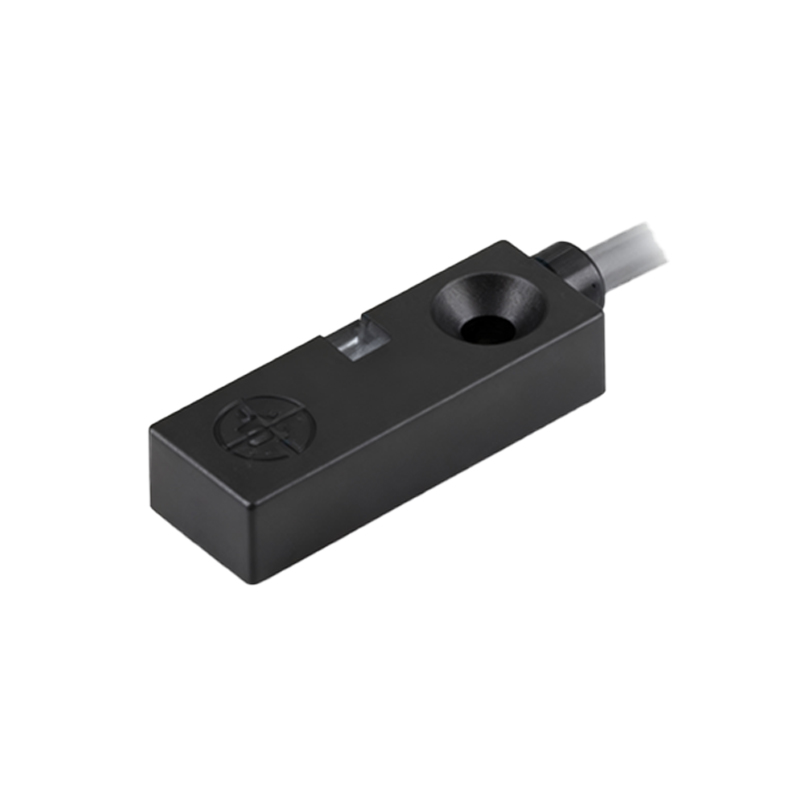
The predominant technology employed in powder proximity sensors is capacitive sensing. The fundamental principle involves detecting changes in capacitance between the sensor's active face (or probe) and a reference ground, typically the sensor's body or the installation vessel's wall. The sensor generates a high-frequency oscillating electric field from its sensing electrode. When no powder is present, the capacitance remains at a baseline level determined by the dielectric constant of air. As powder particles approach the sensing area, they enter this electric field. Since most powdered materials (like flour, plastic pellets, or cement) have a dielectric constant higher than air, their presence alters the local dielectric properties. This change increases the capacitance of the system. The sensor's internal circuitry continuously monitors this capacitance. Once the change exceeds a pre-set threshold—calibrated for the specific material being detected—the sensor's output state switches, signaling the presence of powder.
Key Design Considerations and Material Compensation
A significant challenge in powder detection is the variability in material properties. Factors such as moisture content, particle size distribution, compaction, and chemical composition can all influence the dielectric constant. Advanced powder proximity sensors incorporate features to mitigate these effects. Automatic compensation circuits are common, which dynamically adjust the sensitivity baseline to account for gradual environmental changes like humidity buildup or material coating on the probe. Additionally, sensors often feature adjustable sensitivity potentiometers or teach-in functions, allowing engineers to calibrate the detection threshold precisely for the application's specific material under normal operating conditions. The physical design of the probe is also crucial; rod, cable, and plate styles are available to suit different vessel geometries and material flow patterns, ensuring the electric field adequately penetrates the detection zone.
Installation and Application Best Practices
Correct installation is paramount for reliable operation. The sensor must be mounted at the precise point where detection is required, such as a high or low level within a silo. It is critical to ensure the sensing area is unobstructed and that the probe length is suitable for the vessel size. In conductive metal vessels, proper grounding is essential to establish a stable capacitive coupling. For non-conductive vessels (e.g., plastic bins), a separate reference electrode may be necessary. Applications are diverse: they include high-level detection to prevent overfilling, low-level detection to avoid pump cavitation or process starvation, and continuous level monitoring in conjunction with control systems. In pneumatic conveying lines, specially designed sensors can detect the presence or absence of powder flow, providing a crucial signal for line blockage or empty feeder conditions.
Advantages Over Alternative Detection Methods
Powder proximity sensors offer distinct advantages compared to mechanical, optical, or ultrasonic methods. As non-contact devices, they suffer no wear from material abrasion, a common failure point for paddle wheel or diaphragm switches. They are unaffected by color, transparency, or dust-laden atmospheres that can blind optical sensors. While ultrasonic and radar sensors are excellent for continuous level measurement, capacitive proximity sensors are often more cost-effective for simple point-level detection tasks. Their solid-state design with no moving parts translates to high reliability, minimal maintenance, and long service life in harsh industrial environments, provided they are selected and installed correctly for the material and process.
Conclusion and Selection Criteria
In summary, the effective operation of powder proximity sensors is based on the precise measurement of capacitance changes caused by the intrusion of powdered material into a high-frequency electric field. Successfully deploying these sensors requires a clear understanding of the material's electrical properties, the process conditions, and the vessel characteristics. When selecting a sensor, key parameters to evaluate include the dielectric constant of the powder, required sensing range, process temperature and pressure, chemical compatibility of the probe material, and the necessary output type (e.g., PNP/NPN, relay, analog). By matching the sensor's capabilities to the application's demands, engineers can achieve robust, maintenance-free detection that enhances process safety, efficiency, and