Introduction to Photoelectric Sensors in Elevator Systems
Photoelectric sensors are fundamental components in modern elevator control systems, including the Mitsubishi LUN-II-S (commonly referred to as the "Lingyun 2S"). These devices play a critical role in ensuring precise positioning, safe door operation, and reliable car movement. Unlike mechanical limit switches, photoelectric sensors offer non-contact detection, which translates to higher durability, reduced maintenance, and improved accuracy. In the LUN-II-S model, these sensors are integrated into the control logic to monitor the position of the elevator car, detect landing levels, and manage door opening and closing sequences. Their operation is based on the principle of light beam interruption or reflection, providing a clean digital signal to the elevator's main controller. The reliability of these sensors directly impacts the overall performance and safety certification of the elevator system.
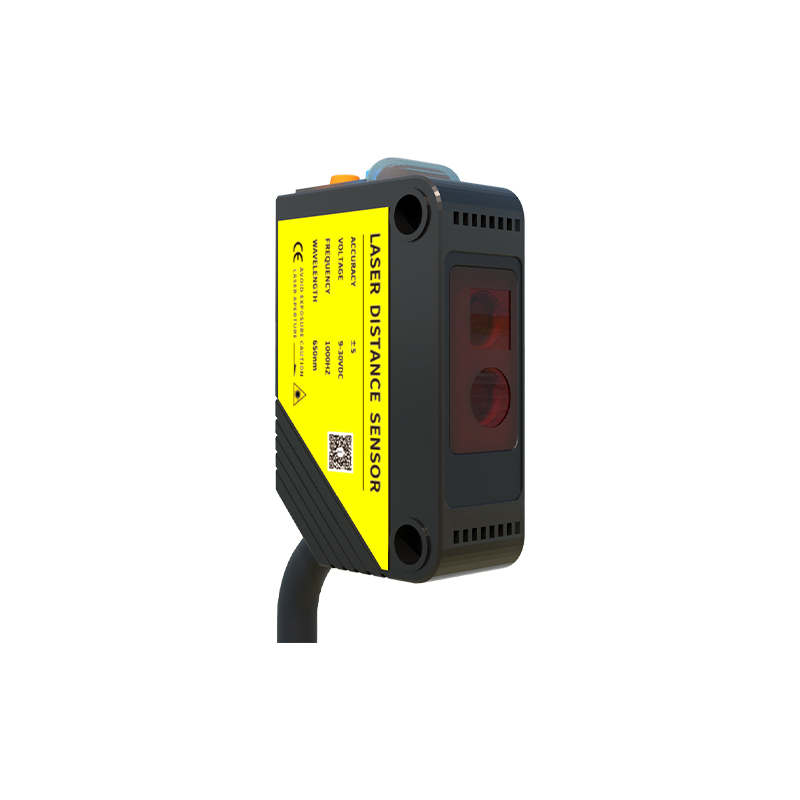
Working Principle and Types Used
The photoelectric sensors deployed in Mitsubishi LUN-II-S elevators typically operate on one of two primary principles: through-beam or reflective. Through-beam sensors consist of a separate emitter and receiver. The emitter projects a focused light beam, often infrared, to the receiver. When an object, such as the elevator car or door, interrupts this beam, the receiver's signal changes state, signaling the controller. This type is highly accurate and used for critical positioning tasks. Reflective sensors, on the other hand, house both emitter and receiver in a single unit. They detect objects when the emitted light beam reflects off a target back to the receiver. A common application in the LUN-II-S is for door safety edges or detecting obstructions in the doorway. These sensors are designed to be immune to ambient light interference and are calibrated for specific detection ranges as per the elevator's mechanical design.
Integration within the LUN-II-S Control Architecture
In the Mitsubishi LUN-II-S elevator, photoelectric sensors are not standalone devices but are intricately woven into the proprietary MELSEC or similar Mitsubishi control architecture. Their signals are fed into the elevator's Programmable Logic Controller (PLC) or dedicated control boards. For instance, sensors mounted in the hoistway provide landing zone detection. As the car approaches a floor, a vane or flag attached to the car interrupts the sensor beam, generating a precise slowdown and leveling signal. Similarly, door zone sensors ensure the car is perfectly aligned with the floor sill before door opening is permitted. The control software uses these inputs to execute smooth starts and stops, directly influencing passenger comfort and energy efficiency. The wiring and signal conditioning are designed to meet strict electromagnetic compatibility (EMC) standards to prevent false triggering.
Common Applications and Placement
Specific applications of photoelectric sensors in the LUN-II-S elevator system are numerous. Key placements include the hoistway for position registration, where a series of sensors create a digital map of the elevator's travel path. Door operation utilizes sensors for safety edges (light curtains) that instantly reverse door closing if an obstruction is detected, a vital safety feature. Another critical application is in the pit and overhead spaces, where sensors may act as final limit switches to prevent over-travel. Furthermore, sensors monitor the condition of compensation chains and governor systems. Each sensor's location is determined during the installation and commissioning phase, with precise alignment being crucial. Technicians use manufacturer-specific tools and software to calibrate the sensing distance and response time, ensuring they meet the original design specifications.
Maintenance, Troubleshooting, and Best Practices
Regular maintenance of photoelectric sensors is essential for the long-term reliability of the LUN-II-S elevator. Maintenance routines involve visual inspection for physical damage, cleaning of the lens surfaces to prevent dust or grease buildup that could scatter or block the light beam, and verification of alignment. A common troubleshooting step is to check the sensor's LED indicator, which typically shows power status and output state. Signal verification using a multimeter or the elevator's diagnostic software can isolate faults. Problems often stem from misalignment due to building settlement or vibration, wiring issues like broken conductors or poor connections, or, less frequently, component failure. Best practices include using only OEM-specified replacement parts, following static discharge precautions during handling, and documenting any adjustments made to the sensor's position or sensitivity during servicing.
Advancements and Future Trends
While the core technology in existing LUN-II-S installations is mature, newer generations of Mitsubishi elevators incorporate advanced sensing technologies. These include laser-based photoelectric sensors for even higher precision in leveling, and sensors with integrated IO-Link or other industrial communication protocols for predictive maintenance. These smart sensors can transmit data on their own health, operating hours, and environmental conditions to the building management system. Although retrofitting older LUN-II-S systems with such advanced sensors may not always be feasible or cost-effective, understanding these trends highlights the evolution from simple binary detection to intelligent sensing networks. This progression aims to further enhance safety, reduce downtime through anticipatory maintenance, and improve the overall lifecycle management of elevator assets.