Introduction to 3-Wire Proximity Sensors
In the realm of industrial automation, proximity sensors are indispensable components for non-contact object detection. Among the various configurations, the 3-wire proximity sensor stands as the most prevalent and versatile type. Unlike their 2-wire counterparts, which simplify installation but can have limitations in switching capacity and voltage drop, 3-wire sensors offer superior performance and reliability. They are extensively used in manufacturing, packaging, material handling, and automotive assembly lines. This article delves into the fundamental principles, wiring configurations, operational characteristics, and key application considerations for these critical devices.
Core Operating Principle
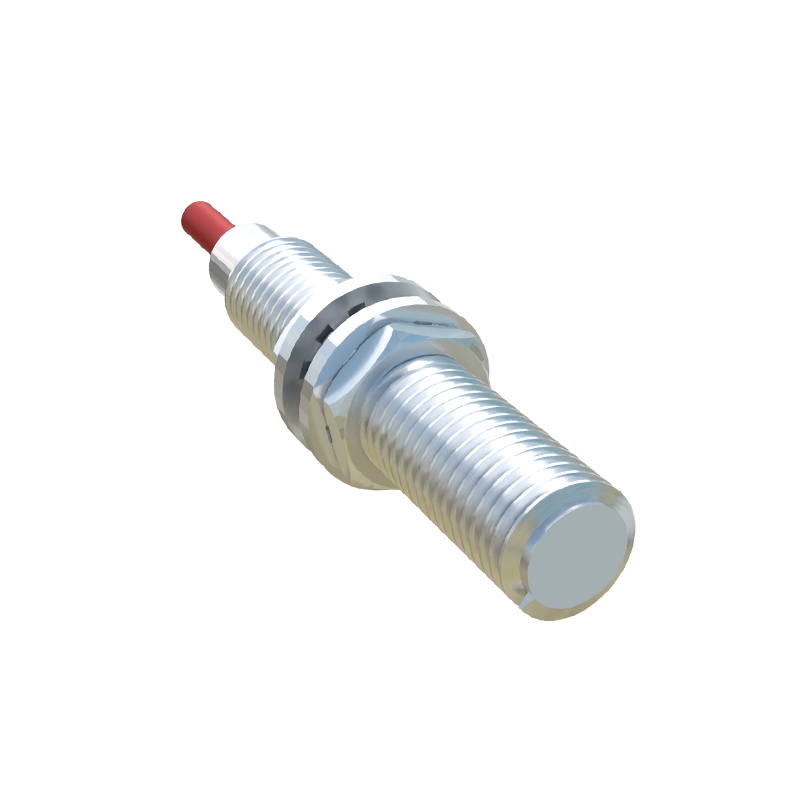
A 3-wire proximity sensor operates primarily on the principle of electromagnetic induction (for inductive types detecting metals) or capacitance (for capacitive types detecting various materials). The sensor generates an oscillating electromagnetic field from its sensing face. When a target object enters this field, it causes a change in the oscillation amplitude or frequency. An internal circuit detects this change and triggers a solid-state switching output. The "3-wire" designation refers to the distinct connections required: one for power supply positive (typically brown wire), one for power supply negative or common (typically blue wire), and one for the output signal (typically black wire for NPN or black/white for PNP). This dedicated output line provides a clean, low-impedance signal to the programmable logic controller (PLC) or other control system.
Wiring Configurations: NPN vs. PNP
The most crucial distinction in 3-wire sensors is the output transistor type, categorized as NPN or PNP. This determines how the sensor interfaces with the control system's input module. An NPN sensor, also known as a sinking sensor, switches the negative or 0V (blue) line to the output (black) wire when activated. In this configuration, the load (e.g., PLC input) is connected between the positive supply (brown) and the sensor's output (black). Conversely, a PNP sensor, or a sourcing sensor, switches the positive voltage (brown) to the output wire. Here, the load is connected between the sensor output and the common negative (blue). The choice between NPN and PNP is not about performance but about compatibility with the control system's input circuit architecture, which is often region-dependent (e.g., PNP is common in Europe, NPN in Asia).
Detailed Wiring and Connection Procedure
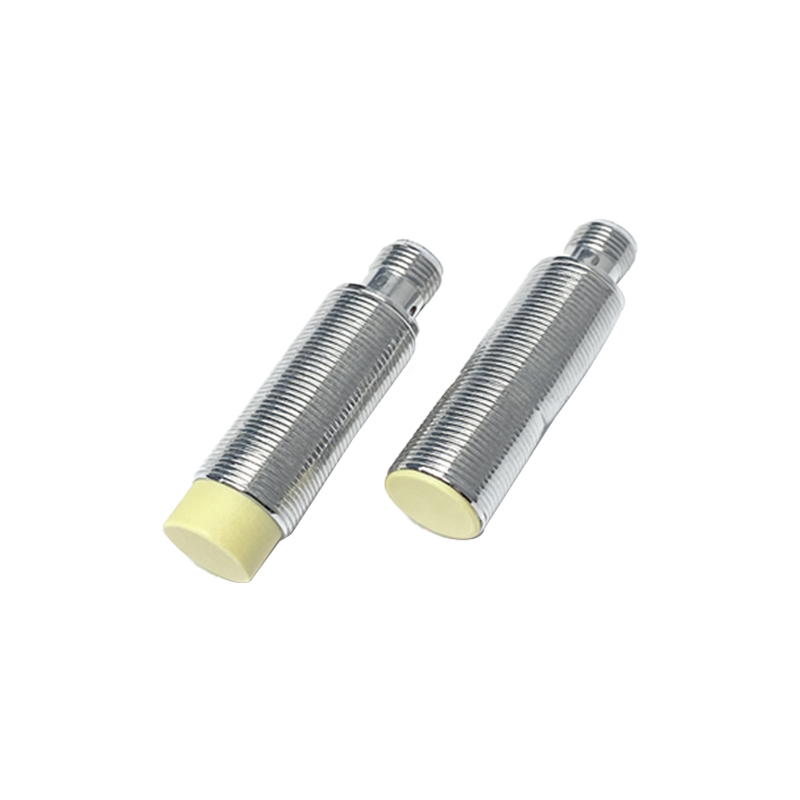
Correct wiring is paramount for safe and reliable operation. First, verify the sensor's voltage rating (commonly 10-30V DC). Connect the brown wire to the positive DC supply terminal and the blue wire to the negative/0V terminal. The output wire (black for NPN) is then connected to the PLC's input channel. The corresponding PLC input common must be wired appropriately: for an NPN sensor, the PLC input common is typically connected to positive (+V), creating a complete circuit when the sensor activates and sinks current. Always refer to the manufacturer's datasheet for the exact color code and pinout, as variations can exist. Proper shielding and routing of cables away from high-voltage power lines are recommended to prevent electrical noise interference.
Output Types: Normally Open (NO) vs. Normally Closed (NC)
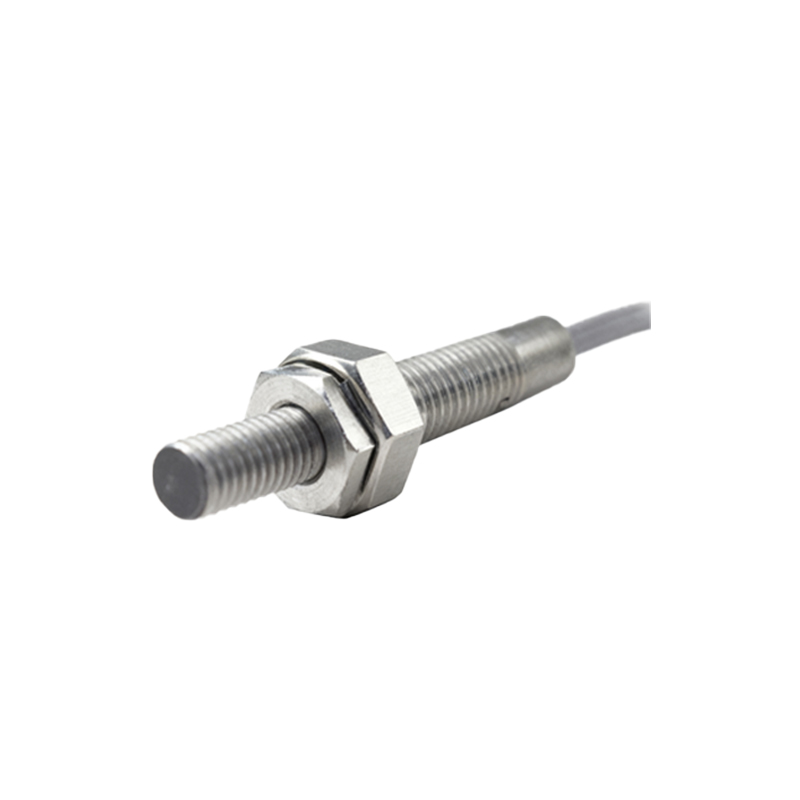
Beyond NPN/PNP, 3-wire sensors offer a choice of output logic: normally open (NO) or normally closed (NC). A normally open (NO) output is inactive (open circuit, no current flow) when no target is present. When a target is detected, the output switches "on," closing the circuit to allow current flow. A normally closed (NC) output behaves in the opposite manner: it is active (closed circuit) with no target present and switches "off" (opens the circuit) upon detection. The selection depends on the safety and logic requirements of the application. For instance, an NC configuration might be used for a safety-critical presence check where a wire break should be detected as a fault condition.
Key Advantages and Performance Characteristics
The 3-wire design offers significant advantages. It provides a physically separate path for power and signal, resulting in minimal residual current (leakage) when off and a very low voltage drop when on. This ensures a crisp, unambiguous signal for the controller. These sensors typically have faster response times and higher switching frequencies than 2-wire types, making them suitable for high-speed counting or positioning tasks. They also allow for a wider range of output configurations and are less sensitive to load characteristics. Their robust construction, often with LED status indicators, facilitates easy troubleshooting and maintenance in harsh industrial environments.