Introduction to Alarm Photoelectric Sensors
Alarm photoelectric sensors are critical components in modern industrial automation, designed to detect the presence, absence, or position of objects without physical contact. These sensors operate by emitting a beam of light, typically infrared, visible red, or laser, and analyzing the reflected or received signal. When the light beam is interrupted or altered by an object entering its detection field, the sensor triggers an alarm output. This output can be a relay contact change, a solid-state switch, or a specific communication protocol signal, which is then used to initiate safety protocols, halt machinery, or alert operators. The fundamental principle relies on the modulation of light, allowing for high-speed, reliable detection even in challenging industrial environments characterized by dust, vibration, or variable lighting conditions. Their non-contact nature ensures minimal wear and tear, leading to long service life and reduced maintenance costs, making them indispensable for applications ranging from packaging and material handling to security and access control.
Key Specifications and Selection Criteria
Selecting the appropriate alarm photoelectric sensor model requires a thorough understanding of key specifications. The sensing range is paramount, with models available for short-range (a few centimeters), medium-range (up to several meters), and long-range (tens of meters) applications. The type of sensing mode—diffuse (proximity), retro-reflective, or through-beam—determines the installation and operational logic. Diffuse models sense light reflected directly from the target, while retro-reflective types use a reflector, and through-beam models employ separate emitter and receiver units. Light source choice (LED or laser) affects spot size and precision. Output configuration, such as NPN/PNP transistor, relay, or analog (4-20mA/0-10V), must match the control system's input requirements. Additionally, environmental ratings like IP67 or IP69K for dust and water ingress protection, operating temperature range, and housing material (e.g., stainless steel for washdown areas) are critical for ensuring reliability. Response time, typically in milliseconds, is vital for high-speed production lines.
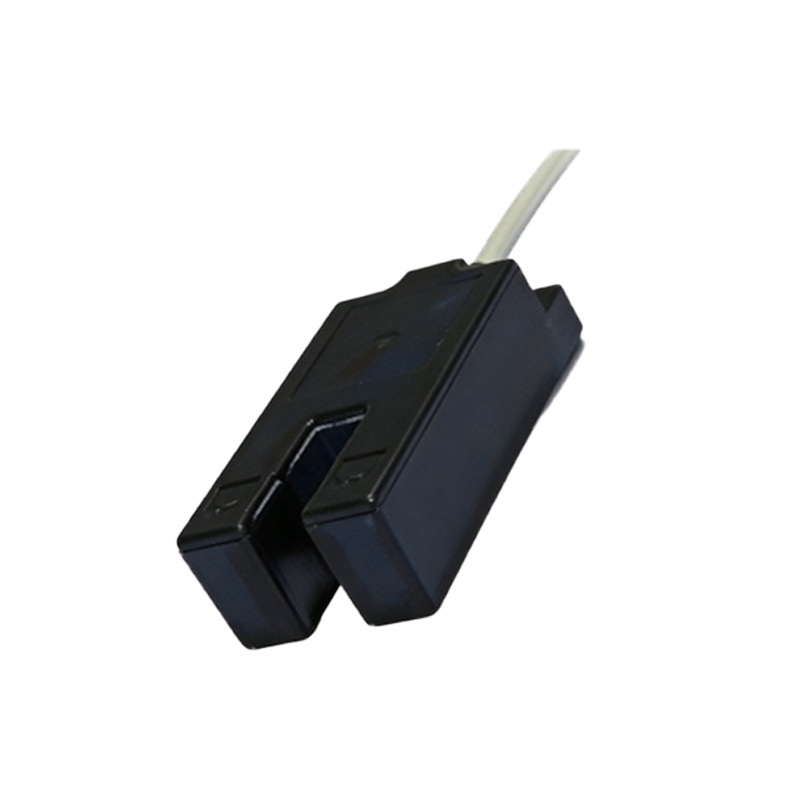
Popular Model Series and Their Applications
Several leading manufacturers offer robust series of alarm photoelectric sensors. For instance, the Series PX from Manufacturer A features compact, modular designs with advanced background suppression technology, ideal for detecting small objects on conveyor belts in the food and beverage industry. The V18 Series by Manufacturer B is renowned for its rugged, cylindrical metal housing and long sensing ranges, commonly used in automotive assembly for part presence verification. Manufacturer C's Q4X Series laser sensors provide exceptional accuracy and a visible red beam for precise alignment, perfect for edge detection in paper and printing machinery. Another notable line is the E3Z Series of diffuse-reflective sensors, known for their affordability and stability, widely deployed in packaging equipment for counting and jam detection. Each series is engineered with specific application challenges in mind, offering variants with built-in timers, logic functions, or IO-Link communication for Industry 4.0 connectivity.
Advanced Features and Smart Functionality
Modern alarm photoelectric sensors incorporate advanced features that enhance performance and simplify integration. Background Suppression (BGS) and Foreground Suppression (FGS) technologies allow the sensor to ignore objects beyond or before a set distance, respectively, ensuring detection of only the target. Teach-in functionality enables quick configuration by simply presenting the target to the sensor, which then automatically sets its sensitivity. Sensors with IO-Link capability provide detailed diagnostic data, such as signal strength, operating hours, and temperature, facilitating predictive maintenance and reducing downtime. Some high-end models offer Dual Digital Outputs, allowing one sensor to monitor two different conditions, such as "object present" and "object missing." Synchronization features prevent crosstalk in dense installations where multiple sensors operate nearby. These smart features transform simple detection devices into intelligent nodes within a networked automation system.
Installation, Calibration, and Troubleshooting
Proper installation is crucial for optimal sensor performance. For through-beam sensors, precise alignment of the emitter and receiver is necessary, often aided by alignment indicators or audible signals. Retro-reflective sensors require a clean, properly angled reflector. Diffuse sensors should be mounted at the correct distance and angle to the target, considering its color and reflectivity. Calibration, often via potentiometer or push-button, adjusts sensitivity to avoid false triggers from environmental noise. Common troubleshooting steps include checking power supply connections, verifying the alignment, cleaning the lens of dust or debris, and ensuring the target object is within the specified sensing range and has adequate reflective properties. Monitoring the sensor's status LED can quickly indicate problems like a stable light condition, overload, or short circuit. Regular maintenance schedules should include visual inspections and functional tests.
Future Trends and Industry Outlook
The evolution of alarm photoelectric sensors is closely tied to trends in industrial IoT and miniaturization. Future models will increasingly feature enhanced connectivity, seamlessly integrating with cloud platforms for remote monitoring and data analytics. There is a growing demand for sensors with even smaller form factors to fit into compact machinery without sacrificing sensing range or durability. Energy-efficient designs that consume less power are also a priority. Furthermore, the integration of artificial intelligence for pattern recognition at the edge could enable sensors to not only detect presence but also classify objects based on size, shape, or material. The use of new light sources and spectral analysis may expand detection capabilities to include color or surface quality inspection. As industries strive for greater efficiency and zero-defect production, the role of intelligent, connected photoelectric sensors will become more central than ever.