Introduction to Mirror Reflective Photoelectric Sensors
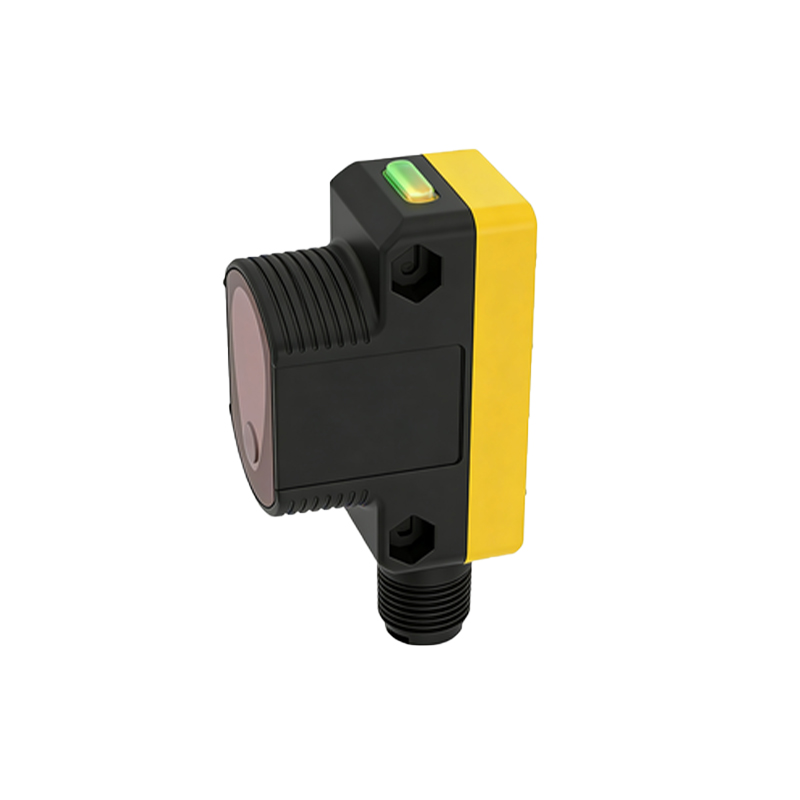
Transparent mirror reflective photoelectric sensors, often referred to as retro-reflective sensors, represent a sophisticated category of detection devices widely used in industrial automation. Unlike diffuse or through-beam sensors, these units consist of an emitter and a receiver housed within a single device. They operate by emitting a light beam, typically infrared or visible red, towards a specialized reflector. This reflector, often a prismatic or corner-cube type, is designed to return the light beam directly back to the receiver along the same path, regardless of the angle of incidence. The "transparent" aspect in some models refers to the sensor's ability to allow a certain degree of background light or to have a visible indicator, but more critically, it denotes the sensor's capability to detect transparent or translucent objects, such as glass, plastic films, or clear bottles, which pose a significant challenge for standard reflective sensors.
Core Working Principle and Technology
The fundamental operation hinges on the precise modulation of the emitted light. The sensor's emitter sends a modulated pulse of light. The dedicated reflector returns this modulated signal. The receiver is tuned to recognize only this specific modulated frequency, effectively filtering out ambient light interference from factory lighting or sunlight. Detection occurs when a target object interrupts this established light path between the sensor and the reflector. For detecting transparent objects, advanced models employ polarization filters. The emitter's light is polarized in one plane. The reflector is a special "corner-cube retro-reflector" that rotates the polarization of the reflected light. The receiver has a polarizing filter oriented orthogonally. When the beam is uninterrupted, the rotated polarized light passes through the receiver's filter. A transparent object passing through the beam, however, will slightly alter or preserve the original polarization, causing a detectable drop in the received signal strength, thus triggering the output.
Key Advantages in Industrial Settings
These sensors offer several compelling benefits. First is their long sensing range compared to diffuse sensors, often reaching several meters, while maintaining a compact, single-body design that simplifies mounting and alignment compared to separate emitter/receiver through-beam setups. The use of a modulated light source grants high immunity to ambient light, ensuring stable operation in varied lighting conditions. The primary advantage, however, is their unique capability to reliably detect transparent and glossy objects without contact. This solves a pervasive problem in packaging, bottling, and material handling industries. Furthermore, they provide a consistent, strong return signal from the reflector, leading to a high signal-to-noise ratio and stable switching characteristics.
Primary Application Areas
The application spectrum for transparent mirror reflective sensors is vast. In packaging machinery, they are indispensable for detecting the presence or absence of clear plastic films, labels on transparent backings, and empty glass or plastic containers on high-speed filling lines. The semiconductor and electronics manufacturing industries utilize them for detecting wafer cassettes, transparent PCB carriers, and the presence of films or coatings. In automotive assembly, they monitor the passage of windshields and windows. They are also crucial in printing for detecting transparent overlays or monitoring web breaks of clear films. Any process involving the handling, counting, or positioning of clear materials is a potential application area for this sensor technology.
Critical Selection Criteria and Installation Tips
Selecting the appropriate sensor requires careful consideration of several parameters. The most crucial is the material and characteristics of the target object—its transparency, thickness, and surface finish. The required sensing distance and the size of the object must be matched with the sensor's specified range and beam spot size. Environmental factors like dust, fog, temperature, and potential exposure to cleaning chemicals dictate the required ingress protection (IP) rating. Electrical output type (PNP/NPN, analog, IO-Link) must be compatible with the control system. For installation, precise alignment with the reflector is paramount for optimal performance. Manufacturers often provide alignment indicators like visible red beams or signal strength LEDs. The sensor and reflector should be mounted on stable surfaces to prevent vibration-induced misalignment. It is also vital to ensure the background behind the reflector is free from highly reflective surfaces that could cause false triggers.
Comparison with Other Photoelectric Sensing Modes
Understanding where mirror reflective sensors fit among other types is key. Through-beam sensors offer the longest range and highest reliability for opaque object detection but require separate mounting for emitter and receiver. Diffuse reflective sensors detect objects without a reflector but have shorter ranges and can be fooled by the color or reflectivity of the target. Mirror reflective sensors strike an optimal balance, offering longer ranges than diffuse types in a single housing, with the added, unique benefit of transparent object detection. They are generally less susceptible to object color variations than diffuse sensors but require a clear path to and from the reflector.
Future Trends and Technological Developments
The evolution of transparent mirror reflective sensors is aligned with Industry 4.0 trends. Future developments include enhanced intelligence through integrated IO-Link communication, which allows for parameter setting, condition monitoring, and diagnostic data reporting directly to the controller. Miniaturization continues, enabling installation in tighter spaces. Improved algorithms for background suppression and digital signal processing will further enhance their ability to discriminate between target objects and environmental noise. There is also a growing focus on developing models with even higher precision for detecting ultra-thin or minimally contrasting transparent materials, pushing the boundaries of what is automatable in modern manufacturing.