Introduction to LA02 Photoelectric Sensor
The LA02 photoelectric sensor represents a significant advancement in industrial sensing technology, designed to deliver reliable performance in demanding environments. As a key component in automation and control systems, this sensor utilizes light beams to detect the presence, absence, or distance of objects without physical contact. Its compact design and robust construction make it suitable for a wide range of applications, from manufacturing lines to packaging machinery. The LA02 series is engineered to meet international standards, ensuring compatibility with various industrial setups. By converting light signals into electrical outputs, it enables precise monitoring and control, enhancing operational efficiency and safety in automated processes.
Key Technical Specifications and Features
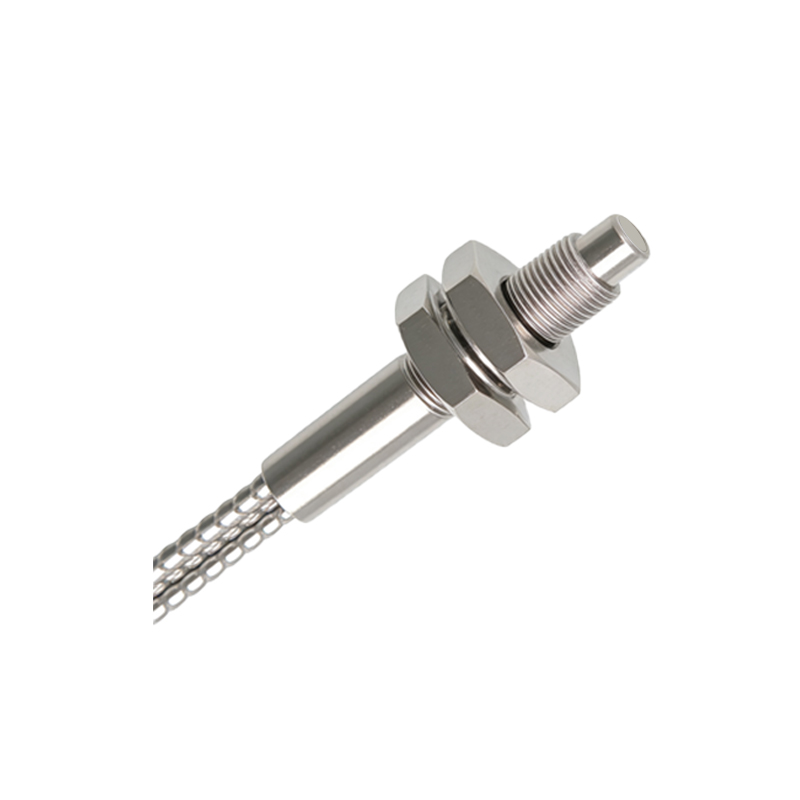
The LA02 photoelectric sensor boasts a set of impressive technical specifications that contribute to its high reliability. It typically operates with a sensing range of up to 2 meters, depending on the model, and supports both diffuse and retro-reflective sensing modes. The sensor features a response time of less than 1 millisecond, allowing for rapid detection in fast-paced industrial settings. Constructed with an IP67-rated housing, it is resistant to dust, water, and mechanical shocks, ensuring durability in harsh conditions. Additionally, the LA02 includes adjustable sensitivity settings, LED indicators for status monitoring, and a choice of output types such as NPN, PNP, or analog signals. These features make it versatile for integration into diverse control systems, from simple switches to complex programmable logic controllers (PLCs).
Working Principle and Sensing Modes
At its core, the LA02 photoelectric sensor operates on the principle of light emission and reception. It contains a light source, usually an infrared or visible LED, and a photodetector. When the emitted light beam is interrupted or reflected by an object, the sensor detects the change and triggers an output signal. The LA02 supports multiple sensing modes: through-beam, retro-reflective, and diffuse. In through-beam mode, a separate emitter and receiver are used for long-range detection. Retro-reflective mode employs a reflector to bounce light back to the sensor, ideal for medium distances. Diffuse mode relies on light reflecting directly from the object, suitable for close-range applications. This flexibility allows users to select the optimal mode based on environmental factors and detection requirements.
Installation and Calibration Guidelines
Proper installation and calibration are crucial for maximizing the performance of the LA02 photoelectric sensor. Begin by mounting the sensor securely on a stable surface, ensuring it is aligned correctly with the target area. Avoid placing it near sources of intense light or reflective materials that could cause interference. For calibration, use the built-in potentiometer to adjust sensitivity, starting with a low setting and gradually increasing until the sensor reliably detects objects. Test the sensor under normal operating conditions to verify its response. Regular maintenance, such as cleaning the lens and checking connections, helps prevent false triggers and extends the sensor's lifespan. Following these guidelines ensures accurate detection and reduces downtime in industrial applications.
Common Applications in Industry
The LA02 photoelectric sensor finds extensive use across various industrial sectors due to its versatility and reliability. In manufacturing, it is employed for object detection on conveyor belts, part counting, and position verification. In packaging, it assists in label detection, fill level monitoring, and seal integrity checks. The automotive industry utilizes it for robotic guidance and assembly line control. Additionally, it plays a role in material handling systems for palletizing and sorting operations. Its ability to operate in challenging environments, such as those with high temperatures or vibrations, makes it a preferred choice for enhancing automation and productivity. Case studies show that integrating LA02 sensors can lead to reduced errors and improved efficiency in production processes.
Troubleshooting and Maintenance Tips
Despite its robustness, the LA02 photoelectric sensor may encounter issues that require troubleshooting. Common problems include false detection, reduced sensing range, or no output signal. To address false detection, check for environmental interferences like ambient light or dust, and adjust sensitivity accordingly. If the sensing range diminishes, inspect the lens for dirt or damage and clean it with a soft cloth. For no output, verify power supply connections and ensure the sensor is correctly wired to the control system. Regular maintenance involves periodic inspections, firmware updates if applicable, and replacement of worn components. Keeping a log of performance data can help identify patterns and prevent future failures, ensuring continuous operation in industrial settings.
Future Trends and Innovations
The future of photoelectric sensors like the LA02 is shaped by ongoing technological advancements. Emerging trends include the integration of IoT capabilities for real-time data monitoring and predictive maintenance. Enhanced connectivity options, such as Ethernet or wireless protocols, enable seamless integration into smart factory systems. Innovations in materials and design are leading to more compact and energy-efficient models with extended sensing ranges. Additionally, the adoption of artificial intelligence allows for adaptive sensing, where sensors can learn and optimize detection parameters autonomously. As industries move towards greater automation and digitalization, the LA02 series is expected to evolve, offering improved accuracy and functionality to meet evolving demands.