Introduction to Through-Beam Photoelectric Sensors
Through-beam photoelectric sensors, often referred to as opposed-mode sensors, are a fundamental component in modern industrial automation. These devices operate on a simple yet highly effective principle: a separate emitter and receiver are positioned opposite each other. The emitter projects a beam of light—typically infrared, visible red, or laser—directly toward the receiver. When an object passes between the two units, it interrupts this light beam, causing the receiver to detect a change in state and send a corresponding electrical signal to a control system, such as a PLC. This straightforward "light-on" or "light-off" detection method makes them exceptionally reliable for a wide range of applications, from object detection on high-speed conveyor lines to safety guarding on machinery.
Core Operating Principle and Components
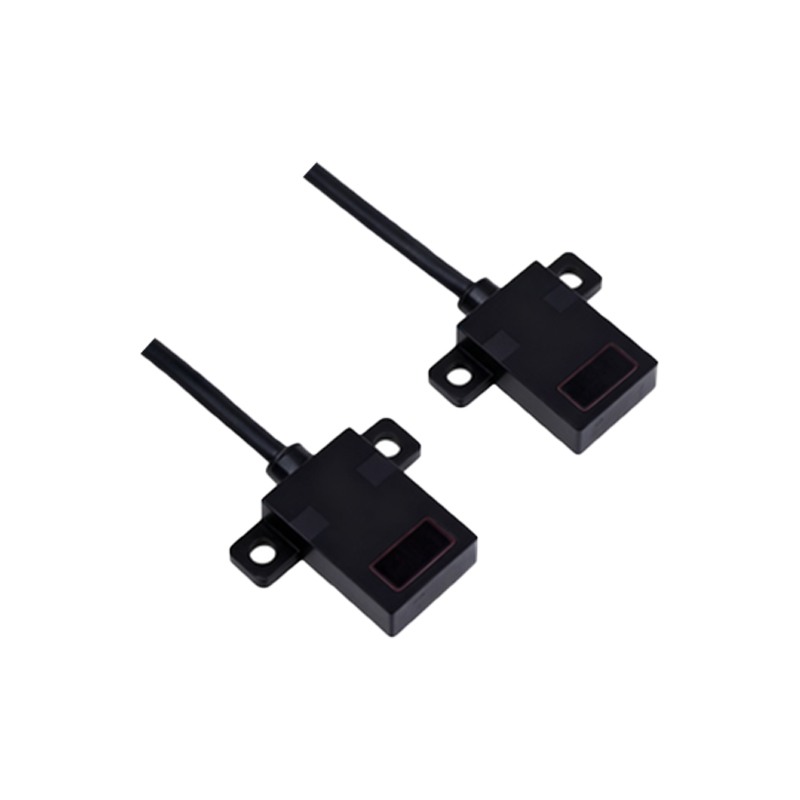
The effectiveness of a through-beam sensor stems from its distinct, separate components. The emitter houses a light source, usually an LED or laser diode, which generates a focused beam. The receiver contains a phototransistor or photodiode tuned to respond specifically to the wavelength of the emitted light. This physical separation provides the longest possible sensing range among photoelectric sensor types, often exceeding 50 meters in ideal conditions. Because the receiver only needs to detect the presence or absence of the beam, it is largely immune to common challenges like target color, reflectivity, or surface finish. The system's robustness is further enhanced by modulated light signals. The emitter pulses the light at a specific high frequency, and the receiver is synchronized to recognize only this frequency, effectively filtering out ambient light from factory lighting or sunlight, which prevents false triggering.
Key Advantages in Industrial Settings
Through-beam sensors offer several compelling advantages that justify their widespread use. First and foremost is their exceptional reliability and sensing distance. The long, straight beam path allows for detection of very small objects at great distances, making them ideal for large-scale applications. Their high signal strength results in a superior signal-to-noise ratio, ensuring stable operation even in environments with vibration or electrical interference. Secondly, they are remarkably consistent. Since detection depends solely on beam interruption, performance is unaffected by the color, transparency (to a degree), or angular orientation of the target object. This consistency reduces setup time and maintenance. Finally, their simple "go/no-go" logic makes integration with control systems straightforward, providing a dependable digital signal for counting, positioning, or safety interlocking.
Common Applications and Use Cases
The application spectrum for through-beam sensors is vast within factory automation. A primary use is in object detection and counting on packaging and assembly lines, where they reliably detect products, bottles, or boxes regardless of their labels or material. They are indispensable in material handling for detecting the presence of items on conveyors, triggering sorters, or signaling end-of-travel positions. In the realm of safety, they form the basis of safety light curtains, where an array of beams creates an invisible guard; interrupting any beam immediately halts dangerous machinery. Other specialized applications include web break detection in paper or textile manufacturing, where a break in the material interrupts the beam, and in elevator systems for door control and leveling.
Installation Considerations and Best Practices
Proper installation is critical to realizing the full performance of through-beam sensors. The most crucial step is precise alignment of the emitter and receiver. Even minor misalignment can drastically reduce effective sensing range or cause intermittent operation. Using manufacturer-provided alignment tools or indicators is highly recommended. The mounting hardware must be rigid and stable to prevent vibration from knocking the units out of alignment over time. Environmental factors must also be considered. While modulated light resists ambient light, placing sensors away from direct, intense light sources is prudent. For outdoor or washdown environments, selecting sensors with a high Ingress Protection (IP) rating (e.g., IP67 or IP69K) is essential to protect against dust and water. Regular maintenance should include cleaning the lenses to prevent buildup of dust, oil, or condensation that could attenuate the light beam.
Comparison with Other Sensing Modes
Understanding when to choose a through-beam sensor over other types like retro-reflective or diffuse sensors is key. Retro-reflective sensors use a single unit that emits light to a reflector and receives the reflected beam. While easier to install (only one unit to wire and mount), their range is shorter, and they can be fooled by shiny objects that reflect light like the target reflector. Diffuse (proximity) sensors detect light reflected directly off the target object. They are the easiest to install as only one unit is needed and it faces the target, but they have the shortest range and are highly sensitive to the target's color and surface properties. The through-beam sensor sacrifices some installation convenience for maximum performance, range, and reliability, making it the preferred choice for the most demanding detection tasks.
Future Trends and Technological Developments
The evolution of through-beam sensor technology continues to align with Industry 4.0 trends. Modern sensors are becoming smarter and more connected. Integrated IO-Link communication is a significant advancement, allowing sensors to transmit not just a simple switch signal but also detailed diagnostic data—such as signal strength, operating temperature, and lens contamination levels—to higher-level control systems for predictive maintenance. There is also a trend toward miniaturization, providing the same long-range performance in smaller housings for space-constrained applications. Furthermore, the development of more robust laser diode sources enables even longer ranges and the ability to generate extremely thin, precise beams for detecting very small objects like wires or fibers, opening new possibilities in electronics and textile manufacturing.