Introduction to the E2EC-X04S12-WC
The E2EC-X04S12-WC is a high-performance, cylindrical inductive proximity sensor from Omron's E2EC series. Engineered for demanding industrial environments, this model features a robust M12 threaded barrel housing, making it suitable for a wide range of automation and control applications. Its core function is to detect the presence or absence of metallic objects without physical contact, thereby ensuring reliable operation and minimizing mechanical wear. The "WC" suffix typically indicates specific wiring or connector variations, often a pre-wired cable version, which simplifies installation and enhances durability by eliminating a potential failure point. This sensor is designed to deliver consistent performance in challenging conditions, including areas with cutting fluids, coolants, and metal chips.
Key Technical Specifications and Features
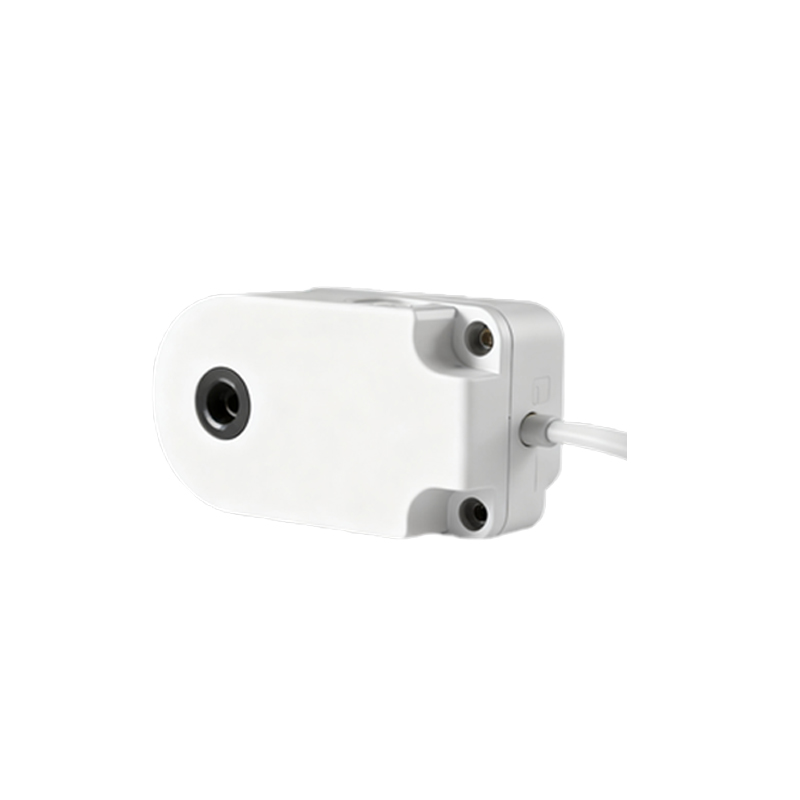
The operational characteristics of the E2EC-X04S12-WC define its application scope. It is a shielded (flush-mountable) type sensor, allowing it to be installed flush with a metal surface without affecting its sensing performance. The sensing distance is standardized at 4mm for this form factor. It operates on a DC supply voltage, commonly in the range of 12-24V DC, ensuring compatibility with standard industrial control circuits. The output configuration is typically a 3-wire DC PNP (sourcing) or NPN (sinking) transistor switch, providing a clean, fast switching signal to a PLC or controller. Key features include a high switching frequency, enabling detection of rapidly moving objects, and built-in protection against short-circuit, reverse polarity, and surge voltages, which are critical for longevity in electrically noisy environments.
Operating Principle and Sensing Performance
This sensor operates on the principle of electromagnetic induction. An internal oscillator generates a high-frequency electromagnetic field at the active face of the sensor. When a metallic target (such as steel, aluminum, or brass) enters this field, eddy currents are induced in the target. These currents absorb energy from the oscillator, causing its amplitude to dampen. The sensor's detection circuit monitors this change and triggers the solid-state output switch. The performance is characterized by factors like the rated sensing distance, hysteresis (the difference between the switch-on and switch-off points for stability), and repeatability. The E2EC-X04S12-WC offers excellent temperature stability and is largely unaffected by ambient light or dust, unlike optical sensors.
Installation and Wiring Considerations
Proper installation is paramount for optimal performance. The M12 threading allows for easy mounting in standard nuts or directly into tapped holes. As a shielded model, it can be embedded in metal without requiring a lateral clearance zone, saving space. For the pre-wired "WC" version, the cable is typically a flexible, oil-resistant PVC cable. The standard wiring color code is brown for DC+, blue for DC-, and black for the output signal. It is crucial to follow the manufacturer's datasheet for correct connections to avoid damage. Ensuring a stable power supply with minimal ripple and implementing proper cable routing away from high-voltage lines are best practices to prevent electromagnetic interference (EMI).
Typical Industrial Applications
The robustness and reliability of the E2EC-X04S12-WC make it a versatile component across numerous sectors. In automotive assembly lines, it is used for part presence verification, such as detecting pistons, gears, or engine blocks on conveyors. In packaging machinery, it counts metallic items or verifies the position of capping heads. Within machine tools, it serves as a limit switch for tool changer arms or spindle positioning. It is also extensively used in material handling systems for detecting pallets, lift positions, and robotic end-effector status. Its resistance to industrial contaminants makes it ideal for these harsh settings.
Maintenance, Troubleshooting, and Selection Criteria
While known for durability, periodic checks are recommended. Common issues include false triggering or failure to detect, often caused by accumulated metallic debris on the sensing face, incorrect power supply, or wiring faults. Regular cleaning of the sensor face is a simple yet effective maintenance task. When selecting a sensor for a new application, engineers must consider the target material (steel, aluminum, etc.), required sensing distance, environmental factors (temperature, chemicals), housing material (often nickel-plated brass or stainless steel), and output type (PNP/NPN) to match the control system. The E2EC-X04S12-WC, with its balanced specifications, serves as a reliable default choice for many standard metal detection tasks.