Introduction to the ES-M1 Proximity Sensor
The ES-M1 proximity sensor represents a significant advancement in non-contact detection technology, widely adopted across automation and industrial control systems. Engineered for reliability and precision, this inductive sensor is designed to detect the presence or absence of metallic objects without any physical contact. Its robust construction typically features a cylindrical metal housing, making it suitable for harsh industrial environments where dust, moisture, and mechanical stress are common. The core principle of operation involves generating an electromagnetic field; when a metallic target enters this field, it induces eddy currents, causing a change in the sensor's oscillation amplitude. This change is then processed by the internal circuitry to trigger a solid-state output signal. The ES-M1 series is renowned for its consistent performance, offering a stable sensing range and high switching frequency, which are critical for high-speed automation processes.
Key Technical Specifications and Performance Metrics
Delving into the technical specifications, the ES-M1 sensor typically operates on a standard DC voltage range, such as 10-30V DC, ensuring compatibility with most industrial power supplies. Its output configuration often includes options like NPN (sinking) or PNP (sourcing) transistor outputs, providing flexibility for integration into various control systems, including PLCs (Programmable Logic Controllers). The sensing distance, a crucial parameter, is precisely defined, with common models offering ranges from 1mm to 5mm. It exhibits minimal hysteresis, ensuring accurate and repeatable detection points. Furthermore, the ES-M1 boasts a high switching frequency, often exceeding 1kHz, allowing it to detect objects in rapid succession—a vital feature for packaging, assembly, and sorting applications. Its construction usually meets high Ingress Protection (IP) ratings, such as IP67, guaranteeing resistance to water and dust ingress, thereby enhancing its durability and operational lifespan in challenging conditions.
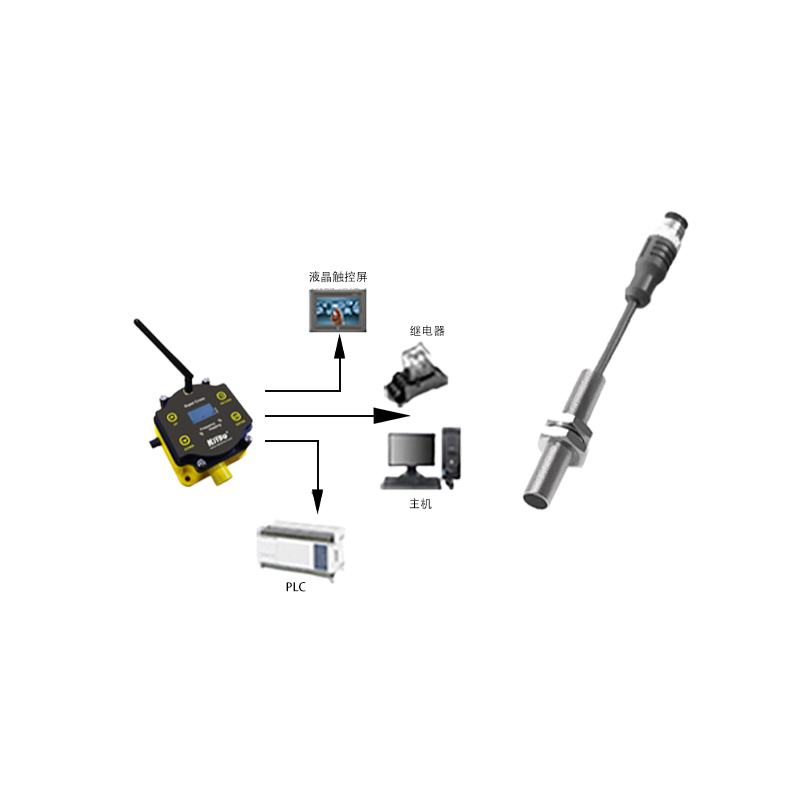
Distinctive Features and Design Advantages
Several distinctive features set the ES-M1 apart from generic proximity sensors. Firstly, its embedded LED status indicator provides immediate visual feedback on the sensor's operational state and detection events, simplifying installation, troubleshooting, and maintenance. Secondly, many models in this series incorporate short-circuit and reverse polarity protection, safeguarding the sensor and the connected circuitry from accidental wiring errors or electrical faults. The temperature stability is another strong point; the ES-M1 is designed to maintain its sensing characteristics across a wide ambient temperature range, often from -25°C to +70°C. This ensures reliable performance in both freezing cold storage facilities and hot manufacturing plants. The use of high-quality materials and potting compounds protects the internal electronics from vibration and shock, making it a dependable choice for heavy machinery and mobile equipment.
Primary Industrial Applications and Use Cases
The versatility of the ES-M1 proximity sensor makes it a cornerstone in numerous industrial applications. In automated manufacturing lines, it is extensively used for part presence verification, counting, and position detection of metal components on conveyors. Within the automotive industry, these sensors play a critical role in robotic welding arms, ensuring precise positioning of car body panels, and in assembly stations for detecting piston or gear positions. Material handling systems, such as automated guided vehicles (AGVs) and palletizers, rely on ES-M1 sensors for end-of-travel detection and pallet height sensing. Furthermore, in packaging machinery, they are instrumental in detecting the presence of metallic foils, caps, or cans, ensuring proper filling and sealing operations. Their robustness also makes them suitable for harsh environments like steel mills or foundries, where they monitor the position of rollers, cranes, and other heavy equipment.
Installation Guidelines and Best Practices
Proper installation is paramount to harnessing the full potential of the ES-M1 sensor. It is essential to mount the sensor securely, ensuring its sensing face is parallel to the target surface and within the specified nominal sensing distance. Engineers must account for the sensor's "blind zone," the area immediately in front of the sensing face where detection is not possible. Adequate clearance should be maintained between the sensor and surrounding metal structures to prevent false triggering due to side or background interference. When wiring, following the manufacturer's datasheet for correct connection of the power supply, load, and output wires is critical. For applications involving different types of metals, note that the effective sensing distance can vary; for instance, steel provides the standard range, while for non-ferrous metals like aluminum or copper, the range is typically reduced, necessitating careful calibration during setup.
Maintenance, Troubleshooting, and Longevity
The ES-M1 sensor is designed for minimal maintenance, but periodic checks are recommended to ensure long-term reliability. Regularly clean the sensing face from accumulated dirt, metal