Fundamental Operating Principles
At the core of every modern scanner lies a photoelectric sensor, a device that converts light signals into electrical ones. The fundamental principle involves an emitter, typically an LED or laser diode, which projects a beam of light onto the target surface—be it a document, barcode, or object on an assembly line. A receiver, such as a phototransistor or photodiode, then detects the reflected or transmitted light. The sensor's electronics analyze the intensity or modulation of this received light. In scanners, this interaction is meticulously controlled. The light beam scans across the target, and variations in reflectivity—such as the contrast between black text and white paper or the pattern of a barcode—create a corresponding analog signal. This signal is digitized, processed, and ultimately reconstructed into a digital image or decoded data string. The precision of this light detection directly dictates the scanner's resolution and accuracy.
Primary Sensor Types and Configurations
Several photoelectric sensor configurations are employed in scanning technology, each suited to specific applications. The retro-reflective type is common in flatbed and sheet-fed document scanners. Here, the emitter and receiver are housed together, and light is reflected off a fixed mirror or the document itself back to the receiver. This setup is compact and reliable for consistent, short-range scanning. For long-range or high-precision applications, such as in industrial barcode readers or 3D scanners, a thrubeam (or through-beam) configuration is often used. The emitter and receiver are separate units placed opposite each other; the target object breaks the beam. This method offers high speed and immunity to target surface color or reflectivity. A more sophisticated variant is the diffuse reflective sensor, where the receiver detects light scattered directly from the target's surface. Advanced versions use background suppression or fixed-field technology to ignore objects beyond a set distance, crucial for precise edge detection in automated sorting systems.
Critical Performance Parameters
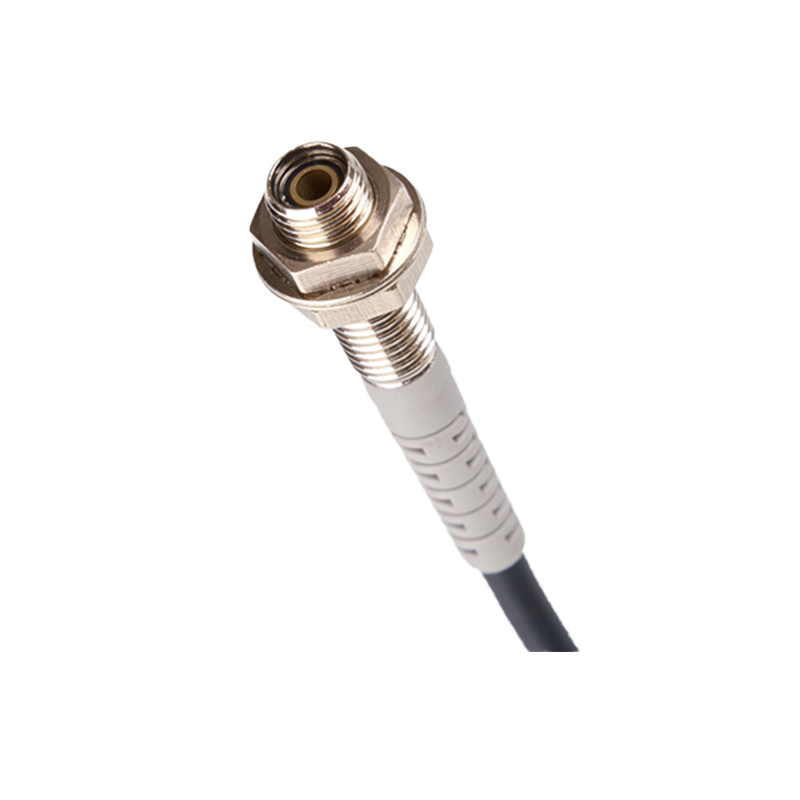
Selecting the appropriate photoelectric sensor for a scanner hinges on key performance parameters. Resolution, often measured in dots per inch (DPI), is determined by the smallest light spot the sensor can distinguish. This depends on the emitter's wavelength (e.g., red LED vs. infrared laser) and the quality of the focusing optics. Response time, or switching frequency, is vital for high-speed conveyor scanning, dictating how quickly the sensor can detect a change in light state. Another crucial factor is the light source. Visible red LEDs are cost-effective for general-purpose use, while infrared LEDs provide discretion and reduce ambient light interference. Laser diodes enable extremely focused beams for long-range, high-resolution scanning, essential in logistics and dimensioning systems. Environmental robustness, including resistance to dust, moisture, and ambient light noise, is also a paramount consideration for industrial-grade scanners.
Industrial and Automation Applications
Beyond office document digitization, photoelectric scanning sensors are indispensable in industrial automation. In manufacturing, they perform critical tasks like precise part presence verification on assembly lines, orientation detection for robotic pick-and-place systems, and continuous web inspection for defects in textiles or films. Barcode and QR code scanners, ubiquitous in logistics and warehouse management, rely on high-speed photoelectric sensors to decode labels on rapidly moving packages, enabling real-time inventory tracking. Furthermore, in automated guided vehicles (AGVs) and robotics, these sensors facilitate navigation and obstacle avoidance by scanning reflective tapes or detecting nearby objects. The integration of smart sensors with Industrial Internet of Things (IIoT) platforms allows for predictive maintenance, where performance data from the photoelectric sensors is analyzed to anticipate failures before they cause downtime.
Innovations and Future Trends
The evolution of photoelectric sensor technology continues to push the boundaries of scanning capabilities. Miniaturization is enabling the integration of high-resolution sensors into mobile devices and wearable tech. The development of CMOS and CCD image sensors as advanced array-based photoelectric devices has revolutionized area scanning, allowing for full 2D image capture in compact barcode readers and machine vision cameras. There is a growing trend towards sensors with integrated intelligence, featuring onboard processors that can perform initial signal conditioning, error checking, and communication via industrial protocols like IO-Link. This reduces the load on central controllers and enhances system reliability. Future advancements may see greater adoption of novel light sources like VCSELs (Vertical-Cavity Surface-Emitting Lasers) for even greater efficiency and the fusion of photoelectric sensing with other technologies like time-of-flight (ToF) for precise 3D volumetric scanning.