Introduction to the IME12 Photoelectric Sensor
The IME12 series represents a cornerstone in the realm of industrial automation, specifically within the category of diffuse reflective photoelectric sensors. Engineered for reliability and versatility, these sensors operate on a fundamental principle: they emit a beam of light, typically from an LED, and detect the portion of that light that is reflected back from a target object. Unlike through-beam or retro-reflective sensors, the IME12 does not require a separate receiver or a reflector. The emitted light and the received signal share the same housing, making installation simpler and more cost-effective for a wide array of applications. This self-contained design is ideal for detecting the presence, absence, or distance of objects without complex alignment procedures.
Key Technical Specifications and Operating Principle
The operational efficacy of the IME12 sensor hinges on its precise technical parameters. It commonly utilizes a modulated infrared or visible red light source to minimize interference from ambient light. The sensing range, a critical specification, varies by model but is typically in the range of a few centimeters to several hundred millimeters. This range is influenced by the color, surface texture, and material of the target object; light-colored, matte surfaces reflect better than dark, shiny ones. The sensor features a potentiometer or teach-in function for setting the sensitivity threshold, allowing it to distinguish between the target and the background. Output configurations are diverse, including discrete NPN or PNP transistor outputs, analog current (4-20 mA), or voltage (0-10 V) outputs, and IO-Link for digital communication, providing seamless integration into modern control systems.
Design Features and Environmental Robustness
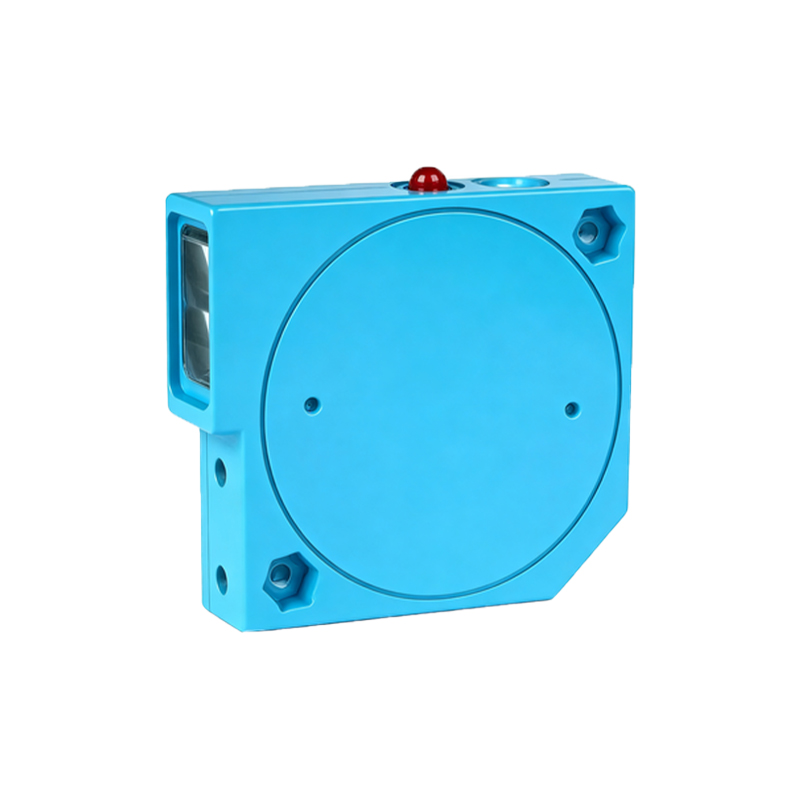
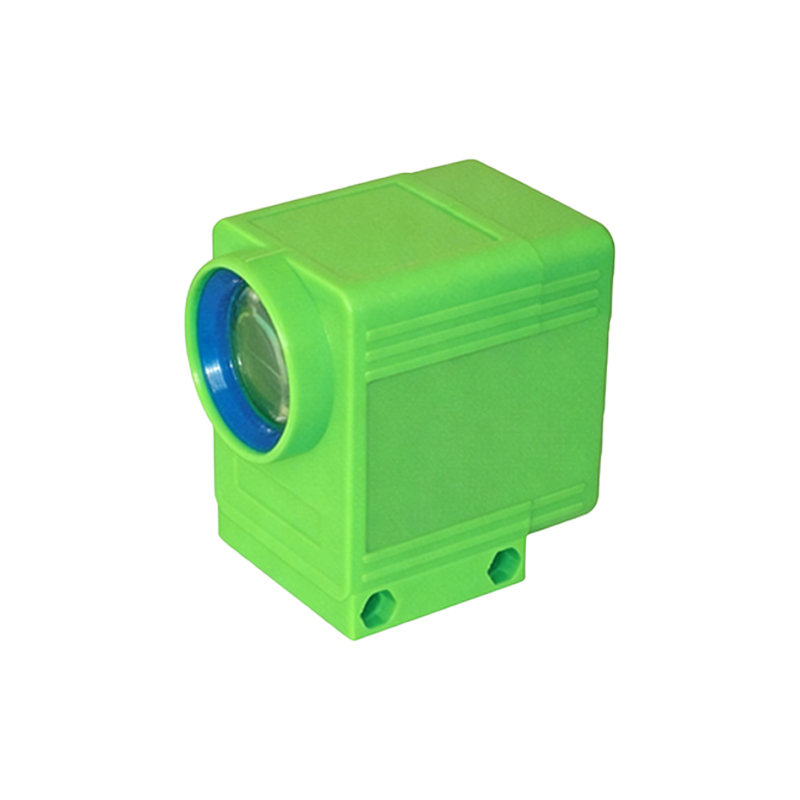
Built for harsh industrial environments, the IME12 sensor boasts a rugged design. The housing is typically constructed from nickel-plated brass or high-grade plastic, offering resistance to mechanical impact and corrosion. Many models achieve an IP67 or IP69K ingress protection rating, ensuring reliable operation despite exposure to dust, oils, and high-pressure washdowns. The compact form factor of the IME12 series allows for installation in space-constrained locations. Additional features often include a visible red or green LED status indicator for operational feedback and an alignment aid to simplify commissioning. These design elements collectively ensure long-term stability and reduce maintenance requirements.
Typical Applications in Automation Systems
The application spectrum for the IME12 diffuse sensor is exceptionally broad. In packaging machinery, it is indispensable for detecting the presence of boxes, bottles, or labels on a conveyor line, triggering subsequent actions like filling, capping, or labeling. Within the automotive industry, these sensors verify part presence in assembly jigs or count components. They are also pivotal in material handling for pallet detection, monitoring stack heights, and ensuring proper positioning. In electronic assembly, the IME12 can detect tiny components on PCBs. Its ability to ignore background objects (through background suppression technology in some variants) makes it perfect for detecting transparent films, glass, or liquid levels in containers.
Installation, Alignment, and Calibration Best Practices
Correct installation is paramount for optimal sensor performance. The sensor should be mounted securely to avoid vibration-induced misalignment. The sensing face must be positioned perpendicular to the expected target surface for maximum signal strength. When aligning, it is crucial to consider the "blind zone"—the minimum distance from the sensor face where detection is not possible. The sensitivity should be calibrated using the actual target object under normal operating conditions. The teach-in procedure, where the sensor "learns" the reflection from the target at the desired position, is highly recommended for consistent and reliable detection, especially when dealing with varying surface properties.
Advantages Over Other Sensing Technologies
Compared to through-beam sensors, the IME12 offers easier installation with only one device to wire and mount. Versus retro-reflective sensors, it eliminates issues caused by dirty reflectors. When contrasted with proximity sensors (inductive or capacitive), photoelectric sensors like the IME12 can detect a wider variety of materials, including non-metallic objects, and typically offer longer sensing ranges. Its diffuse mode provides a good balance of cost, simplicity, and functionality for direct object detection without the need for a dedicated opposing unit, making it a versatile and economical choice for countless standard applications.
Troubleshooting Common Issues and Maintenance
Common issues with diffuse sensors like the IME12 often stem from environmental factors or incorrect setup. Unstable signals can result from sensing shiny targets, where the beam specularly reflects away from the receiver. Using a sensor with background suppression or applying a matte tape to the target can mitigate this. Detection failures may occur if the target color changes beyond the calibrated range, necessitating re-teaching. Lens contamination from dust or grease is a frequent cause of reduced range; regular cleaning with a soft cloth is advised. Always verify power supply compatibility and check wiring connections as a first step in any troubleshooting process.
Future Trends and Integration with Industry 4.0
The evolution of sensors like the IME12 is closely tied to the advancement of Industry 4.0. Modern versions increasingly feature IO-Link communication, transforming them from simple binary switches into intelligent data points. Through IO-Link, parameters can be set remotely, diagnostic data (like signal strength, temperature, or contamination warnings) can be monitored, and device replacement can be simplified with automatic parameter restoration. This digital integration enables predictive maintenance, reduces downtime, and allows for more flexible and adaptive production lines. The core diffuse reflective principle remains, but enhanced connectivity and intelligence are defining the next generation of these essential components.