Introduction to Proximity Sensing Technology
Proximity sensors are fundamental components in modern industrial automation, enabling non-contact detection of objects within a defined range. Unlike mechanical limit switches, these devices operate without physical touch, offering superior reliability, speed, and longevity. They are engineered to detect the presence or absence of metallic or non-metallic targets, triggering an electrical signal for control systems. The core principle involves generating an electromagnetic field or beam and monitoring changes caused by a target's intrusion. This technology is indispensable across manufacturing, packaging, material handling, and automotive assembly lines, where precise, rapid, and wear-free detection is critical for efficiency and safety.
Inductive Proximity Sensor Operation
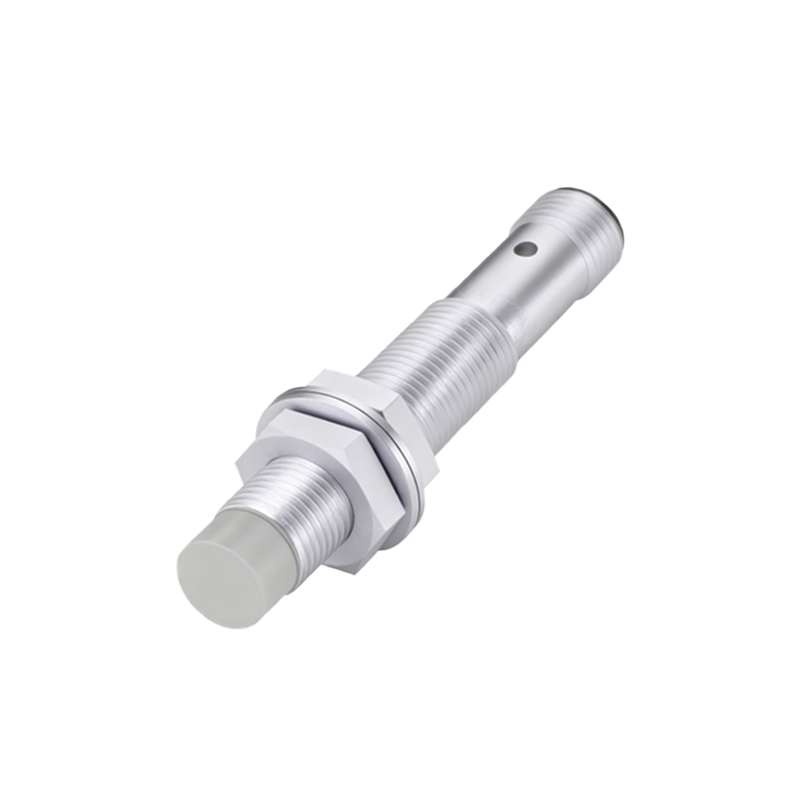
Inductive proximity sensors are specifically designed to detect metallic objects, primarily ferrous metals like steel and iron. The sensor's core contains an oscillator circuit that generates a high-frequency electromagnetic field emanating from the sensing face, which is typically a coil wound around a ferrite core. When a conductive metal target enters this oscillating field, eddy currents are induced on the target's surface. These eddy currents draw energy from the oscillator, causing a reduction in its oscillation amplitude. An internal evaluation circuit monitors this amplitude change. Once the amplitude drop reaches a predetermined threshold—corresponding to the sensor's specified sensing distance—the circuit triggers a solid-state output switch, changing its state (e.g., from OFF to ON). Key characteristics include their insensitivity to non-metallic materials, robustness in dirty environments, and high switching frequencies suitable for counting or high-speed applications.
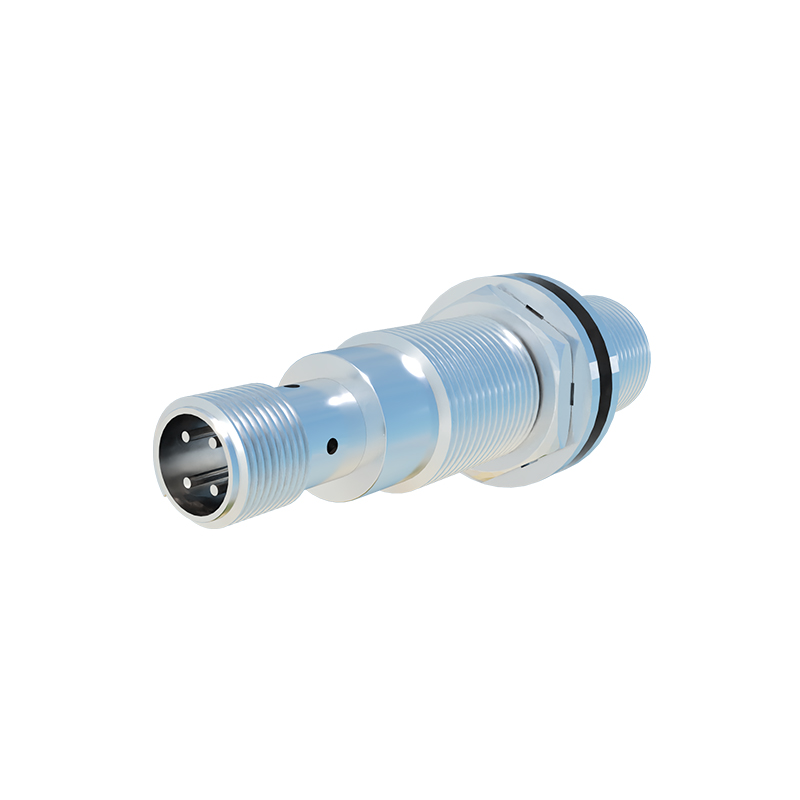
Capacitive Proximity Sensor Functionality
Capacitive proximity sensors can detect a wider variety of materials, including metals, plastics, glass, wood, and liquids. Their operation is based on the principle of capacitance change. The sensor's active face forms one plate of a capacitor, with the target object acting as the other plate, and the air gap serving as the dielectric. An internal oscillator is tuned so that it does not oscillate without a target present. As a target approaches the sensing face, it alters the dielectric constant and increases the capacitance of the system. When the capacitance reaches a sufficient level, the oscillator begins to oscillate. Subsequent circuitry processes this oscillation signal, leading to an output state change. These sensors are ideal for level detection in tanks (for liquids or granules), detecting non-metallic objects through packaging, or applications where the target material is not conductive.
Photoelectric Sensing Principles
Photoelectric proximity sensors, or photoelectric sensors, operate by emitting a beam of light (visible red, infrared, or laser) and detecting changes in the received light. They are categorized mainly into three types: through-beam, retro-reflective, and diffuse. In the diffuse (proximity) mode, the emitter and receiver are housed in the same unit. The emitted light strikes a target and is diffusely reflected back to the receiver. The sensor detects the presence of the target based on the intensity of the returned light. These sensors excel at detecting objects regardless of material composition (color and surface finish can affect range) and are used for long-range detection, transparent object detection, and precise positioning.
Magnetic Proximity Sensor Mechanism
Magnetic proximity sensors, often called reed switches or Hall-effect sensors, detect the presence of a magnetic field, typically from a permanent magnet attached to a moving part. A reed switch consists of two ferromagnetic reeds sealed in a glass tube filled with inert gas. When an external magnetic field of sufficient strength is applied, the reeds magnetize and attract each other, making contact to close the circuit. Hall-effect sensors are solid-state devices that generate a voltage (the Hall voltage) proportional to the strength of an applied magnetic field when a current flows through them. This voltage is processed to provide a digital output. These sensors are extremely reliable for position detection in cylinders, door/window sensing, and applications requiring very low power consumption.
Ultrasonic Proximity Sensor Operation
Ultrasonic sensors measure distance or detect presence using sound waves beyond human hearing. A piezoelectric transducer emits short, high-frequency ultrasonic pulses. These pulses travel through the air, hit a target object, and reflect back to the sensor as an echo. The sensor's electronics calculate the time interval between the emission and reception of the echo. Using the known speed of sound in air, the distance to the target is precisely determined. These sensors are highly effective for detecting objects of any material, color, or transparency, and are widely used for level measurement, collision avoidance in AGVs, and detecting bulk materials.
Key Performance Parameters and Selection Criteria
Selecting the correct proximity sensor requires understanding key specifications. The sensing distance