Introduction to Photoelectric Sensors
Photoelectric sensors are essential components in modern industrial automation, utilizing light beams to detect the presence, absence, or distance of objects. These sensors operate by emitting a light source, typically from an LED or laser, and measuring the reflected or interrupted light to determine object characteristics. They are prized for their non-contact detection capability, high precision, and versatility across various environments, from clean rooms to harsh manufacturing floors. By converting light signals into electrical outputs, photoelectric sensors enable seamless integration with control systems, facilitating tasks such as counting, positioning, and quality inspection. Their reliability and adaptability make them a cornerstone in industries like packaging, automotive, and electronics, where efficiency and accuracy are paramount.
Through-Beam Photoelectric Sensors
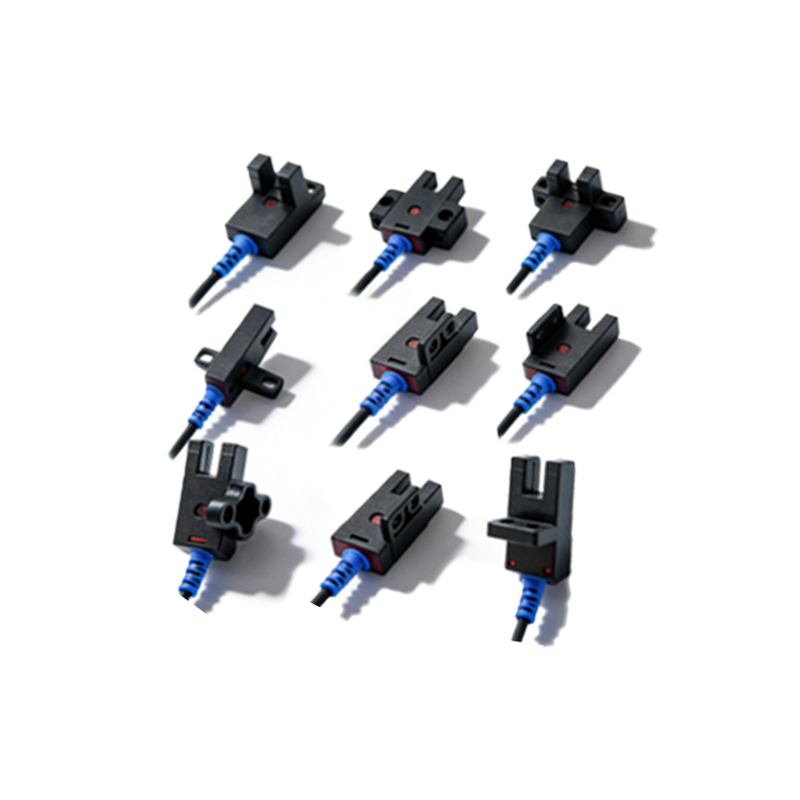
Through-beam sensors, also known as opposed-mode sensors, consist of separate emitter and receiver units positioned opposite each other. The emitter projects a continuous light beam to the receiver, and an object is detected when it interrupts this beam. This design offers the longest sensing ranges among photoelectric sensors, often exceeding 100 meters, and provides high immunity to environmental factors like dust or ambient light. Due to their robust performance, through-beam sensors are ideal for applications requiring reliable detection over large distances, such as conveyor belt monitoring or safety barriers in machinery. However, installation can be more complex, as alignment between the emitter and receiver must be precise to ensure optimal functionality.
Retroreflective Photoelectric Sensors
Retroreflective sensors combine the emitter and receiver into a single housing, using a reflector to bounce the light beam back to the receiver. When an object blocks the beam between the sensor and reflector, detection occurs. These sensors offer moderate sensing ranges, typically up to 10 meters, and simplify installation compared to through-beam types, as only one unit needs wiring and mounting. They are commonly used in material handling, door control, and assembly lines. A key consideration is that reflective surfaces on objects might cause false triggers, so sensors often incorporate polarization filters to distinguish the reflector's light from other reflections, enhancing accuracy in diverse settings.
Diffuse Reflective Photoelectric Sensors
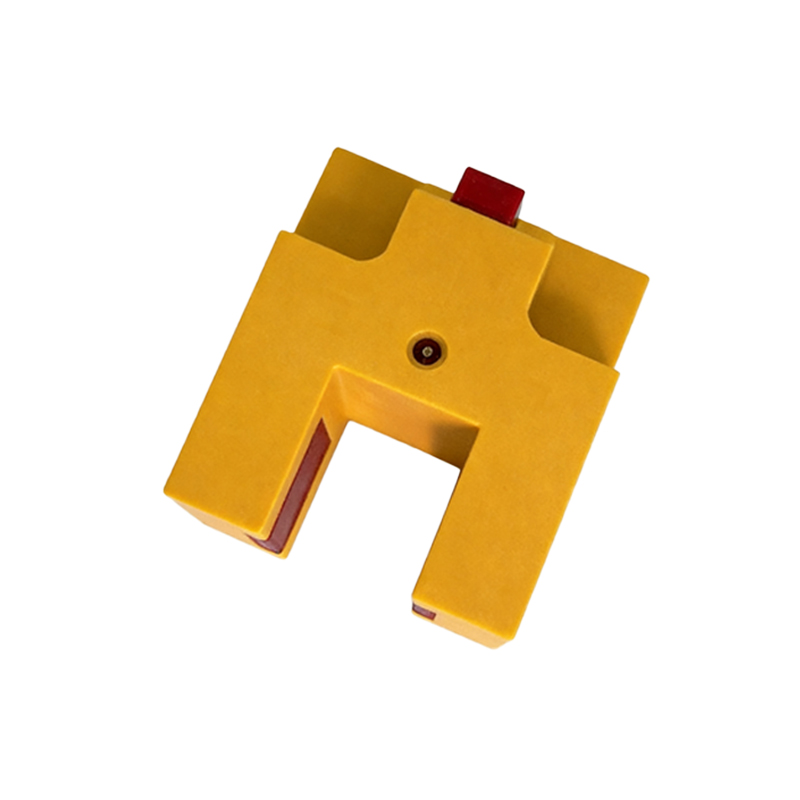
Diffuse reflective sensors, or proximity-mode sensors, have the emitter and receiver in one unit and detect objects by measuring light reflected directly off the target's surface. The sensor emits a beam, and the receiver analyzes the scattered light returning from the object. Sensing ranges are shorter, usually under 2 meters, making them suitable for close-range applications like detecting small parts or monitoring fill levels in containers. Their compact design allows easy integration into tight spaces. However, performance can vary based on object color, texture, and reflectivity, requiring calibration for consistent results. Advanced models feature background suppression to ignore distant objects, improving precision in cluttered environments.
Background Suppression Photoelectric Sensors
Background suppression sensors are a specialized type of diffuse sensor that uses triangulation or lens systems to focus on a specific sensing distance, ignoring objects beyond a set range. By analyzing the angle of reflected light, these sensors can detect objects within a precise zone, even if they have similar reflectivity to the background. This capability is crucial for applications like detecting transparent materials, distinguishing overlapping items, or ensuring accurate positioning in robotic systems. With ranges adjustable up to several meters, they offer flexibility in complex setups, though they may be more expensive than standard diffuse sensors due to their advanced optics and electronics.
Color Recognition Photoelectric Sensors
Color recognition sensors employ multiple light sources and receivers to differentiate between colors based on wavelength reflection. They emit red, green, and blue (RGB) light and measure the intensity of reflected light to identify specific hues or contrasts. These sensors are vital in quality control processes, such as sorting products by color, verifying label accuracy, or inspecting packaging for correct branding. They often include programmable settings to adapt to various color palettes and lighting conditions. While highly accurate, they require calibration for environmental factors like ambient light changes, and their sensing range is generally limited to short distances to maintain color fidelity.
Fiber Optic Photoelectric Sensors
Fiber optic photoelectric sensors use flexible fiber optic cables to transmit light between the emitter and receiver, allowing the sensing head to be placed in confined or hazardous areas where traditional sensors cannot fit. The main electronics unit can be remotely located, protecting it from extreme temperatures, vibrations, or corrosive substances. These sensors come in through-beam, retroreflective, and diffuse types, with sensing ranges depending on the fiber configuration. They are widely used in semiconductor manufacturing, medical devices, and food processing, where space constraints or cleanliness are concerns. However, fiber optics may be fragile and require careful handling to avoid damage from bending or impact.
Laser-Based Photoelectric Sensors
Laser-based sensors utilize laser diodes to produce a focused, coherent light beam, enabling high-precision detection over long distances with minimal beam divergence. They are capable of sensing small objects or measuring exact positions, often with sub-millimeter accuracy. Applications include alignment tasks, thickness measurement, and edge detection in precision engineering. Laser sensors can operate in through-beam, retroreflective, or diffuse modes, offering versatility. Safety precautions are necessary, as laser beams can pose eye hazards, requiring compliance with regulations like IEC 60825. Their cost is higher than LED-based sensors, but the investment is justified for critical measurements in industries like aerospace or electronics.
Selection Criteria for Photoelectric Sensors
Choosing the right photoelectric sensor involves evaluating factors such as sensing range, environmental conditions, object properties, and output requirements. For long-range detection, through-beam or laser sensors are optimal, while diffuse sensors suit close-proximity tasks. Consider ambient light, dust, and temperature to ensure durability—for example, fiber optic sensors excel in harsh settings. Object size, color, and material affect reflectivity, necessitating tests with background suppression or color sensors. Output types (e.g., digital, analog) should match control system interfaces. Consulting manufacturer datasheets and conducting trials can help balance performance, cost, and reliability for specific industrial applications.
Future Trends in Photoelectric Sensing
The future of photoelectric sensors is shaped by advancements in miniaturization, connectivity, and intelligence. Emerging technologies like IoT integration enable sensors to transmit data wirelessly for real-time monitoring and predictive maintenance. Smart sensors with embedded processors can self-calibrate or adapt to changing conditions, reducing downtime. Enhanced materials and designs are improving resistance to extreme environments, while developments in laser and optics are boosting accuracy for micromanufacturing. As industries embrace automation and Industry 4.0, photoelectric sensors will evolve to offer greater versatility, efficiency, and data-driven insights, solidifying their role in next-generation industrial systems.