Introduction to Photoelectric Sensors
Photoelectric sensors are essential devices in industrial automation, utilizing light beams to detect the presence, absence, or distance of objects. These sensors operate by emitting a light source, typically from an LED or laser diode, and measuring the changes in the received light intensity. The core principle involves the conversion of light signals into electrical signals, enabling precise and non-contact detection. Widely used in manufacturing, packaging, and material handling, photoelectric sensors offer high reliability, fast response times, and adaptability to various environmental conditions. Their ability to function without physical contact reduces wear and tear, making them ideal for repetitive tasks in harsh settings. Understanding the components of these sensors is key to optimizing their performance in diverse applications.
Light Emitting Element
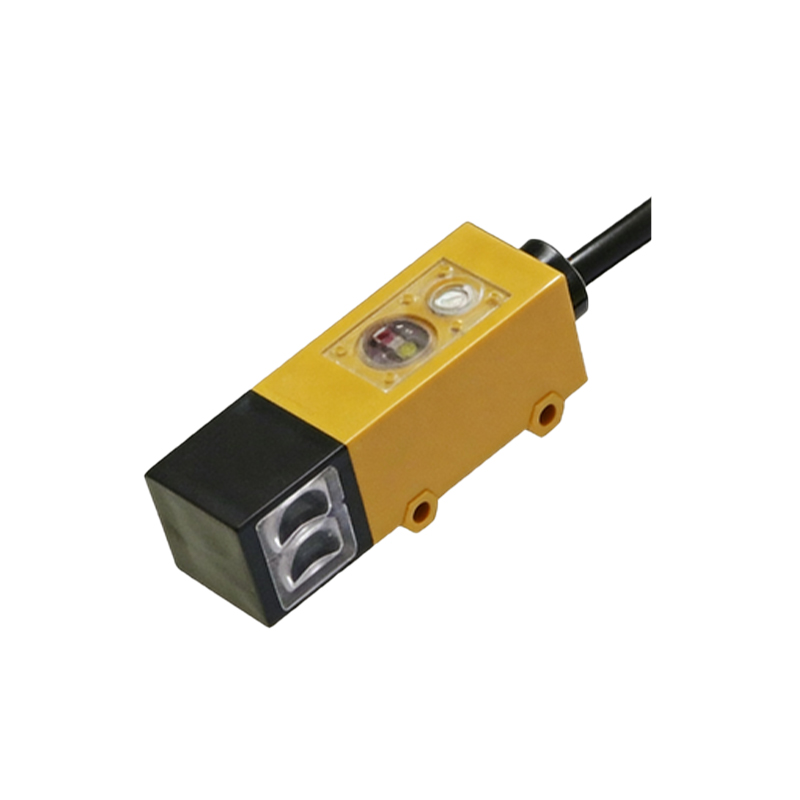
The light emitting element is the source of the optical signal in a photoelectric sensor. Common types include light-emitting diodes (LEDs) and laser diodes. LEDs are popular due to their longevity, low cost, and energy efficiency, emitting visible red, green, or infrared light. Laser diodes provide a more focused beam, allowing for longer detection ranges and higher accuracy in applications like precision alignment or small object detection. The choice of emitter depends on factors such as required range, environmental interference, and target material. For instance, infrared LEDs are often used in dusty or foggy conditions where visible light might scatter. This component is critical for initiating the detection process by generating a consistent light output.
Light Receiving Element
The light receiving element captures the light beam after it interacts with the target object. Typically, this is a photodiode or phototransistor that converts incoming light into an electrical current. Photodiodes offer fast response times and are sensitive to specific wavelengths, matching the emitter's output for optimal performance. In through-beam sensors, the receiver detects direct light from the emitter, while in retro-reflective or diffuse sensors, it measures reflected light. The receiver's sensitivity can be adjusted to filter out ambient light, reducing false triggers. Advanced sensors may use complementary metal-oxide-semiconductor (CMOS) or charge-coupled device (CCD) arrays for imaging applications, enabling shape or color recognition. This element is vital for translating optical data into usable signals.
Signal Processing Circuit
Once the light receiving element generates an electrical signal, the signal processing circuit amplifies, filters, and converts it into a digital output. This circuit includes amplifiers to boost weak signals, filters to eliminate noise from environmental factors like sunlight or electrical interference, and comparators to set detection thresholds. Microcontrollers or integrated circuits (ICs) are often embedded to enable programmable features such as adjustable sensing ranges, time delays, or logic functions. For example, some sensors can be configured to trigger only when the light beam is interrupted for a specific duration. This component ensures reliable operation by processing raw data into clear on/off signals or analog measurements for system integration.
Housing and Optical Components
The housing encloses and protects the internal elements from physical damage, dust, moisture, and chemicals. Made from materials like stainless steel, plastic, or aluminum, it is designed to meet industry standards for ingress protection (IP ratings). Optical components, such as lenses and filters, are integrated into the housing to shape and direct the light beam. Lenses focus the emitted light into a narrow or wide beam, depending on the application—e.g., a focused beam for long-range detection or a diffuse beam for close-range sensing. Filters may be added to block unwanted wavelengths, enhancing performance in challenging environments. These parts contribute to the sensor's durability and accuracy by maintaining optical integrity.
Output Interface
The output interface transmits the processed signal to external control systems, such as programmable logic controllers (PLCs) or robots. Common output types include digital outputs like NPN, PNP, or push-pull configurations, which provide simple on/off signals. Analog outputs, such as 0-10V or 4-20mA, offer continuous data for distance or intensity measurements. Some sensors feature serial communication protocols like IO-Link for advanced diagnostics and parameter setting. The output stage may include protective features like short-circuit or overload protection to prevent damage. This component enables seamless integration into automation networks, allowing for real-time monitoring and control based on sensor data.
Power Supply Unit
The power supply unit provides the necessary electrical energy to operate the sensor, typically ranging from 10-30V DC for industrial models. It ensures stable voltage and current to all internal components, preventing fluctuations that could affect performance. Some sensors incorporate voltage regulation or reverse-polarity protection to enhance reliability. Low-power variants are available for battery-operated applications. This unit is fundamental for consistent sensor operation, especially in systems with multiple devices where power stability is crucial. Proper power management extends the sensor's lifespan and reduces downtime in automated processes.
Conclusion on Component Integration
In summary, photoelectric sensors consist of interconnected components that work together to achieve precise detection. From the light emitting and receiving elements to the signal processing circuits and robust housing, each part plays a specific role in ensuring accuracy and durability. The output interface and power supply unit facilitate integration into broader systems. By understanding these components, engineers can select and configure sensors for optimal performance in applications like object counting, edge detection, or safety monitoring. Regular maintenance, such as cleaning optical surfaces, helps sustain functionality. As technology advances, innovations in miniaturization and smart features continue to expand the capabilities of photoelectric sensors in automation.