Introduction to Proximity Sensing
Proximity sensors are fundamental components in modern industrial automation, providing non-contact detection of objects within a defined range. Their ability to operate without physical contact eliminates mechanical wear, enhances reliability, and allows for high-speed operation in harsh environments. These sensors are indispensable for tasks such as object positioning, counting, limit switching, and safety monitoring. The selection of an appropriate proximity sensor depends on factors including the target material, required sensing distance, environmental conditions, and cost considerations. This article provides a concise technical overview of three primary types of proximity sensors widely used across various industries.
Inductive Proximity Sensors
Inductive proximity sensors are designed specifically for the detection of metallic objects. Their operation is based on the principle of electromagnetic induction. The sensor contains an oscillator circuit that generates a high-frequency electromagnetic field at its active face. When a metallic target enters this field, eddy currents are induced on the target's surface. This causes a change in the oscillation amplitude within the sensor, which is detected by a threshold circuit, subsequently triggering a solid-state output switch. Key characteristics include robustness, high switching frequency, and immunity to non-metallic contaminants like dust, oil, or water. Common sensing ranges vary from a few millimeters to several centimeters. Typical applications include detecting the presence of metal parts on conveyor lines, monitoring machine tool positions, and counting metallic objects. They are not suitable for detecting non-metallic materials.
Capacitive Proximity Sensors
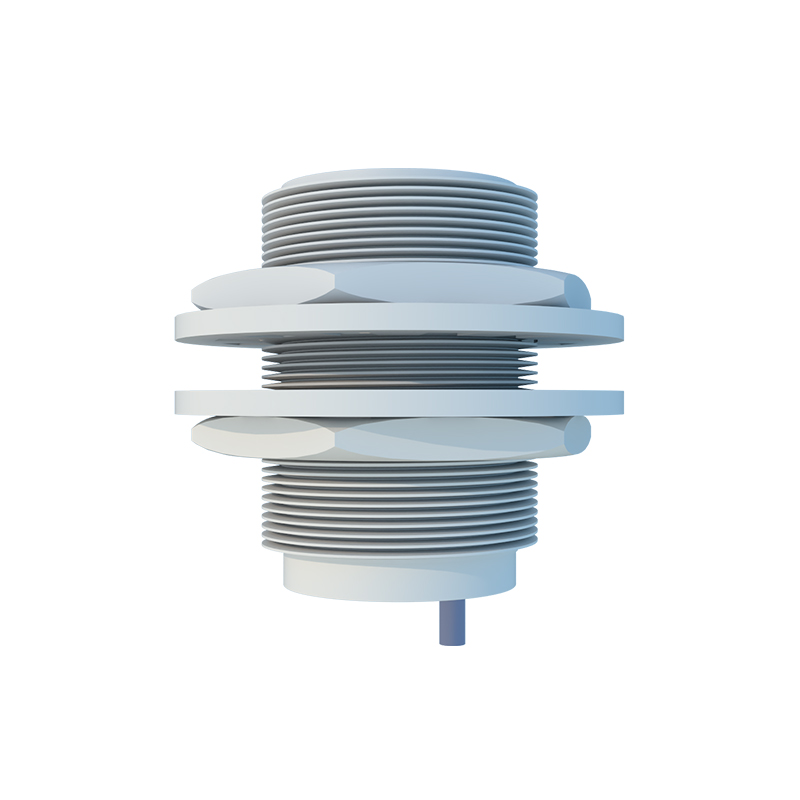
Capacitive proximity sensors offer a more versatile detection capability compared to their inductive counterparts. They can detect both metallic and non-metallic materials, including liquids, plastics, glass, wood, and granular substances. The operating principle involves changes in capacitance. The sensor face acts as one plate of a capacitor, with the target object acting as the other plate. An oscillator circuit measures the capacitance of this system. When a target approaches, the capacitance increases. Once it reaches a preset threshold, the sensor triggers its output. These sensors often feature sensitivity adjustment screws to compensate for different material properties and to ignore background objects. They are ideal for applications such as liquid level detection in tanks, monitoring fill levels of non-metallic materials in hoppers, and detecting the presence of paper, wood, or plastic products. However, they can be more susceptible to environmental factors like humidity.
Ultrasonic Proximity Sensors
Ultrasonic proximity sensors utilize sound waves beyond the human hearing range (typically above 20 kHz) to detect objects and measure distance. They operate on the time-of-flight principle. The sensor emits a burst of ultrasonic pulses and then listens for the echo reflected from a target. By calculating the time interval between the emission and reception of the echo, the sensor can determine the distance to the object with high accuracy. This technology allows for longer sensing ranges, from a few centimeters up to several meters. A significant advantage is its ability to detect virtually any solid or liquid object, regardless of color, transparency, or material composition. Common applications include precise distance measurement, object detection on packaging lines, presence detection of irregularly shaped items, and level sensing for bulk solids or liquids in large vessels. Factors like temperature, air turbulence, and the target's sound-absorbing properties can influence performance.
Comparative Summary and Selection Criteria
Choosing the right sensor requires a careful analysis of the application. Inductive sensors are the go-to choice for reliable, high-speed detection of metals in dirty environments. Capacitive sensors provide the flexibility needed for diverse materials but require careful tuning to avoid false triggers. Ultrasonic sensors excel in long-range detection and precise distance measurement for almost any object but may have a slower response time and higher cost. Engineers must evaluate the target material, required sensing distance, environmental conditions (temperature, contaminants), response speed, and installation constraints. Understanding the core principles and limitations of these three primary technologies—inductive, capacitive, and ultrasonic—forms the foundation for effective and reliable automation system design.