Introduction to Proximity Sensing at Close Range
A 5cm proximity sensor represents a critical category of non-contact detection devices engineered for precise, short-distance object sensing. These sensors are designed to reliably detect the presence or absence of a target within a nominal range of up to five centimeters. Operating without physical contact, they are indispensable in automation and control systems where hygiene, speed, or delicate handling is paramount. The core principle involves generating an electromagnetic field or a beam of radiation and detecting changes caused by a target entering its effective sensing zone. This short-range specification ensures high precision and repeatability, minimizing false triggers from background objects while providing a compact sensing solution for space-constrained applications.
Core Technologies Behind 5cm Proximity Sensors
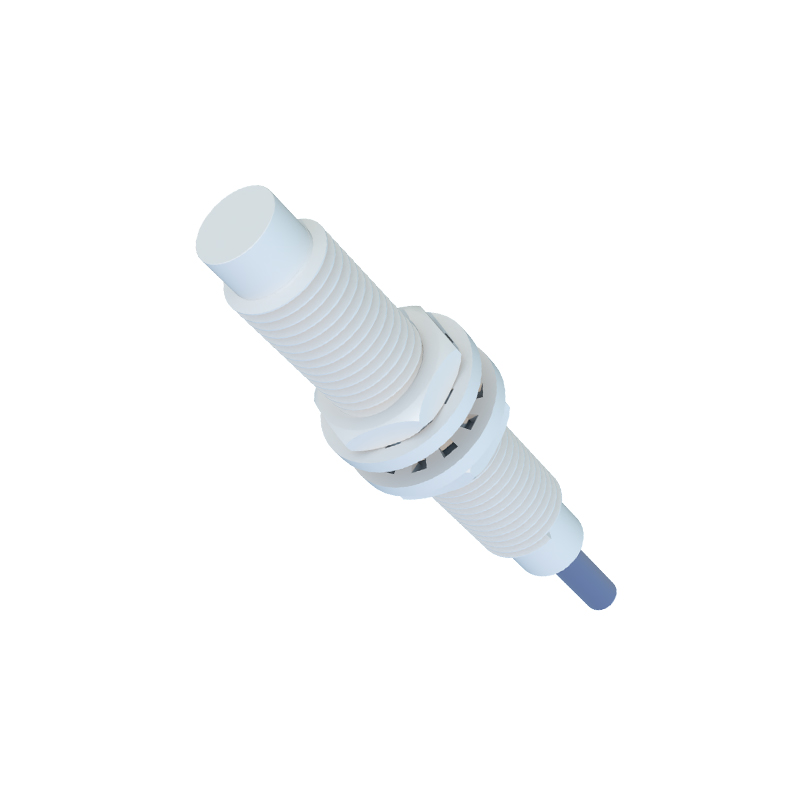
Several sensing technologies are capable of achieving reliable detection within a 5cm range, each with distinct advantages. Inductive proximity sensors are the most common for metallic targets. They generate an oscillating electromagnetic field; when a conductive metal object enters this field, eddy currents are induced, causing a change in oscillation amplitude that is detected by the sensor's circuitry. For non-metallic objects, including liquids, powders, and most solids, capacitive proximity sensors are employed. These sensors detect changes in capacitance caused by the dielectric properties of a target material relative to the surrounding environment. Photoelectric sensors, utilizing modulated infrared light, can also be configured for precise 5cm sensing, offering excellent response times for small or fast-moving objects.
Key Performance Parameters and Specifications
Selecting a 5cm proximity sensor requires careful analysis of its technical specifications. The nominal sensing distance, 5cm in this case, is defined for a standard target under ideal conditions. Engineers must consider the assurance factor, which accounts for temperature fluctuations, voltage variations, and manufacturing tolerances, often reducing the effective operating distance. Repeatability, the sensor's ability to consistently detect a target at the same point, is crucial for precision assembly. Response time, typically in microseconds for inductive types, determines the maximum operational speed of the machinery. Other vital parameters include output type (PNP/NPN, analog, IO-Link), housing material (nickel-plated brass, stainless steel, PBT plastic), and environmental ratings like IP67 or IP69K for protection against dust and water ingress.
Industrial Applications and Use Cases
The application spectrum for 5cm proximity sensors is vast across factory automation, packaging, automotive, and electronics manufacturing. In robotic assembly cells, they are used for end-of-arm tooling verification, ensuring a gripper has correctly picked up a component before proceeding. On conveyor lines, they provide precise counting and positioning of small parts, bottles, or packages. Within CNC machines, they serve as tool touch-off probes or door interlock safety sensors. In the electronics industry, these sensors verify the presence of microchips on circuit boards before soldering. Their sealed designs also make them suitable for washdown environments in food and pharmaceutical processing, detecting fill levels or container presence.
Installation Considerations and Best Practices
Proper installation is fundamental to achieving the specified 5cm sensing performance and long-term reliability. A primary concern is ensuring adequate clearance from surrounding metal structures, known as the flush-mounting or non-flush-mounting requirement. Non-flush (shielded) sensors can be embedded in metal without affecting their range, while flush-mounted (unshielded) types require a metal-free zone around the sensing face to achieve their full range. Electrical wiring must follow manufacturer guidelines, paying close attention to cable routing to avoid interference with power lines. For opposing sensor installations, sufficient distance must be maintained to prevent mutual interference. Regular maintenance involves cleaning the sensing face from oil, dust, or debris buildup that could attenuate the sensing field.
Comparative Advantages Over Other Sensing Ranges
Choosing a 5cm sensor over longer or shorter-range alternatives is a deliberate design decision. Compared to sensors with ranges of 1-2cm, 5cm sensors offer more installation flexibility and tolerance for mechanical misalignment or part vibration, simplifying machine design and maintenance. Conversely, compared to sensors with ranges of 10-20cm, the 5cm variant provides significantly higher precision and immunity to background objects. The shorter field is less likely to be influenced by non-target materials passing nearby, reducing nuisance trips. This makes the 5cm range an optimal compromise for applications requiring a robust sensing distance that is neither too minimalistic nor excessively broad, balancing precision with practical mounting requirements.
Future Trends and Smart Sensor Integration
The evolution of 5cm proximity sensors is closely tied to Industry 4.0 and the rise of smart factories. Modern sensors increasingly feature integrated IO-Link