Understanding the Core Mechanism
High-speed response photoelectric slot sensors, often termed through-beam or fork sensors, operate on a fundamental principle of light interruption. The sensor comprises an integrated transmitter and receiver housed in a U-shaped or forked body, facing each other across a precise air gap—the "slot." The transmitter emits a continuous or modulated beam of light, typically from an infrared or visible LED, across this gap. The opposing receiver continuously monitors the intensity of this incoming light. When an opaque object passes through the slot, it interrupts the light beam. This sudden drop in light intensity is detected by the receiver, which triggers an immediate electronic switching action in the output circuit. The key to "high-speed response" lies in the optimized electronics, fast-recovery photodiodes or phototransistors, and often a modulated light signal that minimizes interference from ambient light, allowing for reliable detection at exceptionally high frequencies.
Key Advantages for Industrial Automation
The design of the slot sensor offers distinct benefits that make it indispensable in high-speed automation. Firstly, its self-contained, aligned design eliminates the need for precise separate alignment of emitter and receiver, simplifying installation and ensuring consistent performance. The mechanical slot provides a natural guide for objects, ensuring they pass through the detection zone reliably. This makes them perfect for counting, indexing, and edge detection of items on conveyor belts, such as bottles, caps, or small components. Their high response speed, often measured in microseconds, allows them to detect objects moving at several meters per second or even tens of thousands of parts per minute. Furthermore, their robust housing protects the optical components from dust, debris, and mechanical shock in harsh industrial environments.
Critical Performance Specifications
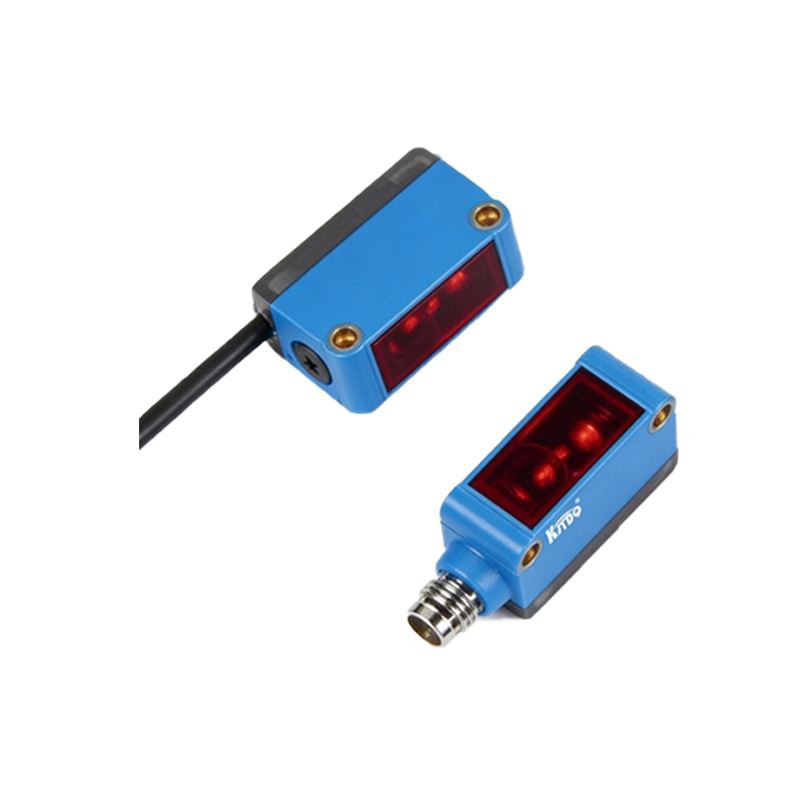
Selecting the right high-speed slot sensor requires careful analysis of several technical parameters. The response time is paramount, typically defined as the time delay between the light beam being interrupted or restored and the corresponding output signal change. For high-speed applications, look for sensors with response times of 20 µs or less. The slot width and depth determine the maximum size of the object that can pass through and the required mounting clearance. The light source type (e.g., infrared, red LED, laser) affects visibility for alignment and resistance to ambient light. Output configuration (NPN/PNP transistor, push-pull, or digital) must be compatible with the controller (PLC, counter). Finally, switching frequency defines how many on/off cycles per second the sensor can handle, directly limiting the maximum count rate or line speed.
Applications in Demanding Environments
These sensors are workhorses across numerous industries. In packaging machinery, they precisely detect labels, foil seals, and product presence for accurate filling and capping operations. Within semiconductor and electronics manufacturing, they perform ultra-high-speed counting and positioning of tiny components like chips, resistors, and connectors. Printers and paper processing equipment use them for paper edge detection, jam prevention, and sheet counting at incredible speeds. In textile machinery, they monitor thread breakage and control loom operations. Their reliability is also crucial in automotive assembly lines for verifying part insertion and robotic guidance. The ability to function reliably despite vibration, temperature fluctuations, and contaminant exposure is a key reason for their widespread adoption.
Selection and Installation Best Practices
Successful implementation hinges on proper selection and setup. Always match the sensor's response time and switching frequency to exceed the application's required speed by a safety margin. Consider the material, color, and surface finish of the target object; highly reflective or transparent materials may require sensors with special polarized lenses or background suppression logic built into the slot design. During installation, ensure the target object passes cleanly through the center of the slot without rubbing against the sensor walls. Secure mounting is essential to prevent misalignment from vibration. For very small objects, ensure the beam spot size is smaller than the object's smallest feature to be detected. Always connect the sensor to a stable, clean power supply as specified in the datasheet to ensure optimal performance and longevity.
Future Trends and Innovations
The evolution of high-speed slot sensors continues, driven by the demands of Industry 4.0 and smarter factories. We are seeing integration of IO-Link communication, which allows for remote configuration, real-time monitoring of sensor health (like lens contamination), and parameter adjustment without physical access. Miniaturization is another trend, enabling inspection of ever-smaller micro-components. Enhanced algorithms within the sensor's circuitry are improving immunity to challenging targets and extreme ambient light. Furthermore, the development of sensors with multiple, independently controllable beams within a single slot body allows for more complex detection tasks, such as width measurement or multi-track monitoring, consolidating functions and saving space in compact machinery.