Introduction to E2 Proximity Sensors
E2 proximity sensors represent a cornerstone of modern industrial automation, providing non-contact detection of metallic and, in some variants, non-metallic objects. Their core function revolves around sensing the presence or absence of a target within a specified sensing range. This capability is fundamental to countless automation processes, from simple part detection on a conveyor to complex robotic positioning. The term "proximity" inherently implies nearness, and these sensors excel at determining when an object enters their defined field. The complementary "distance" or "away" function, while sometimes a specific feature of analog or measuring sensors, is often logically derived from the absence of a detected object, signaling that a target has moved beyond the effective sensing distance. Understanding both the proximity (near) and the inferred distance (far) states is critical for designing robust control systems.
Core Operating Principles
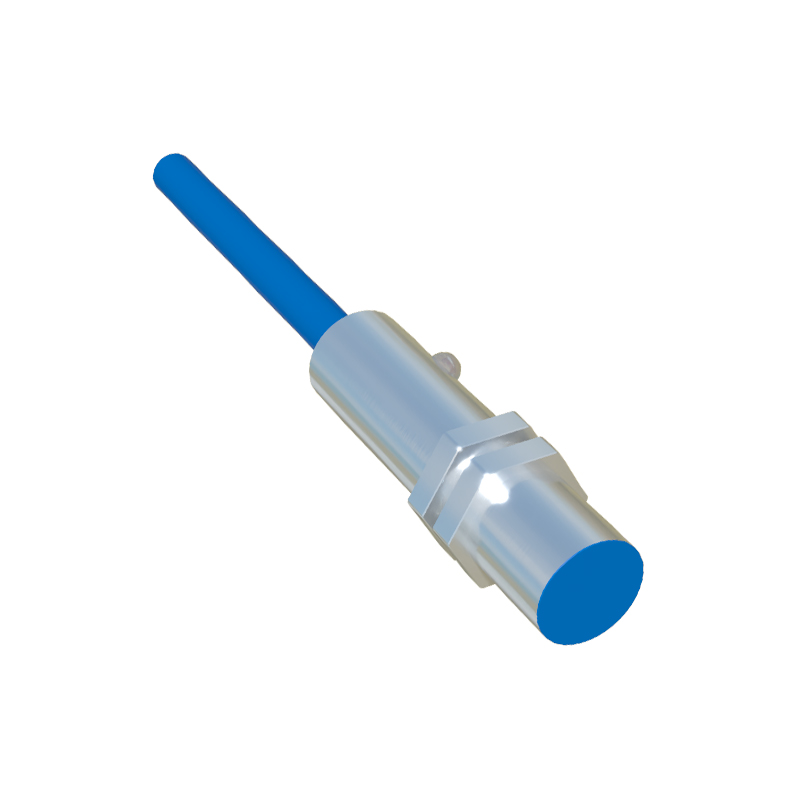
The most common type, the inductive proximity sensor, generates an electromagnetic field from its sensing face. When a metallic target enters this field, eddy currents are induced in the target, causing a change in the sensor's internal oscillation amplitude. This change is detected by the sensor's circuitry, which then triggers a solid-state output switch (typically PNP or NPN). The key parameter here is the "rated operating distance" (Sn), a standardized value. The "effective sensing distance" (Sr) can vary due to factors like target material, size, and temperature. It is crucial to note that for standard binary-output sensors, the output is simply ON or OFF, corresponding to "object present" (proximity) or "object absent" (distance). True distance measurement requires specialized analog or ultrasonic sensors that provide a continuous output signal proportional to the gap.
Defining the Sensing Range and Hysteresis
A critical concept in proximity sensing is hysteresis. This is the difference between the operating point (where the sensor turns ON as a target approaches) and the release point (where the sensor turns OFF as the target moves away). Hysteresis is a designed feature, not a flaw. It prevents output chattering or rapid switching if a target vibrates or stops precisely at the sensing boundary. For instance, a sensor with a 10mm nominal range might activate at 10mm as a part approaches but will only deactivate when the part retreats to 10.5mm. This built-in differential ensures stable signal transitions. From a system logic perspective, the "away" state is reliably confirmed only after the target passes this release point, moving beyond the hysteresis zone.
Application in Machine Sequencing and Safety
The proximity/away function is integral to machine sequencing. Consider a robotic welding cell. An E2 sensor confirms a workpiece is in the fixture (proximity signal), enabling the weld cycle to start. Upon completion, the robot retracts, and the workpiece is ejected. The sensor must then confirm the workpiece has cleared the area (away signal) before a new part can be loaded, preventing collisions. In safety applications, such as guarding, a sensor might monitor if a protective door is fully closed (proximity of the door to the frame). An "away" signal, indicating the door is open beyond a safe threshold, would immediately halt the machine, ensuring operator protection. This binary state monitoring forms the backbone of interlock systems.
Advanced Features: Analog and IO-Link Sensors
While standard sensors provide binary data, advanced E2 models offer enhanced distance functionality. Analog output sensors (e.g., 4-20mA or 0-10V) provide a continuous voltage or current signal that changes linearly with the distance to the target within a specified range. This allows for tasks like monitoring the thickness of a material or the precise position of a cylinder rod. Furthermore, the advent of IO-Link communication protocol has revolutionized sensor capabilities. An IO-Link enabled E2 proximity sensor can transmit not just the switch state but also detailed diagnostic data, parameter settings, and, in analog-capable versions, precise distance values. This enables predictive maintenance, remote configuration, and tighter integration into Industry 4.0 data systems, moving beyond simple near/far logic.
Installation and Environmental Considerations
Reliable operation of proximity and distance sensing depends heavily on correct installation. Sensors must be mounted securely to avoid vibration-induced false signals. The sensing range can be affected by adjacent metal (mounting in a metal bracket may require a non-flush mount), other sensors causing mutual interference, and environmental contaminants like metal dust or cutting fluids. For sensing non-ferrous metals or plastics, capacitive E2 sensors are used, though their sensing range is typically shorter and more susceptible to moisture or material composition changes.