Introduction to Proximity Sensing Technology
Proximity sensors designed for human detection at a 1-meter range represent a critical advancement in industrial automation, security systems, and smart environments. These devices operate by emitting a field or beam of electromagnetic radiation, typically infrared (IR), ultrasonic, or capacitive, and analyzing changes in the return signal to detect the presence of a person within a specified distance. The 1-meter threshold is particularly significant as it strikes a balance between early warning capability and minimizing false triggers from distant or irrelevant objects. In industrial settings, this range is often ideal for ensuring operator safety around machinery, activating equipment only when an authorized person is within an arm's reach, or triggering lighting and climate control in occupied zones. The technology's reliability hinges on precise calibration to distinguish human body characteristics, such as heat signature or dielectric constant, from other moving objects.
Key Operating Principles and Sensor Types
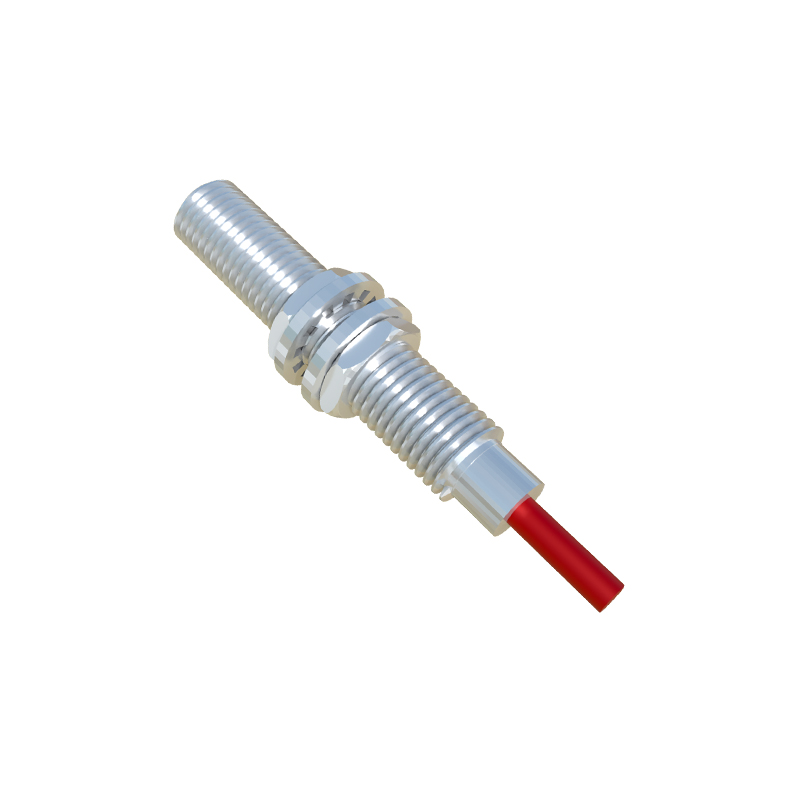
Several sensing technologies are employed to achieve accurate human detection at a 1-meter distance. Passive Infrared (PIR) sensors detect changes in infrared radiation emitted by the human body, making them energy-efficient and common in lighting controls, though they may require supplemental technologies for exact range calibration. Active Infrared sensors, which emit and receive IR beams, offer more precise distance measurement through time-of-flight or triangulation methods, effectively gauging the 1-meter range. Ultrasonic sensors use sound waves beyond human hearing, measuring the echo return time to calculate distance; they are less affected by environmental factors like dust but can be sensitive to air turbulence. Capacitive sensors detect changes in an electrostatic field caused by the human body's conductivity, excelling in non-metallic object differentiation but requiring careful installation to avoid interference. Each type has distinct advantages: IR sensors are cost-effective for many applications, ultrasonic sensors provide robust performance in harsh conditions, and capacitive sensors offer high sensitivity for touchless interfaces.
Critical Design Considerations and Calibration
Achieving consistent and reliable detection at exactly 1 meter necessitates meticulous design and calibration. Environmental factors pose significant challenges; temperature fluctuations can affect IR sensor accuracy, while humidity and airborne particles may impact ultrasonic performance. Sensor lens design, emitter power, and receiver sensitivity must be optimized to create a detection field that is sensitive enough to identify a human but rejects smaller animals or inanimate objects. Advanced models incorporate digital signal processing (DSP) algorithms to filter out noise and adapt to slow environmental drifts. Calibration during installation is paramount, often involving setting threshold values for signal strength or delay times to define the precise 1-meter boundary. Multi-stage sensing zones, where a weaker signal indicates approach and a stronger one confirms presence within 1 meter, are also used to enhance reliability. Furthermore, the sensor's field of view—whether narrow-beam for pinpoint accuracy or wide-angle for area coverage—must align with the application's spatial requirements.
Industrial and Commercial Applications
The 1-meter range proximity sensor finds extensive use across diverse sectors. In industrial automation, they serve as safety guards on robotic cells, conveyor systems, and press machines, halting operation if a worker breaches the safe perimeter. They also enable touchless control of machinery, reducing wear and contamination in cleanrooms or food processing plants. In building automation, these sensors automate lighting, HVAC, and security systems, conserving energy by activating services only when a person is within the relevant zone—such as at an office desk or building entrance. Retail and public spaces utilize them for interactive displays, automatic doors, and people-counting systems. The healthcare sector employs them for hygienic equipment activation and patient monitoring. In each case, the 1-meter distance provides an optimal reaction window—sufficient for system response without being intrusive or wasteful.
Integration Challenges and Future Trends
Integrating these sensors into larger systems presents challenges, including interference between multiple sensors, compatibility with different communication protocols (like IO-Link, Modbus, or Bluetooth Low Energy), and power management for wireless units. Ensuring fail-safe operation is critical, especially in safety-related applications, often requiring redundant sensors or continuous self-testing features. Looking ahead, trends point toward increased miniaturization and the integration of multiple sensing technologies (sensor fusion) in a single package to improve accuracy and reduce blind spots. Artificial intelligence and machine learning are being incorporated to enable sensors to learn typical human movement patterns, further distinguishing humans from other objects and adapting to complex environments. Additionally, the rise of the Industrial Internet of Things (IIoT) demands sensors with built-in connectivity for real-time data analytics and predictive maintenance, transforming simple detection devices into smart nodes within a networked ecosystem.